

Residuals is on show at Asisebenze Art Gallery until Sat, Feb 28, 2026 with a number of events planned throughout the month, including on the first Thursday of February. See our art round-up for details.
From observation to form
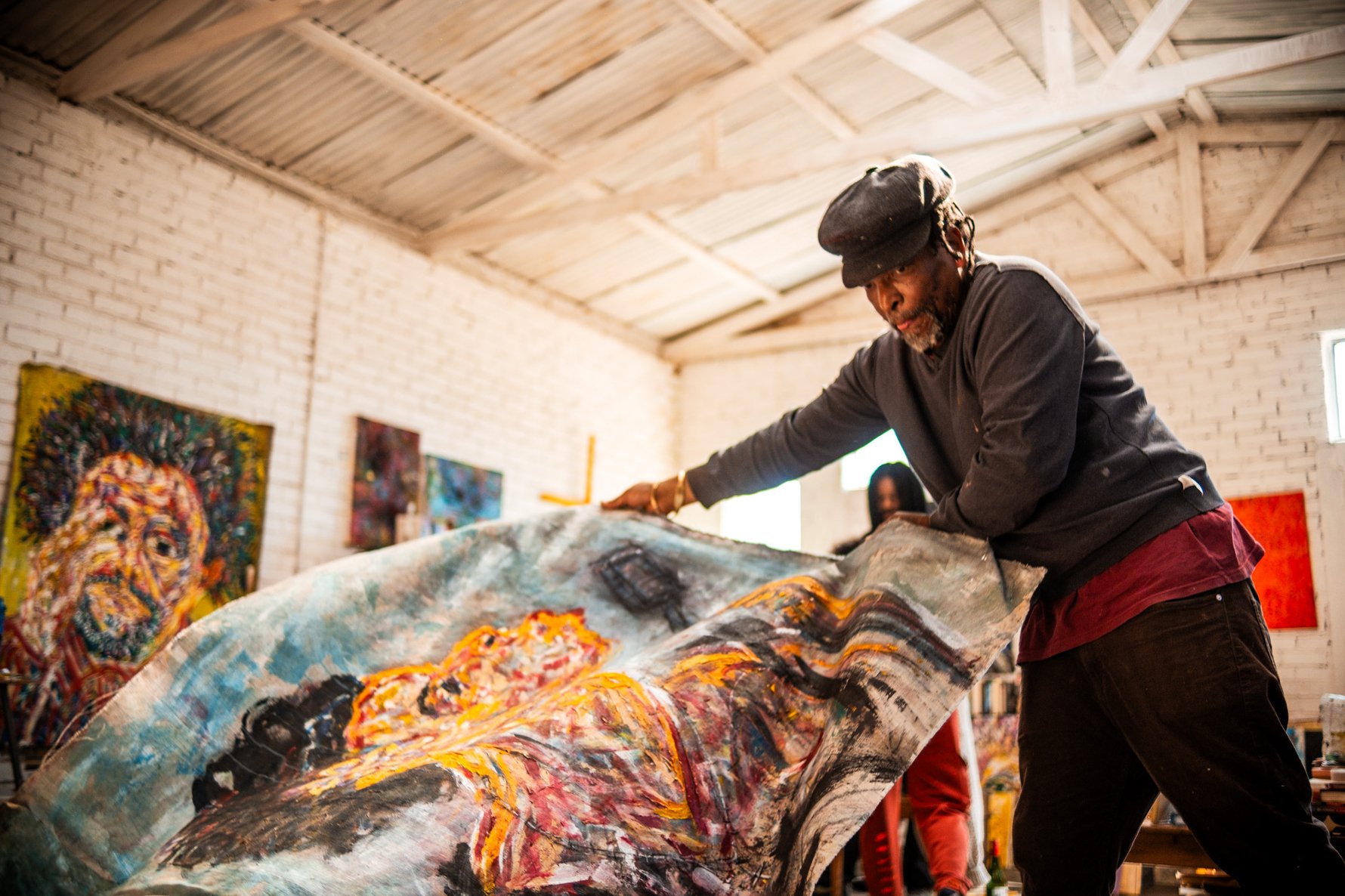
Residuals emerges from a four-year period during which Thokozani Mthiyane observed, sat among, and spoke to people using heroin in Johannesburg's city centre. These encounters were often fleeting; no face would remain the same for long. Mthiyane’s work became a way of sorting through the pains, dreams, and struggles he witnessed – first through writing, then through painting and sculpture – with the process serving as both catharsis and a search for understanding.
Inside the artist's studio
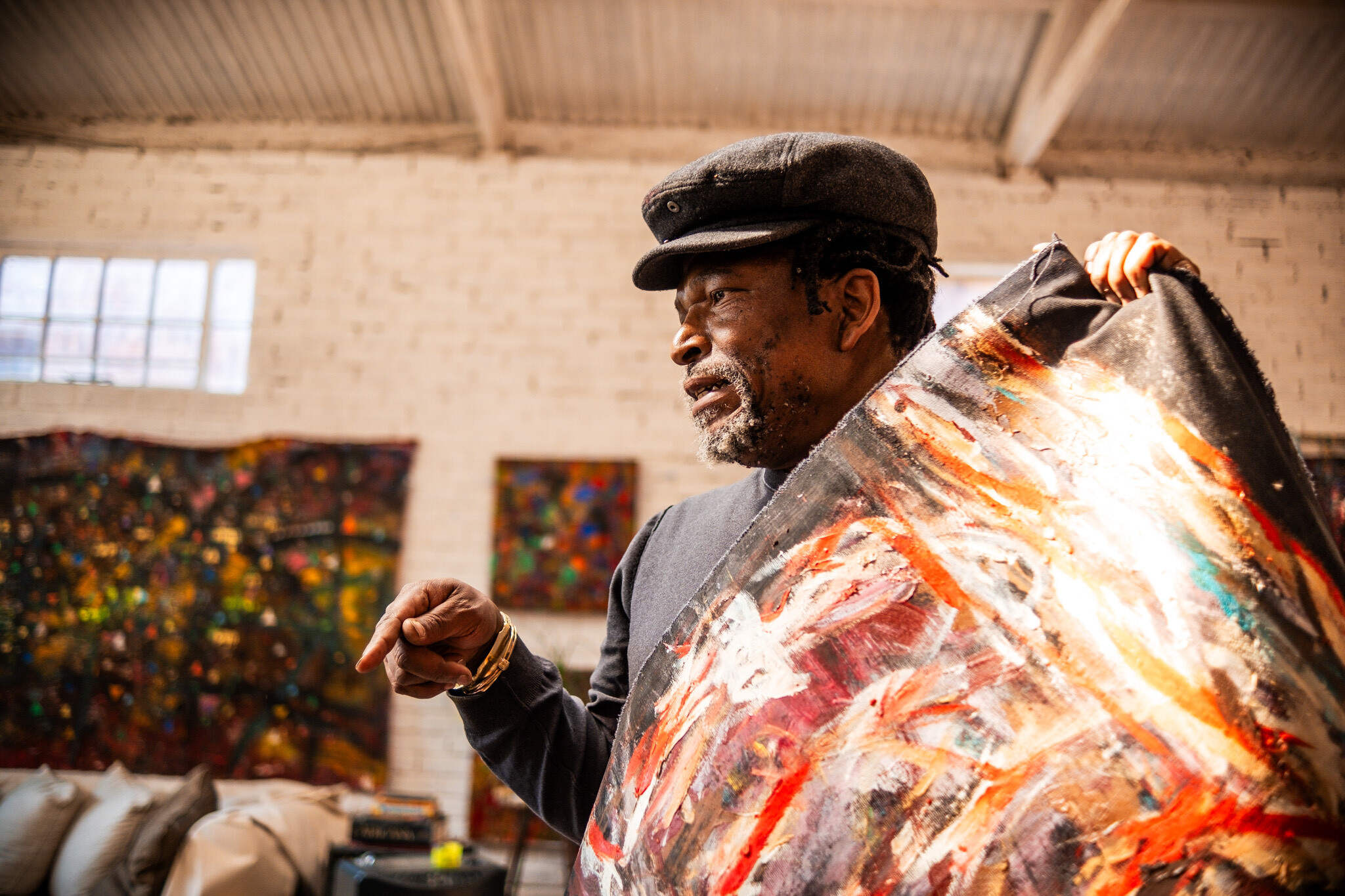
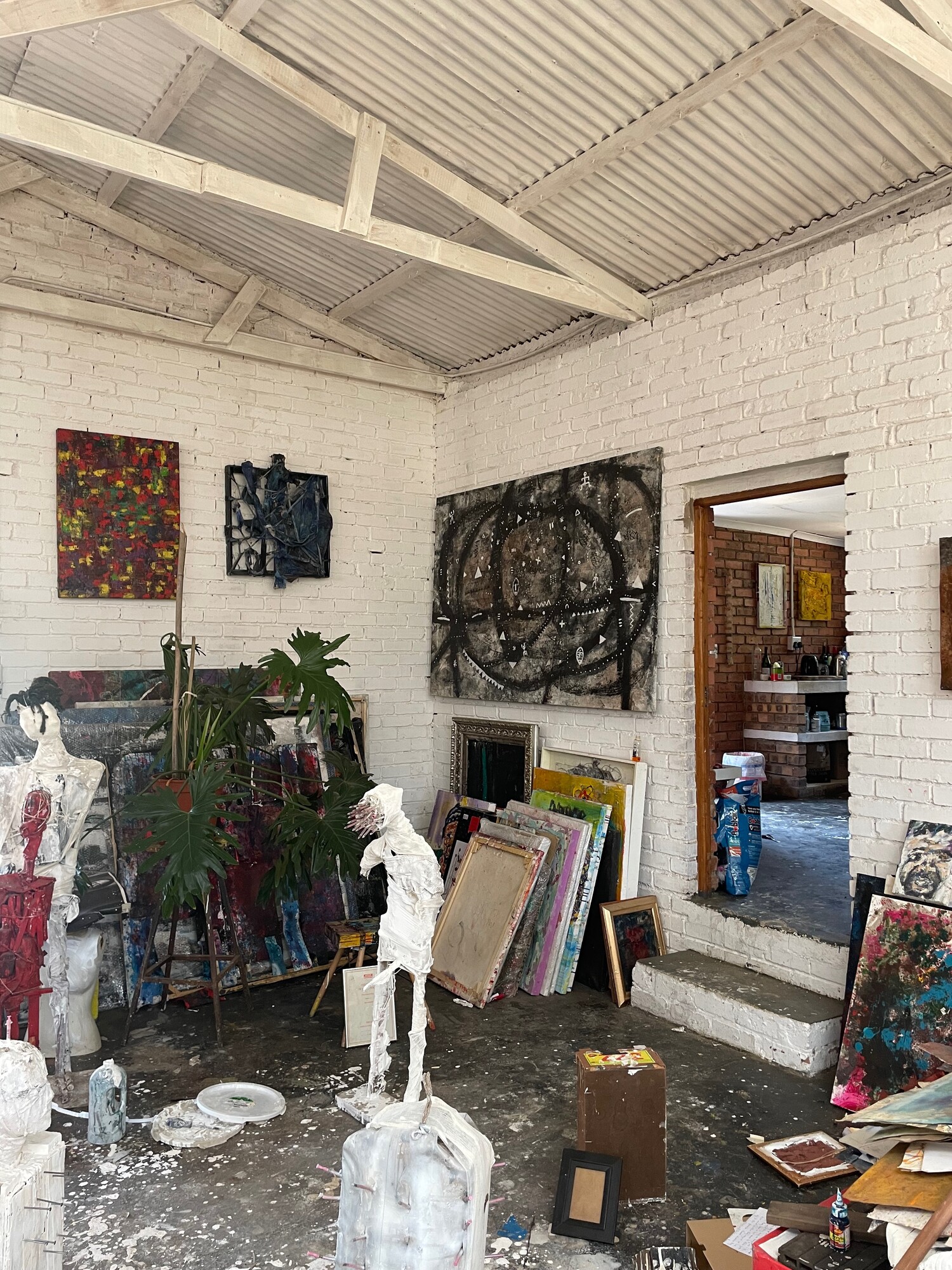
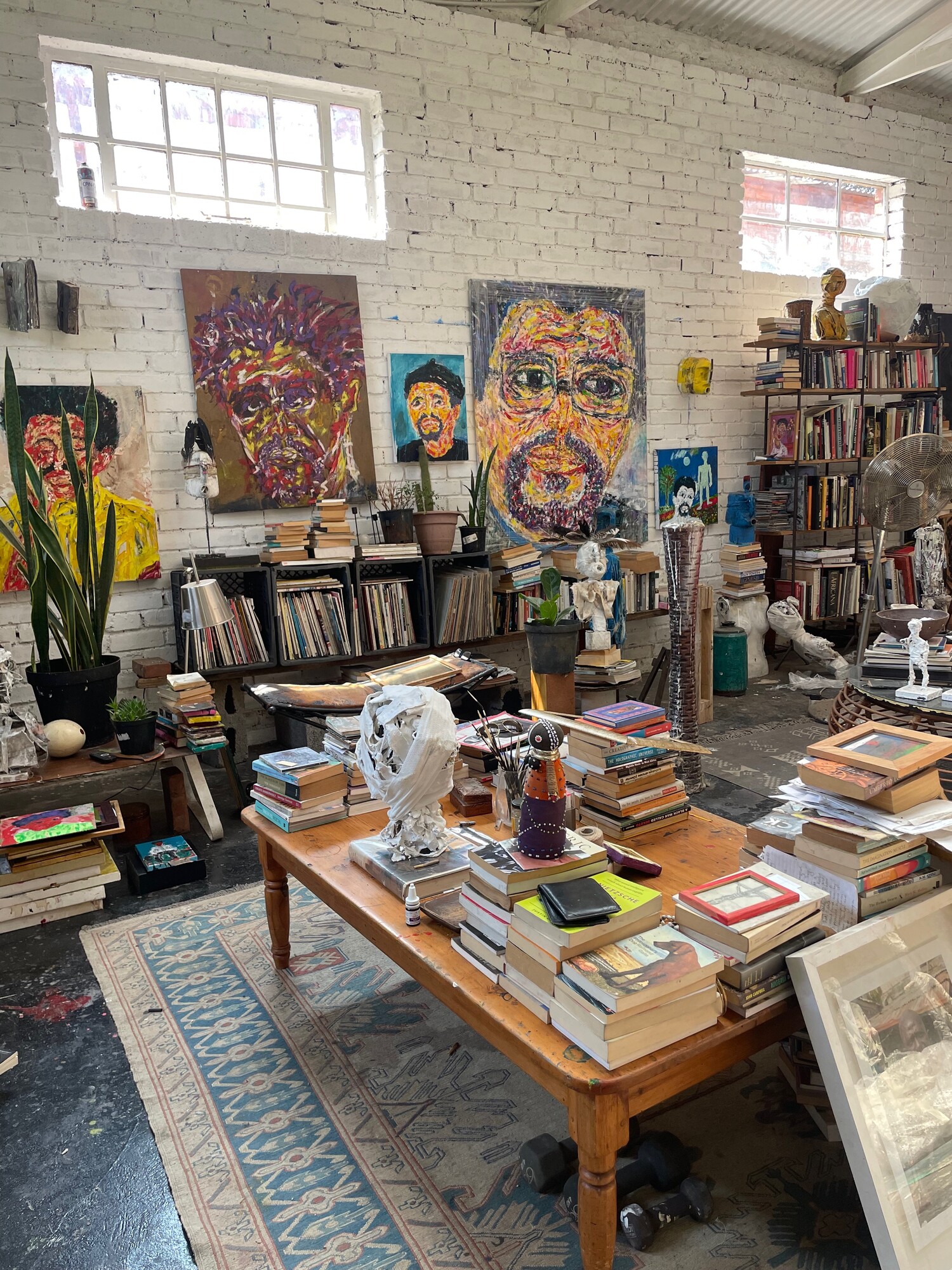
Amid the residential estates and warehouses at 102 Clulee Rd, Linbro Park, a sprawling property houses The Enso Circle: a collection of artist studios, one of which belongs to Mthiyane. He stands at the gate to greet us, paint-splattered trousers hang loosely on his frame, and his step is light, reflecting the lithe strength of his time dancing with the Inzalo Dance Company.Sculptures scatter the stretch of grass and trees, many of which are early iterations of Mthiyane's work, and the morning sun beats the sand-strewn path. At his studio, a pack of dogs winds their way through various half-formed and painted objects, and masks from an earlier exhibition peer down at us as we step inside.
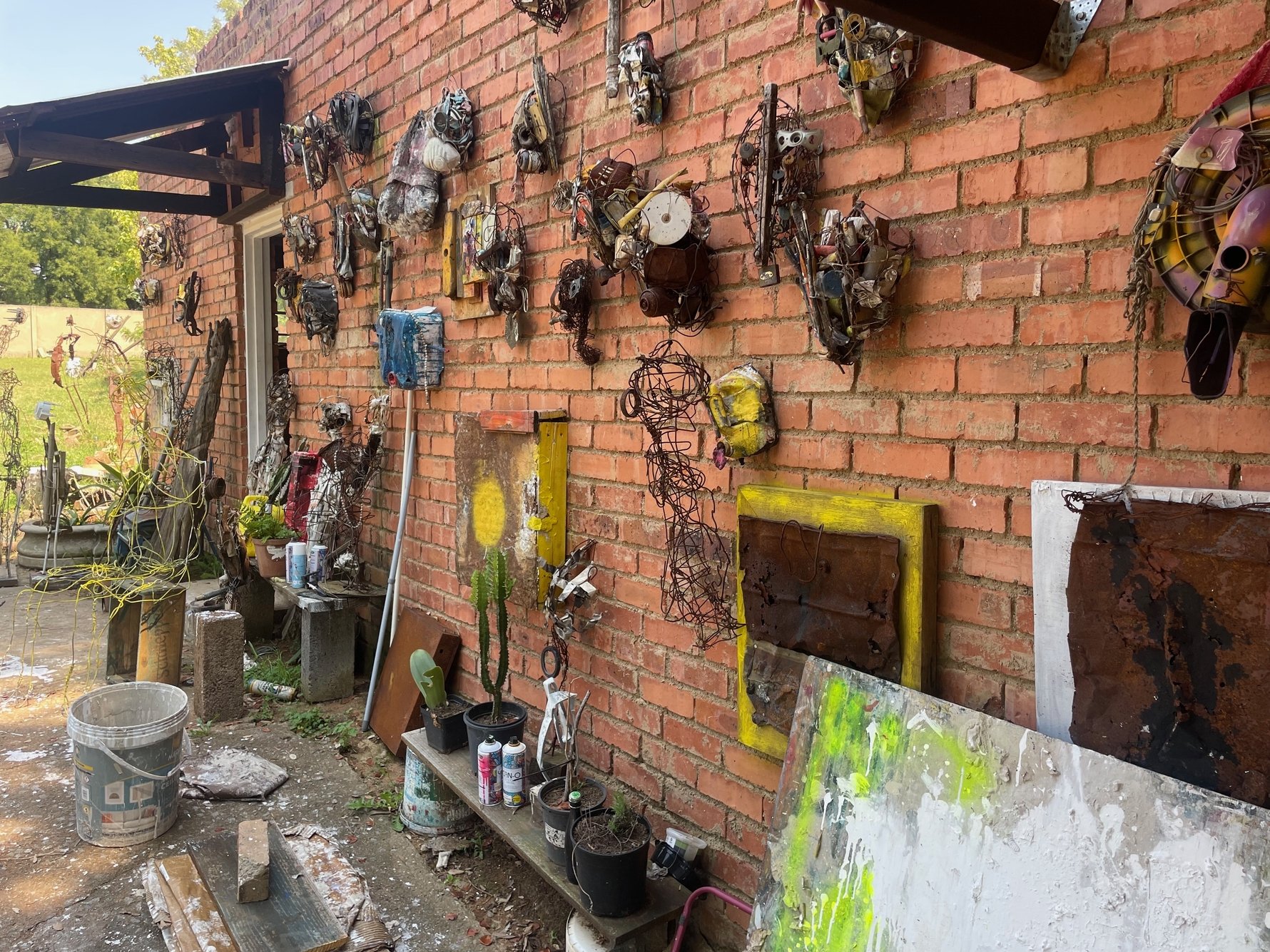
"I’m busy finishing up, wrapping everything to take to the exhibition," Mthiyane says, gesturing at white figures of varying sizes and densely layered paintings. "But I left a few things out – the other stuff in here are things I’m still working on." Piles of books squeeze between the workbenches, tables, canvases, and other objects whose purpose is not immediately clear. "Literature and writing is my first love, before art," Mthiyane tells us before a pause, and a chuckle. "But I could say it the other way round if I wanted to."
Whether it's dancing in the Netherlands, reciting poetry in France, or exhibiting in Nigeria, Mthiyane has an irrepressible urge to create and learn about the world that allows the artist to move between disciplines with seeming ease.
Making sense of the city
For Residuals, Mthiyane works primarily with sculpture and his distinctive oil-finger paintings, both rooted in writing and poetry – and, ultimately, lived experiences. Having moved to Johannesburg in 1999 after years of visiting, he has witnessed the city’s post-apartheid evolution first-hand. In recent years, the growing issue of drug addiction caught his attention.With high youth unemployment and a lack of affordable housing, the promise of a brief escape becomes dangerously alluring. Mthiyane laments how damage caused by addiction extends far beyond individuals, rippling through families and communities. While he does not absolve individuals of blame, he is acutely aware that this is a systemic issue – and that residents of these areas end up carrying its burden.
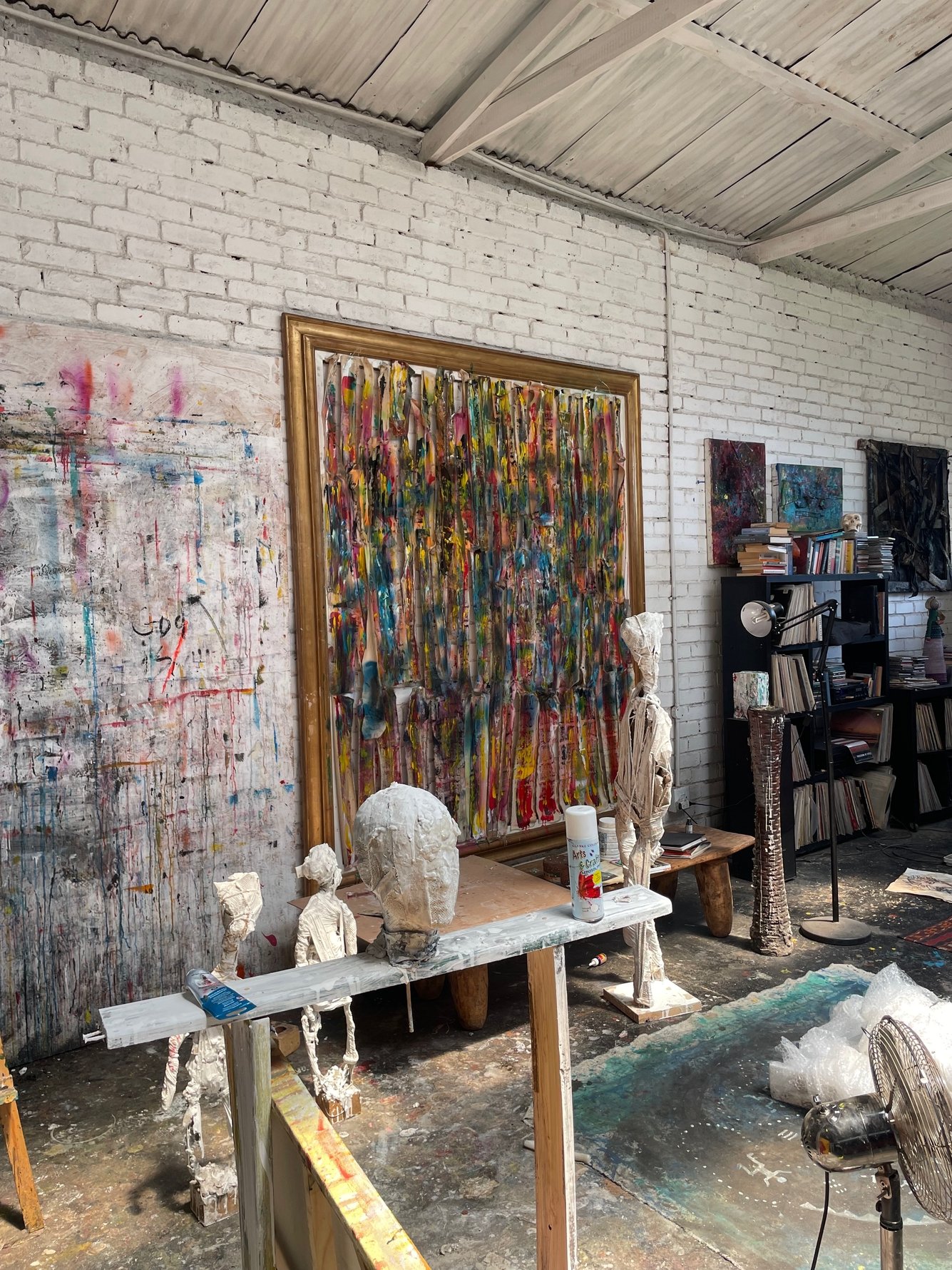
In Your Pocket.
Mthiyane began visiting locations frequented by users, speaking with them and with dealers, slowly learning the rhythms of these spaces. He loosely terms these "interviews", acknowledging how difficult it was to establish continuity as people drifted in and out. He transcribed these fragmented conversations, later transforming the emotions and impressions into abstract portraits.
Alongside the paintings are wire sculptures: white figures, recognisable as people yet broken, disfigured, or otherwise incomplete. Some bear needles in their arms, one has a needle in its head and, though Mthiyane is blunt as he describes seeing someone shoot up in this way after their other blood vessels collapsed, it is quite clear that the scenes he has witnessed have significantly impacted and disturbed him. He tells us they are umkhovu, an isiZulu word referring to a zombie-like creature, with the needles collected over the course of his visits.
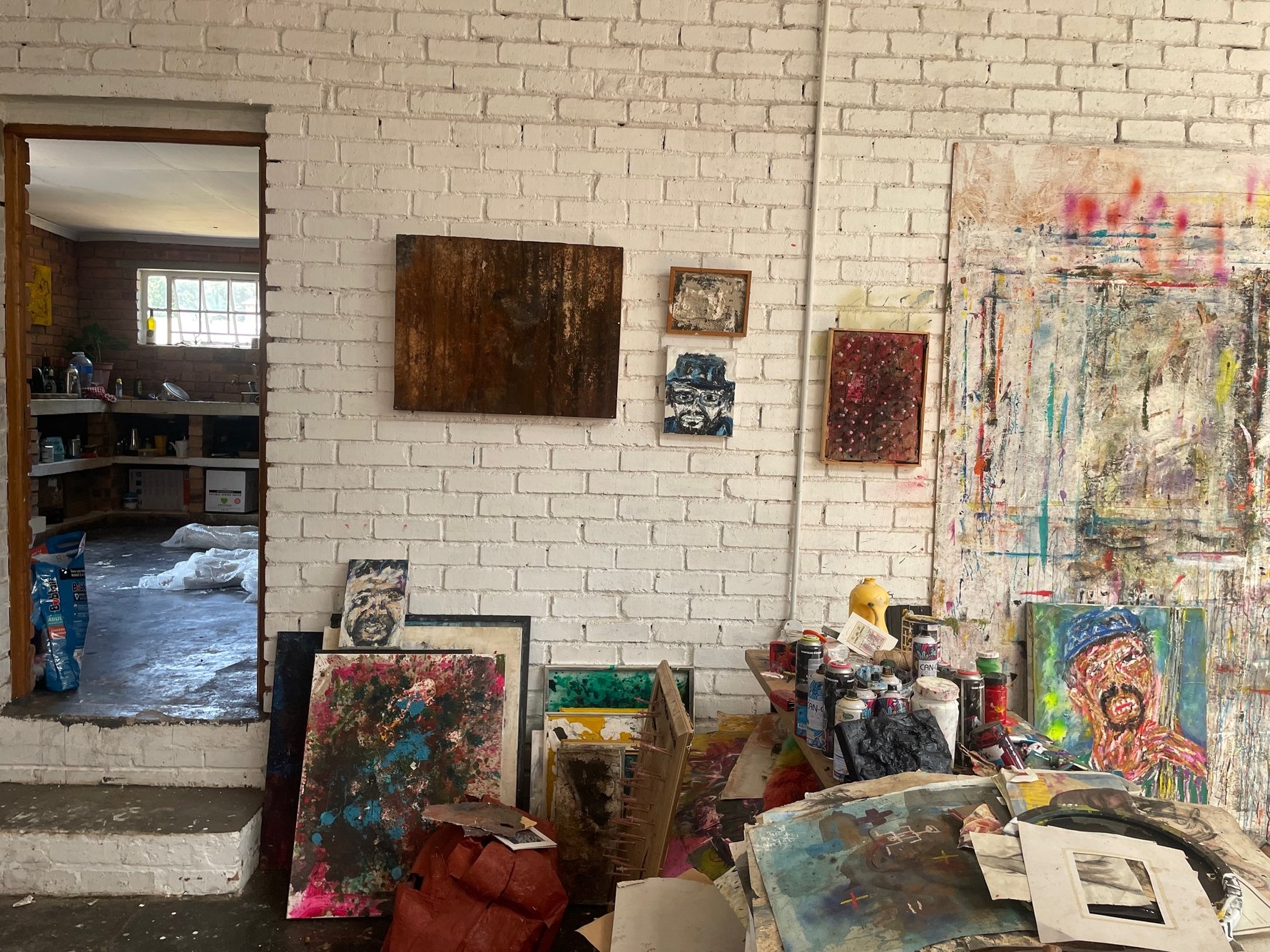
Residuals eschews easy political statements or moral judgements.
In a bold performance he gave at the opening of his exhibition, Mthiyane referenced that boulder, of mythical Sisyphean proportions, carried on the shoulders of young black men, whose masculinity has been distorted and in many ways bent out of shape by the immense burden of history, and the entrapment by that history, and now it's new form of slavery, nyaope addiction.
What struck Mthiyane during his visits then was the persistent search for meaning: for something more than this. His work, too, is an attempt to make meaning from what he sees – and to bring it into existence. The exhibition is the end result, but with Mthiyane's work the meaning lies as much in the finished piece as it does in the process.


Comments