

Our trip to Mncedi Madolo and Mmutla Mashishi's studios in the City Centre takes us to Asisebenze Art Atelier on Plein St (for those who want to schedule a visit to the studios, there is secure parking), a short walk from Asisebenze Art Gallery where their solos are held. Plein St is its usual mid-morning frenzy of people walking between the densely packed stores, going to work and swerving taxis. We start at Mashishi's studio, and after following him up some higgeldy-piggeldy stairs, across a fluorescently lit corridor that seems to expand for ever, and up some more higgeldy-piggeldy stairs, we arrive. All of us a little out of breath as Mashishi laughs, saying that this is his daily exercise.
Materially rooted
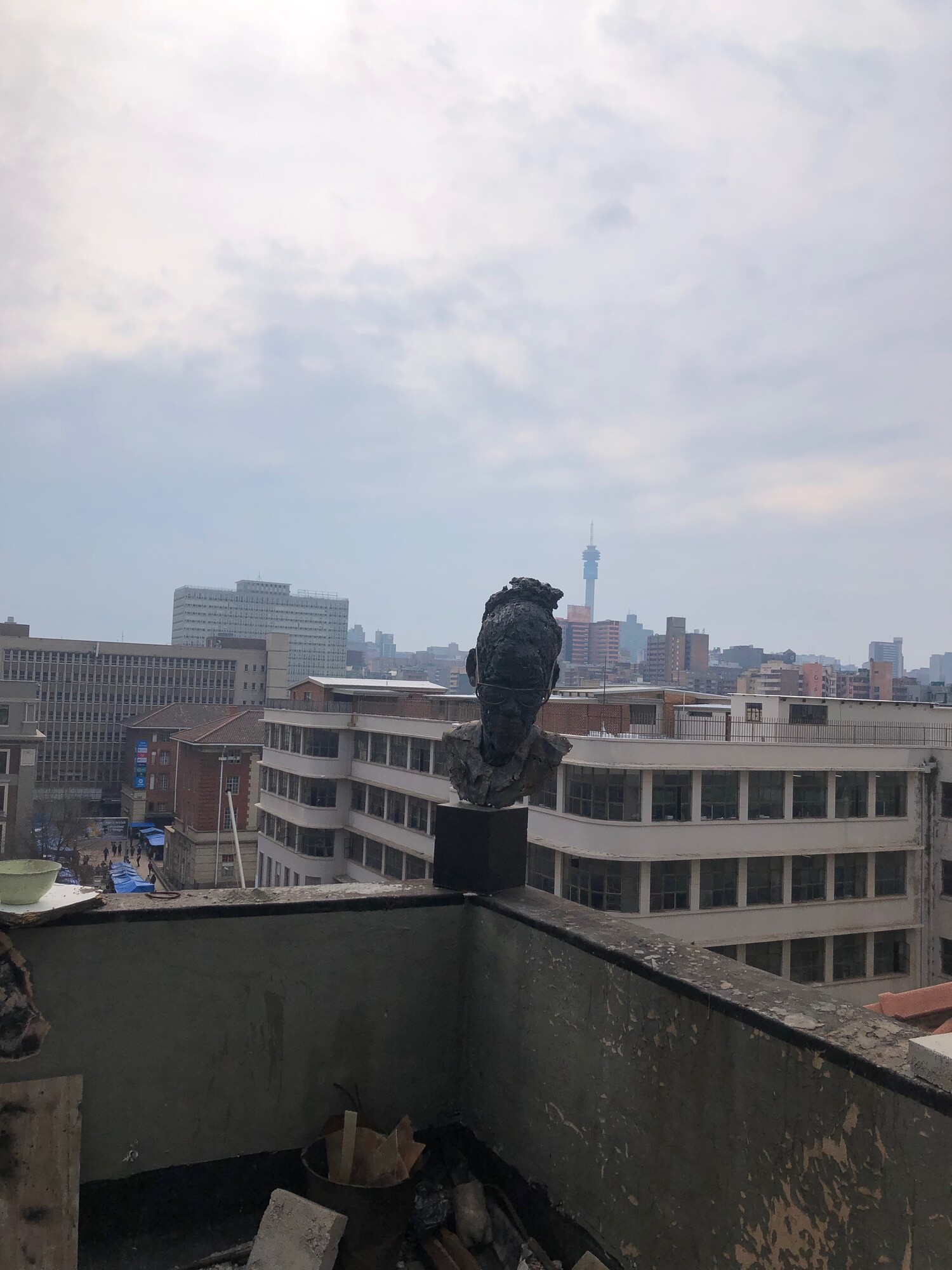
It is one of those studios that is deceptive in how it seems to consist of piles of discarded materials, paint, half-finished canvases and works on paper, but among this a few of Mashishi's finished works lie, and the vision among the clutter becomes apparent. "I don't want to be comfortable here," Mashishi says of the sparse furnishings. A gifted sculptor, Mashishi primarily works with plastic to create sculptures that balance the fine line between roughness, refinement and beauty.For Sepekere: The Nail that Refused to Break, Mashishi has focused on the common nail. This is what Sepekere, a Sepedi word that originates from the Afrikaans spyker, means. It is an object and symbol that we are all familiar with, yet in Mashishi's worn hands, it is made to carry and hold even more weight, as he carefully draws out the beauty and meaning within it.
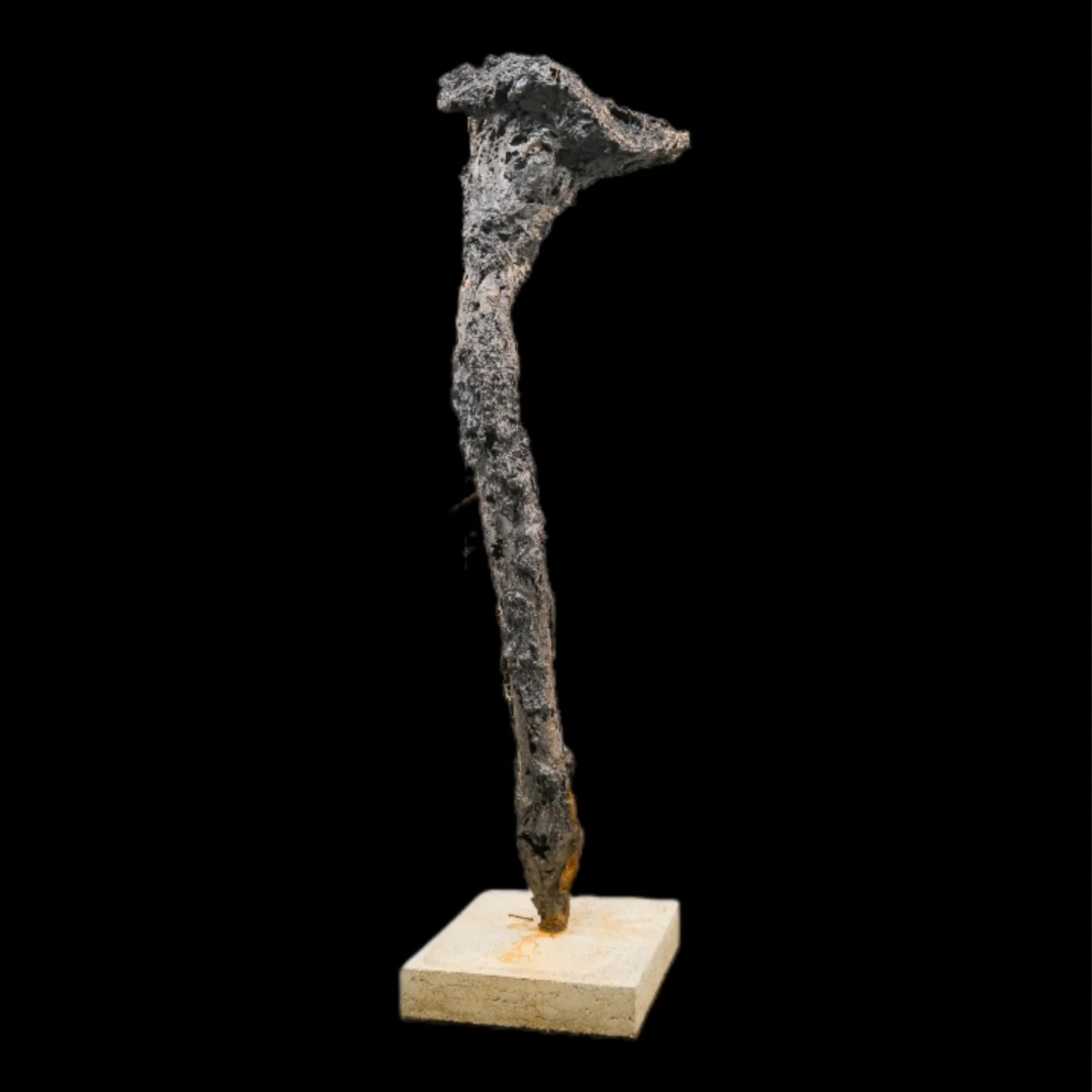
"It's about pain," Mashishi says, holding up a nail. "Look at that building," he points to the Telkom Tower, emerging above the surrounding buildings. "It's a nail." And it is, piercing the ground, breaking into it and embedding itself within it, and jutting out to then pierce the sky. And we could see it then, his vision to create his own nail that size, to see it rising upwards from the ground.
We then turn our attention towards a pile of rusting nails gathered in a circle and the story behind Sepekere unfolds. It starts in Mashishi's youth with a pain that is familiar to most of us, that of standing on a nail and having it roughly rupture the flesh under your foot. And with it there is a betrayal too: nails are meant to be helpful, are they not? Sure, they are a violent object, having to be hit with force to pierce something, but this is not meant to be us.
Since then, despite his success now as a sculptor, Mashishi's life has not been easy, and he jokes that at times pain is almost like a friend, always there. As he collected scrap material for his projects he would pick up nails too, finding within their simplicity a universal symbol for pain, in its many forms. And as he speaks it is hard not to feel like he is a zen master, philosophising about the merits of pain's existence and that we feel it. It sounds like he could almost handle anything you threw at him, that no matter the pain he would find a way to ground himself in his art, that is except for the Joburg cold as he laments about how, now that he is in his fifties, his body can't function with it.
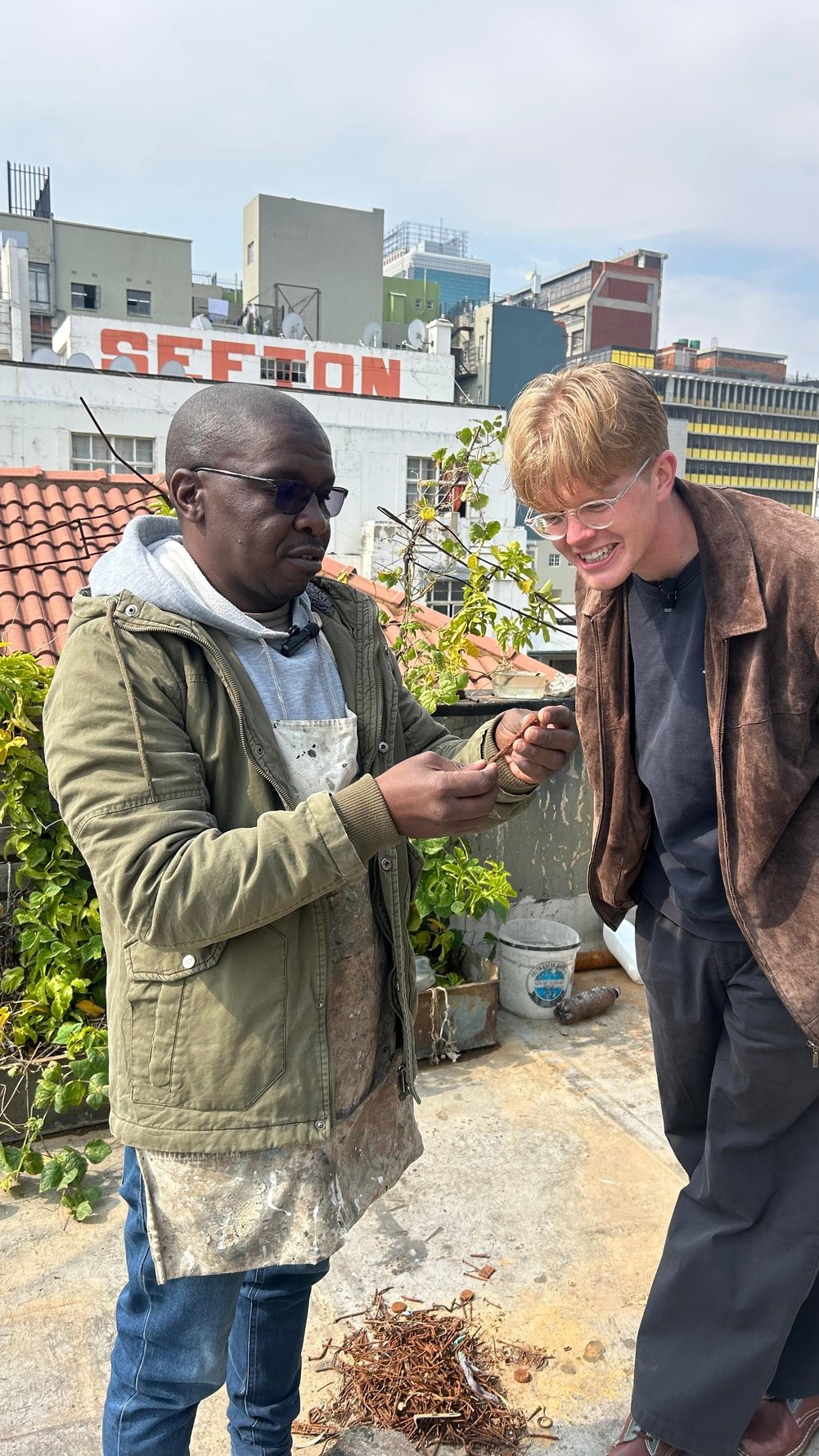
Photo: Johannesburg in Your Pocket.
See, for Mashishi, while the nail inflicts pain, and endures it, it also holds things together. It persists over time. And Sepekere is as much about surviving pain and the transmogrification of it as it is about the experience of pain. Delicate tissue paper and other materials are woven into his work. And it is this tension of fragility, survival and how we cope with pain that Mashishi explores. It is something universal, an experience that binds us all together, all with our own hurts and aches that are nailed into us at odd angles, and yet somehow we keep going. Within this universality, Mashishi's exhibition is also deeply personal, with coded messages scratched onto his sculptures. Messages of his own pain, messages to his family or about them, pots that point to the care of his grandmother when he was young.
This is the beauty of Sepekere. The works are broken yet complete, hard and soft, overt and cryptic. They are like all our pains. And they transcend them. With Mashishi, the nails and scraps don't just survive time, they become something else.
An expansive practice
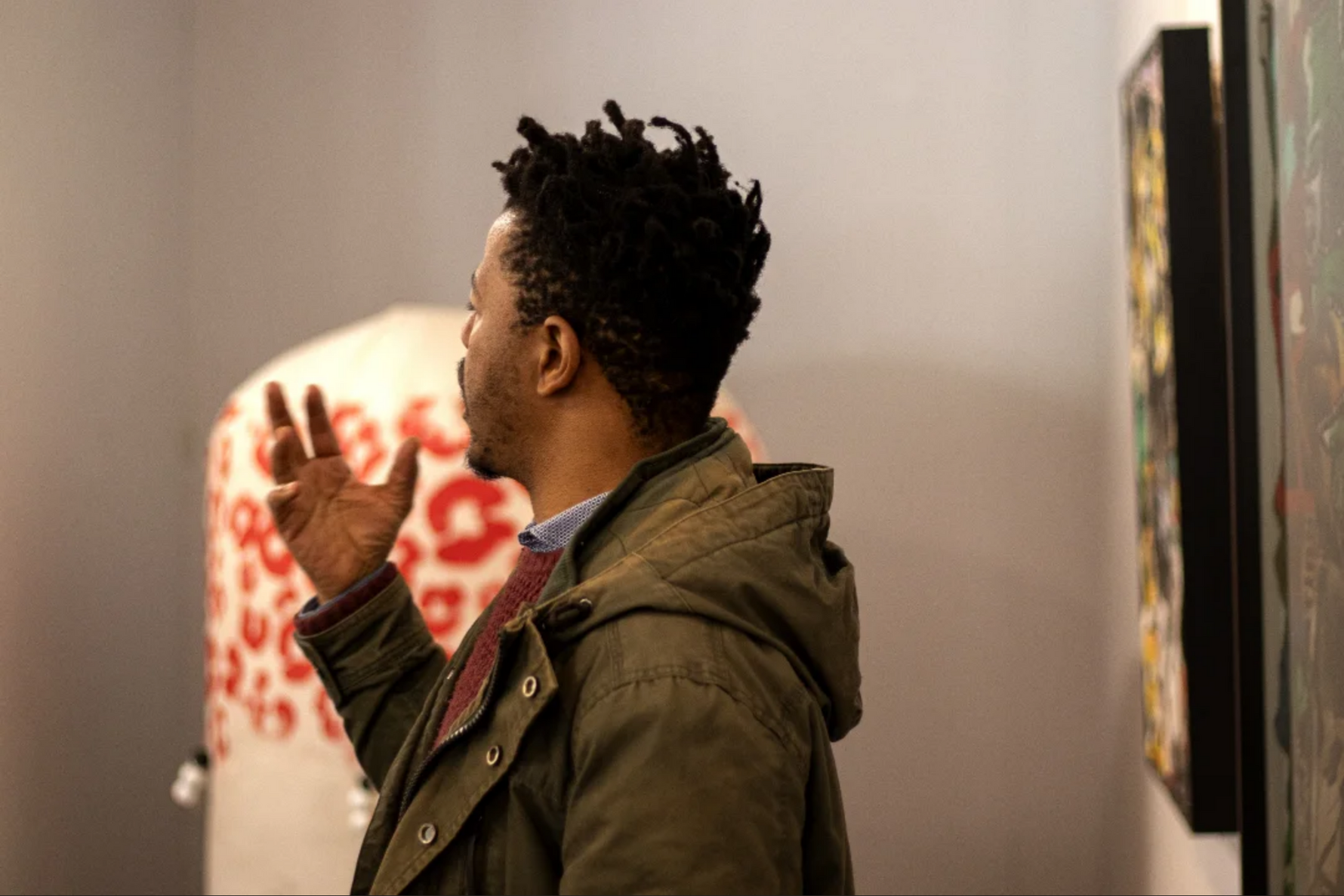
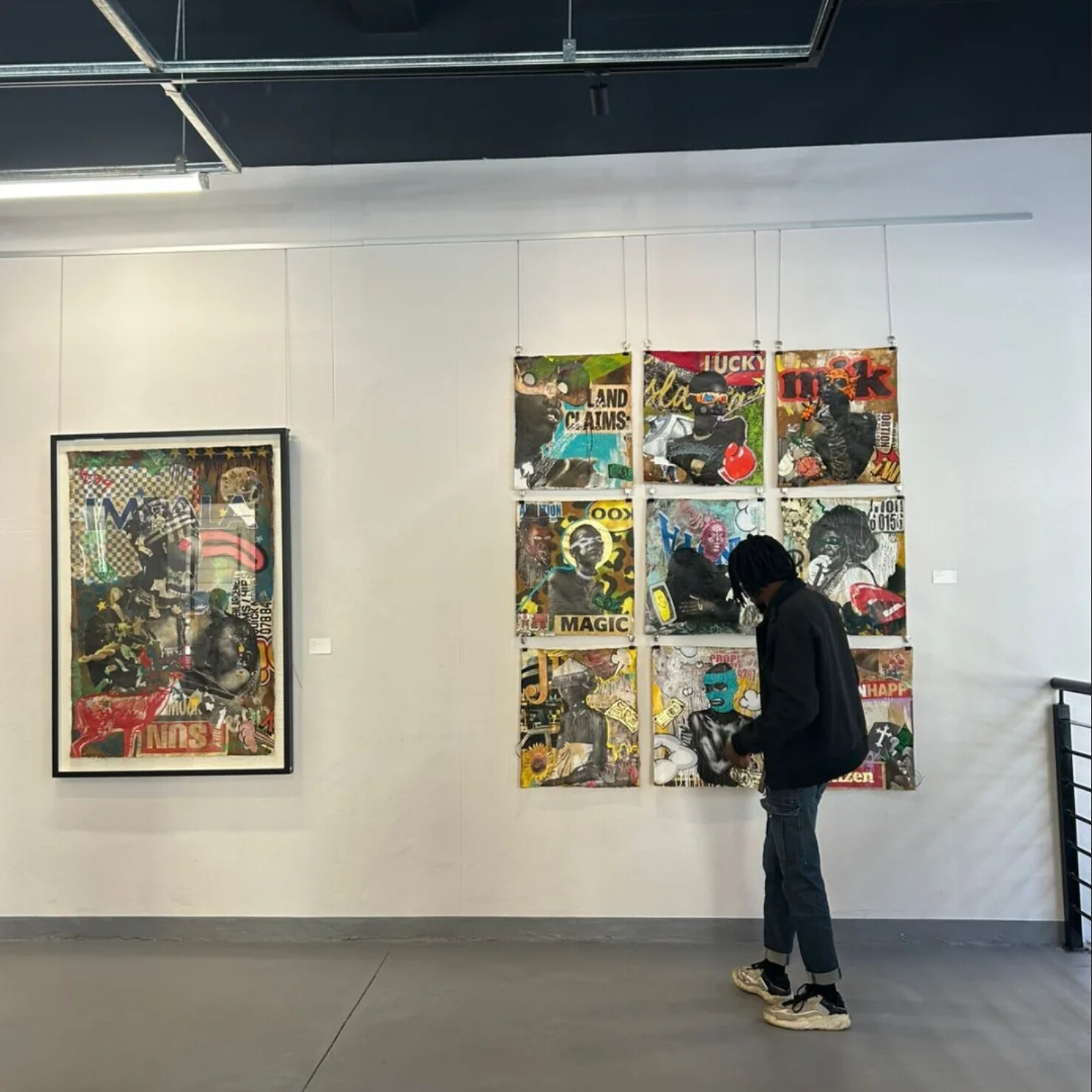
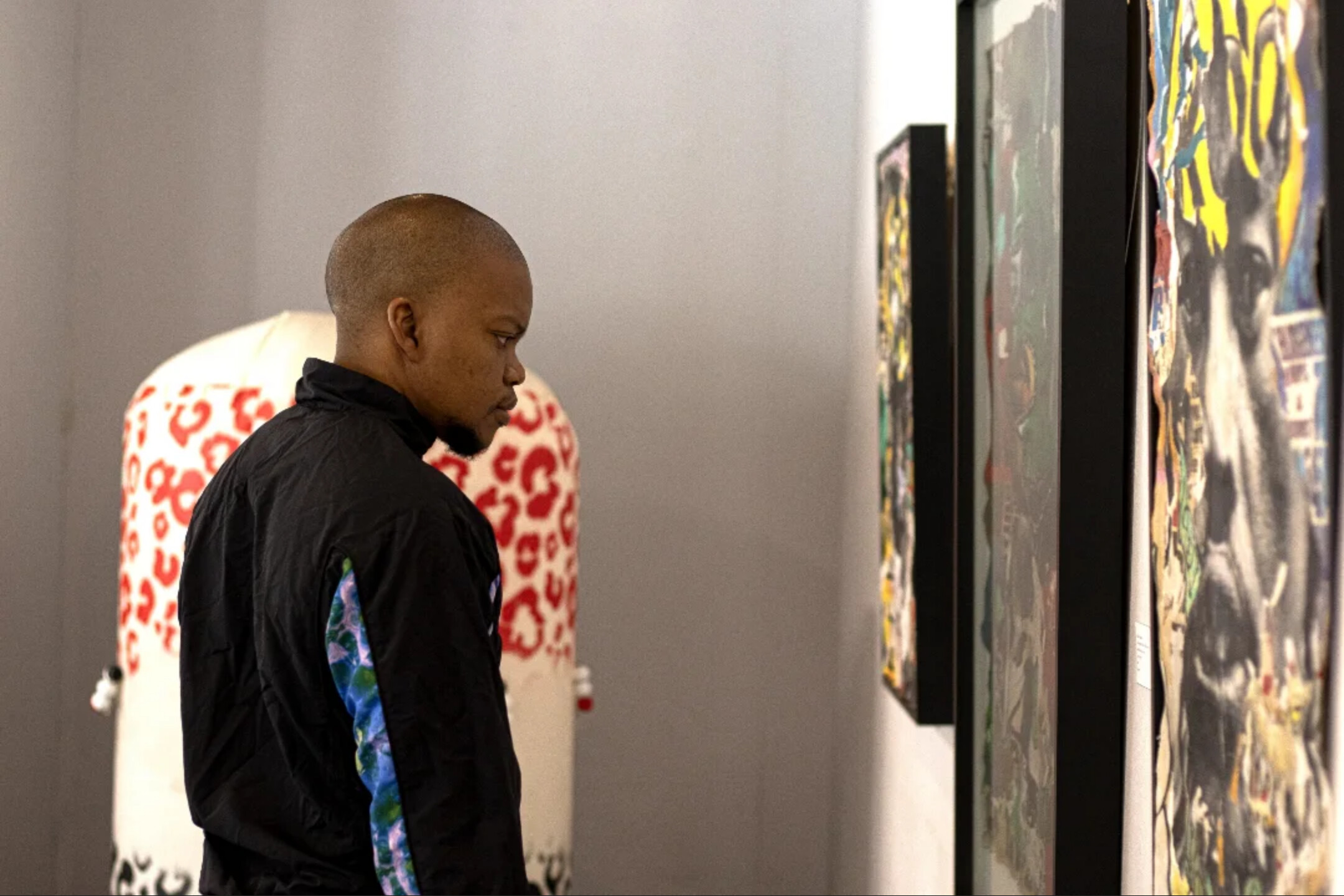
If Mashishi's focus is rooted in the material and expands from there, Madolo's is how to go from the metaphysical into the tangible. Working across paint, collage and sculpture, Madolo creates works that are densely layered in their materials and in their symbols. A newspaper headline or advert, the debris of modern urban life, appears alongside references to historic wars, language and spiritual practices.
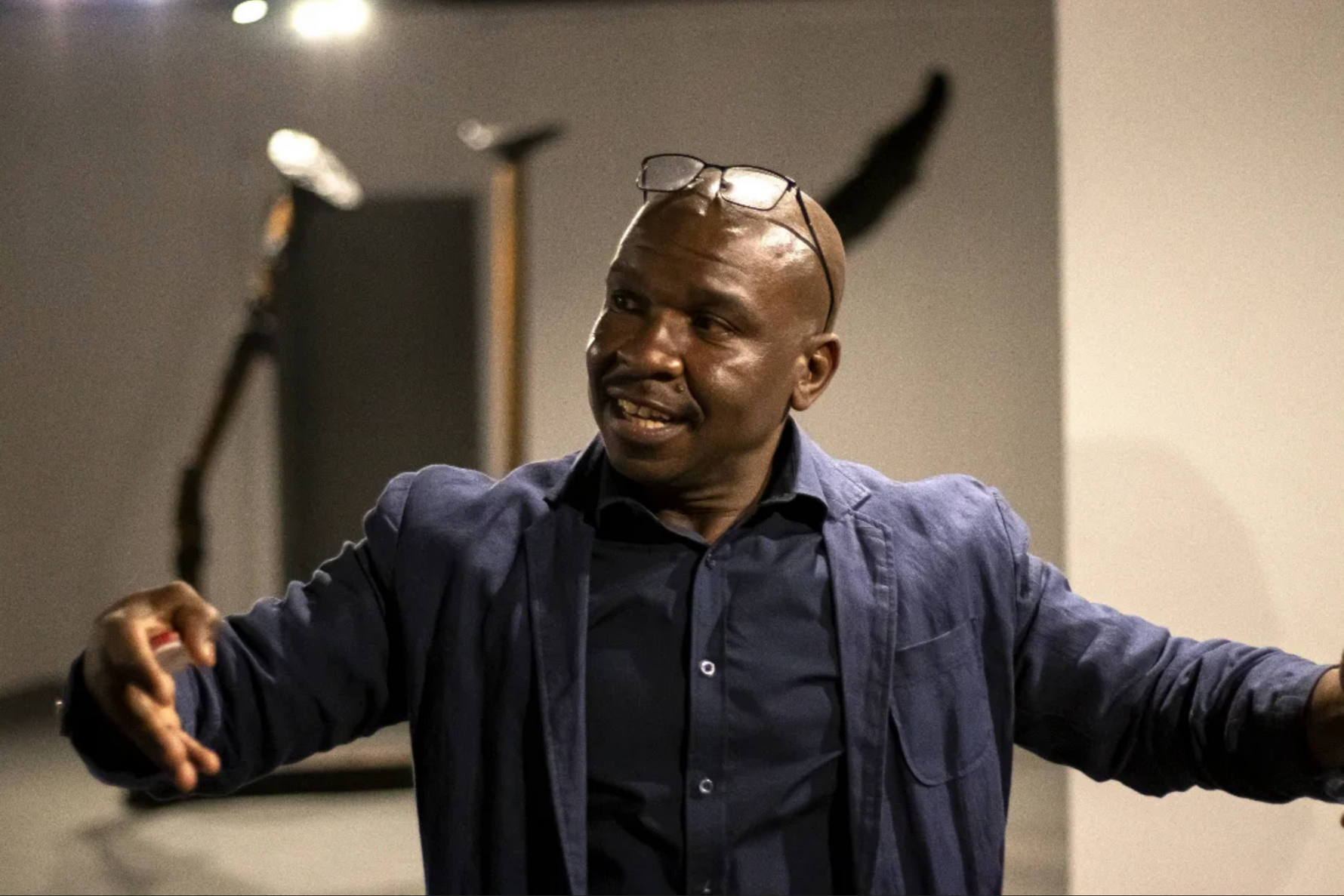
Madolo's studio is vast and expansive, with a gutted industrial look to it that has been given new life by his works in progress, research and collection of indoor plants. Madolo is barefoot when he greets us and there is a lithe grace to the way he moves around his studio. We start with asking why the kuomboka ceremony came to underpin his work. His voice soars across the room as he tells us how one of his best friends moved back to Zambia, and realised how little he knew of her culture and background. As they spoke more about this, he came to learn about kuomboka, a ceremony and yearly shift that moves with the flood plains. Rather than trying to control the water, the people move with it.
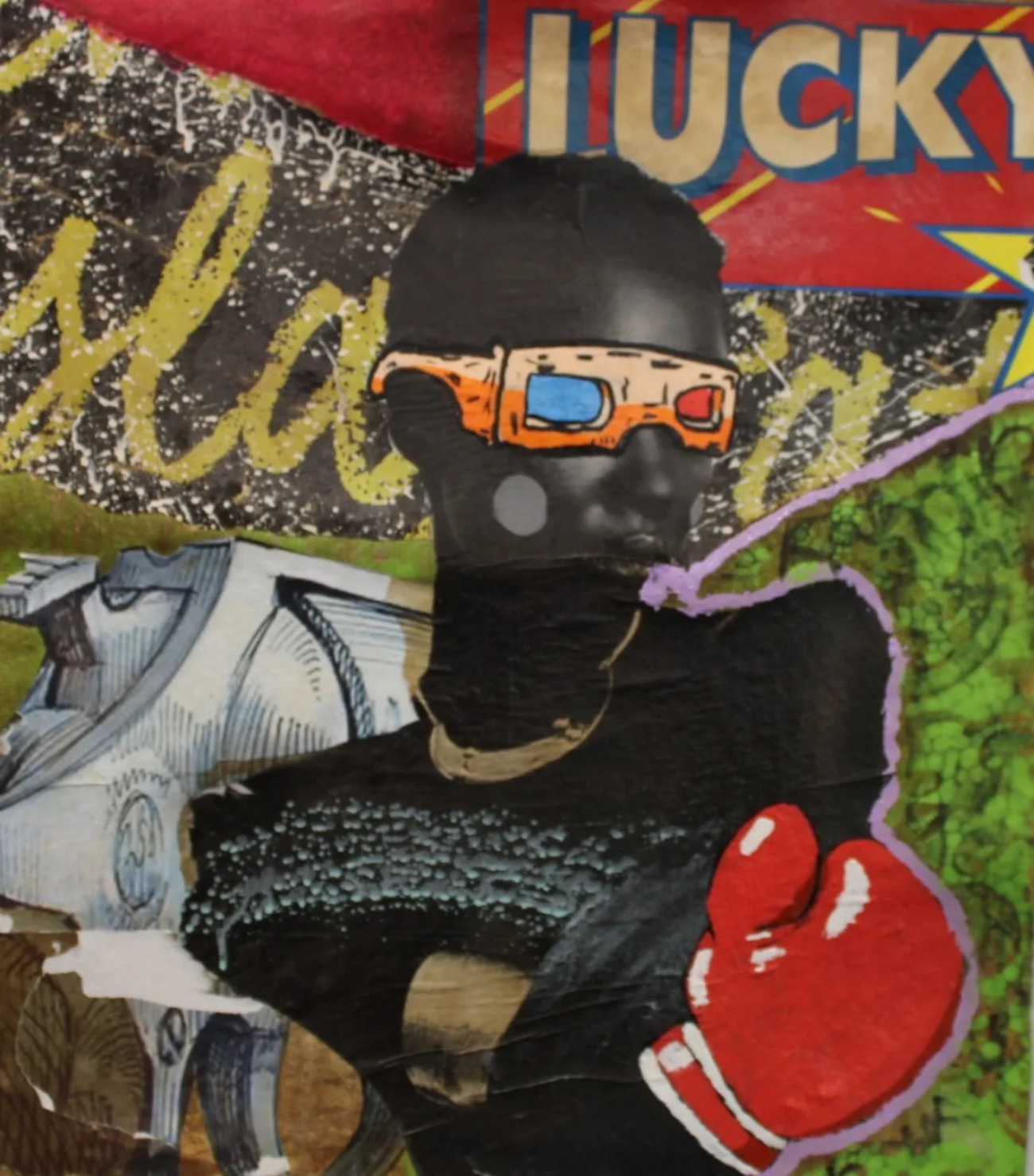
It was not the first thing that prompted Madolo's interest in the different forms of African spirituality and how they have changed over time, but it prompted a deeper dive into what African spirituality looks like and what it means today in urban settings. His works on show display just a fraction of this research, and often obfuscate it for the viewer, forcing us to make our own considerations and judgements. But in his studio one gets a sense of the broad vision underpinning this exhibition.
We start at the present. A 3D printed hand holding a seed pod hanging from a thread of a string. The future is to the left of us in his studio. Sculptures and other works in progress that huddle between his studio's concrete pillars. But we are going into the past. Following the string back from the present, to how traditional Xhosa garments have evolved, the battles of the Hundred Years War, to figures such as Tiyo Soga and Saartjie Baartman, whose stories, Madolo stresses, are just the ones that we have had a chance to learn about in history, with there being thousands of others that we have forgotten. To the early trade between Africa and Asia and the first smelting sites in West Africa that are likely the oldest in the world. The thread branches and twists, to different regions of space and time, and it is almost daunting to think how one moves from these explorations of the past and different cosmologies back into the present.
Yet Madolo does this, with a lucid emancipatory goal for his art and cultural work, something which he says is a delicate balance between the commercial art world. The works on show for Kuomboka certainly suggest at his broader work, and make a compelling case for finding a more spiritual and pure relation with water. One that is not rooted in control, extraction and exploitation. It will not give you easy answers. You are forced to look. With Madolo saying this reflects how spiritual practices get blurred and transformed in urban settings. Much like its subject matter, Kuomboka stays just beyond understanding.
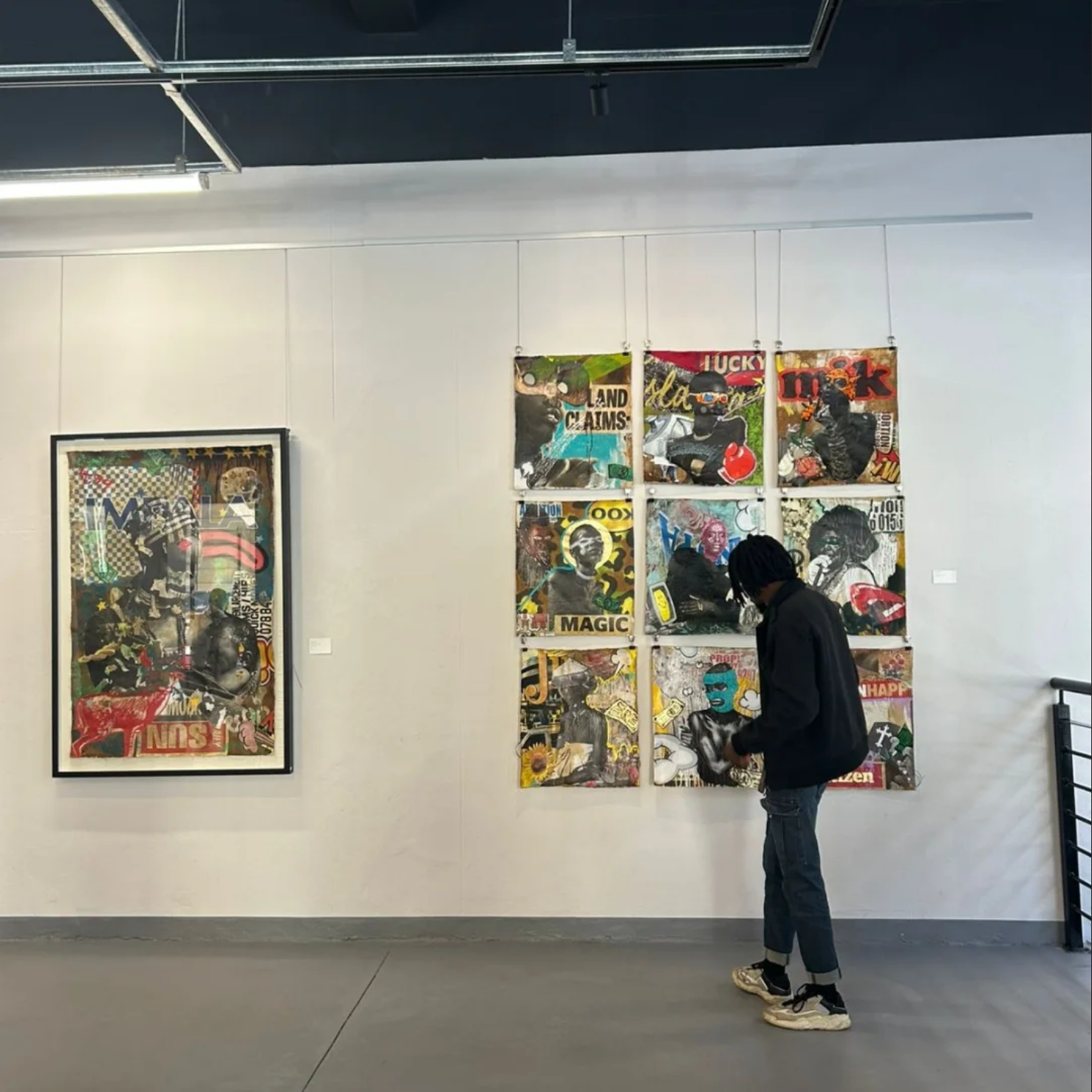
What connects Madolo and Mashishi is their shared refusal to offer easily consumable answers. Where Kuomboka washes over the viewer with expansive histories that deliberately stay just beyond understanding, Sepekere pierces into the visceral reality of endurance. One flows outward to encompass the obscured spiritual layers of the city, while the other drives inward to hold fast the fragile experiences of survival. Together, their materially dense practices present a profound meditation on how we navigate the weight of memory and the pressures of the present.
Both Kuomboka: Trust the Water and Sepekere: The Nail that Refused to Break are currently on view at Asisebenze Art Gallery, 34 Loveday Street in Marshalltown. Head down to experience these vital encounters for yourself before they close on Sat, Jun 13.


Comments