

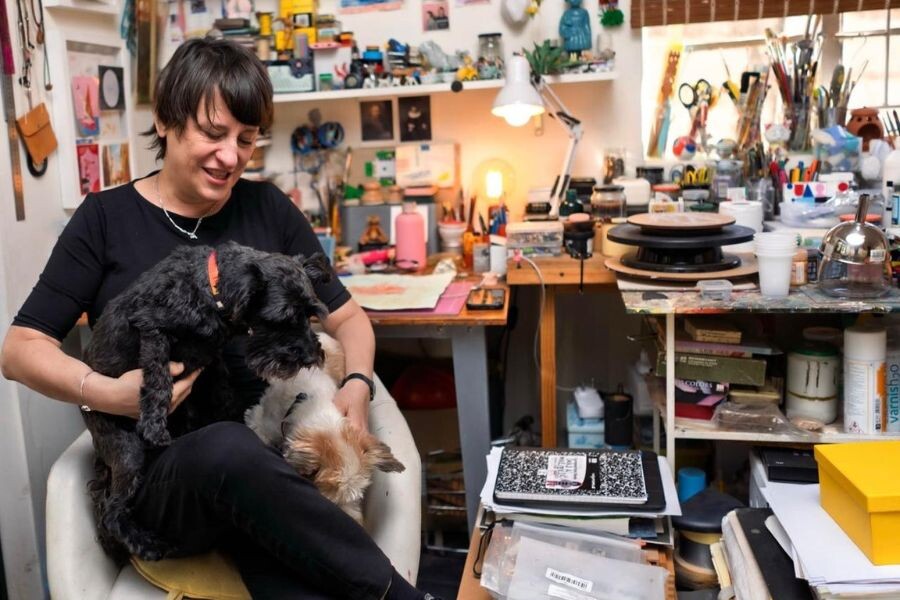
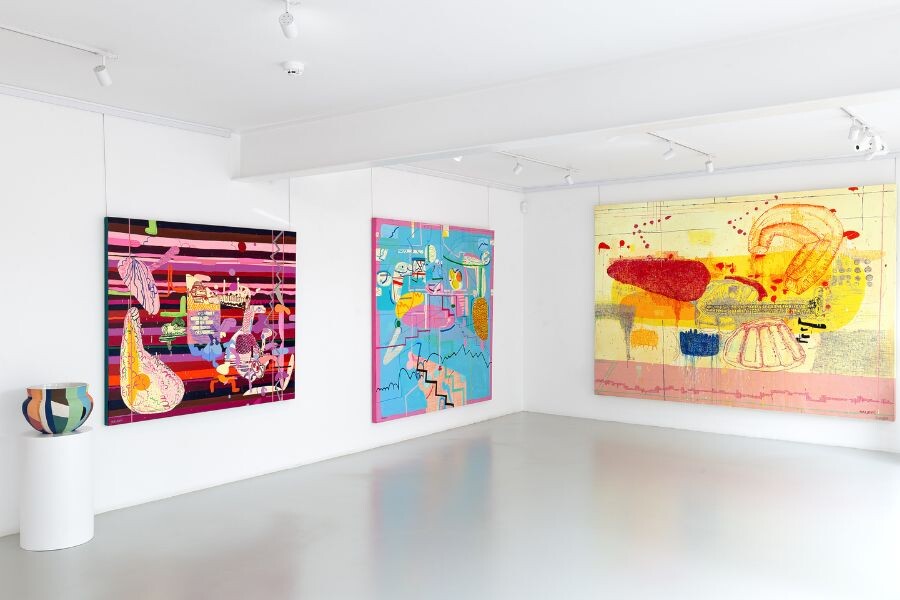
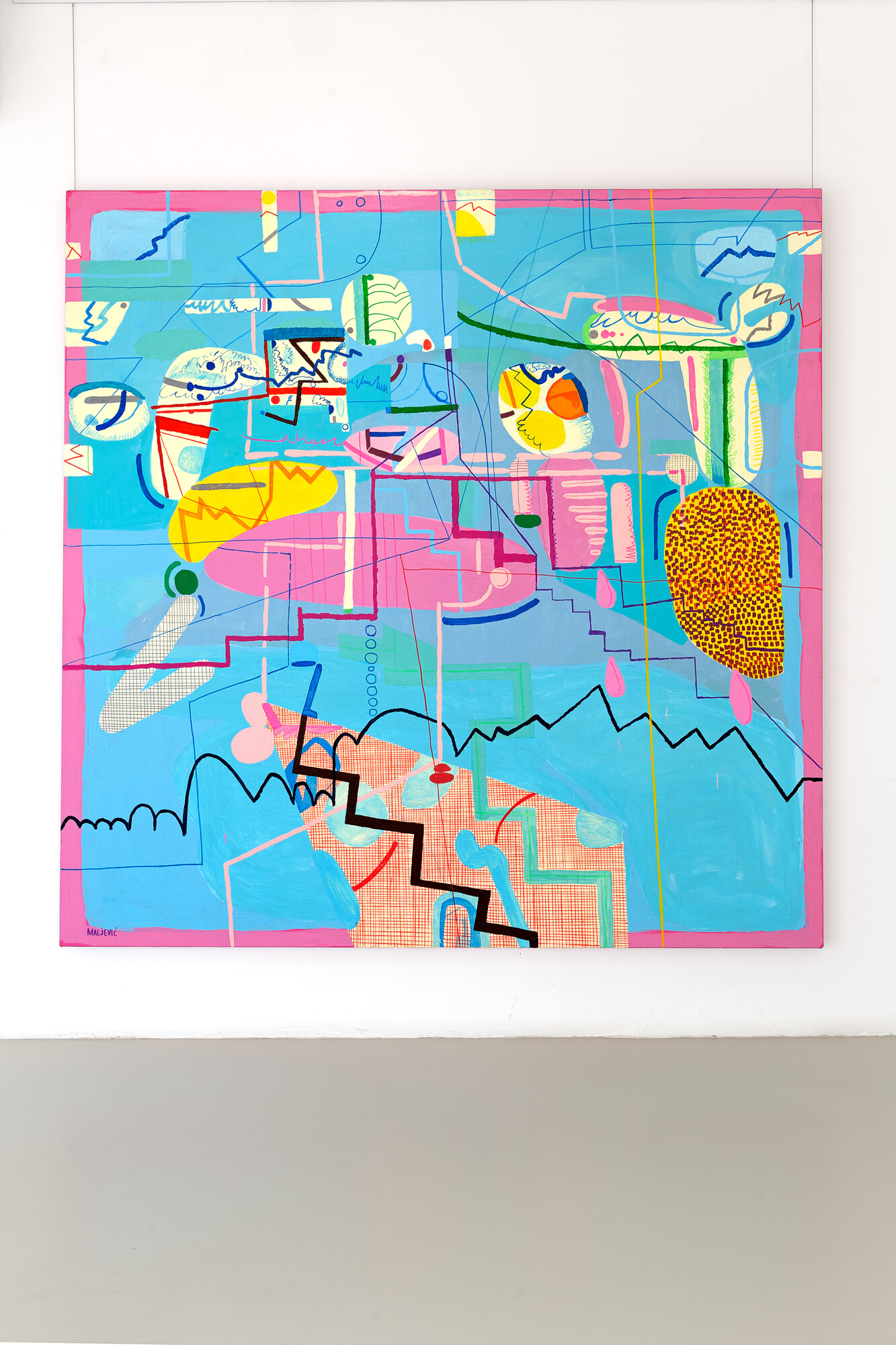
Maljević’s solo, Colour Before Image, shows at 223 Jan Smuts Creative Hub until end May 2026. This precedes a bigger solo show at the gallery later this year.
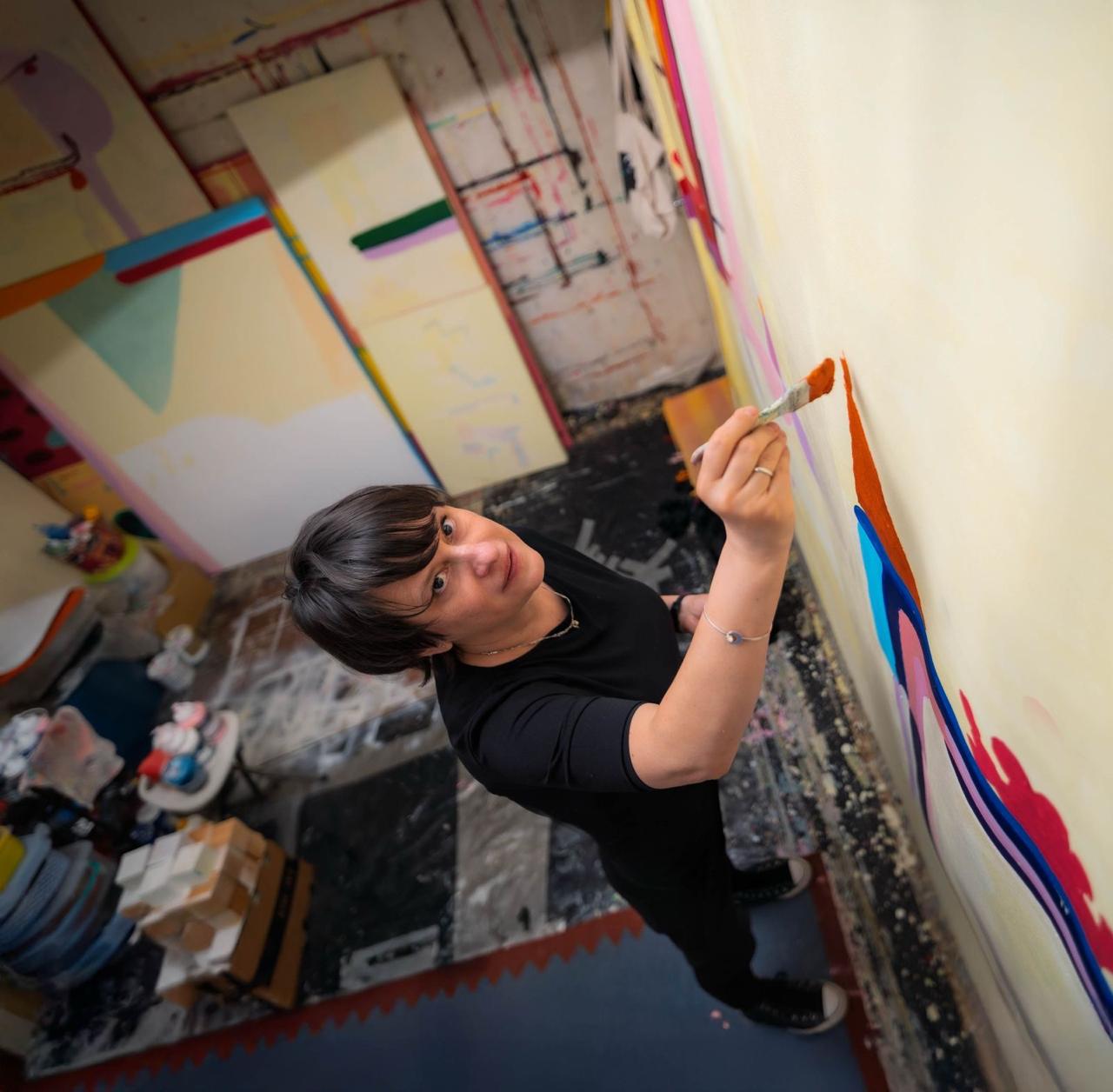
Growing up in communist-era Yugoslavia, Maljević watched as large-scale change coursed through the nation. “During the [former Yugoslavian president] Tito era, when the 1980s felt sheltered and culturally rich, my childhood was shaped by music, concerts through my father’s work and films that left a strong impression, while my mother worked in early childhood education. I first studied design before continuing at the Faculty of Fine Arts in Belgrade, where student life revolved around art, discussion and long nights.”
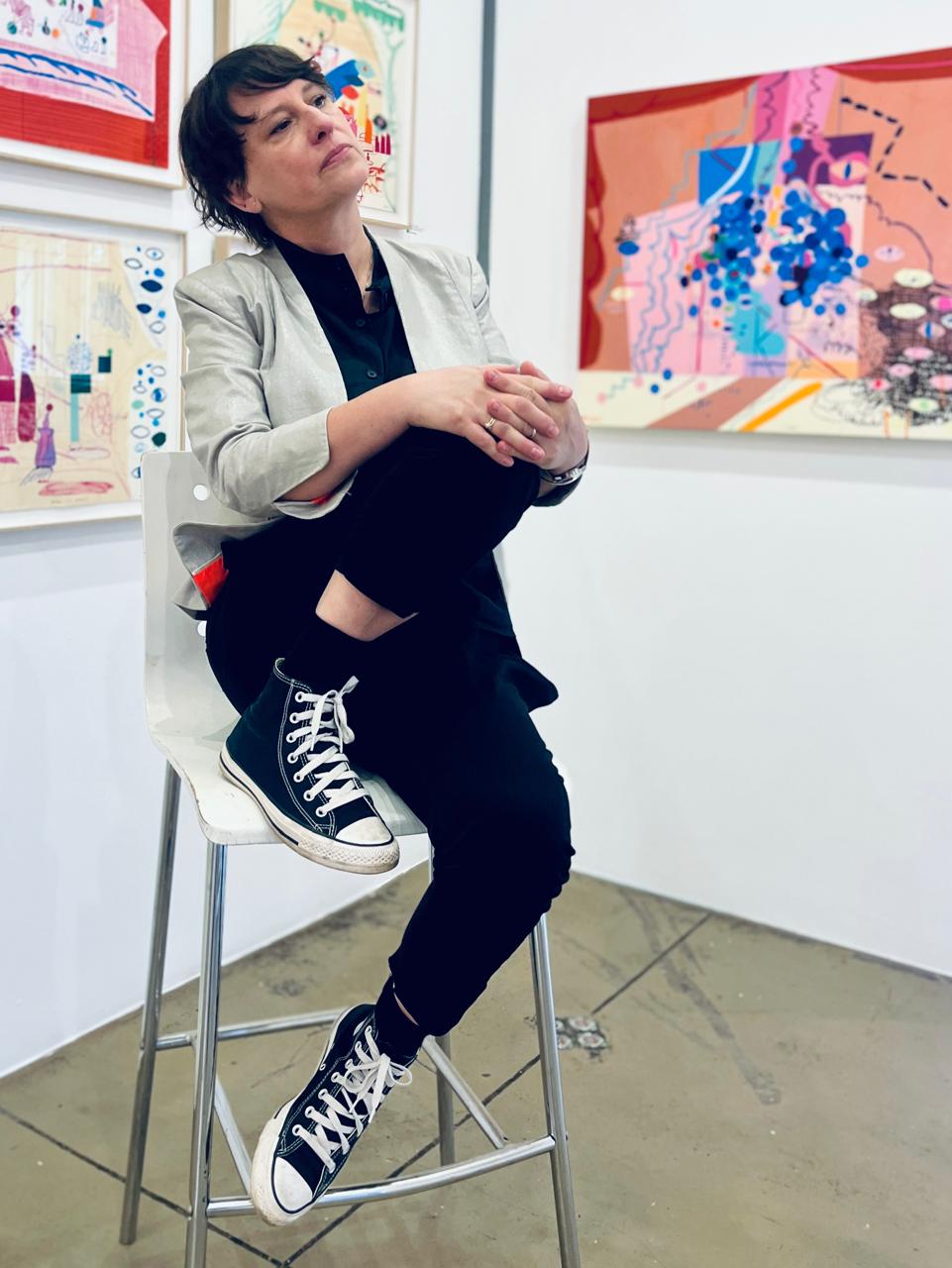
Landing in Johannesburg after a period of upheaval in her home country, Maljević’s practice has become an ongoing conversation – with herself, her surroundings and the viewer. Colour leads, form follows (or resists), and meaning remains open. Her works often feel like a kind of visual Rorschach test: shifting, intuitive and shaped as much by the viewer as by the artist.
We spoke to her about the visual language she’s built, the tension between places and how Johannesburg continues to shape her work.
"Starting from scratch in a completely unknown place was hard, but it also gave me strength. It opened my curiosity and exposed my mind to new, unfamiliar perspectives." – Maja Maljević
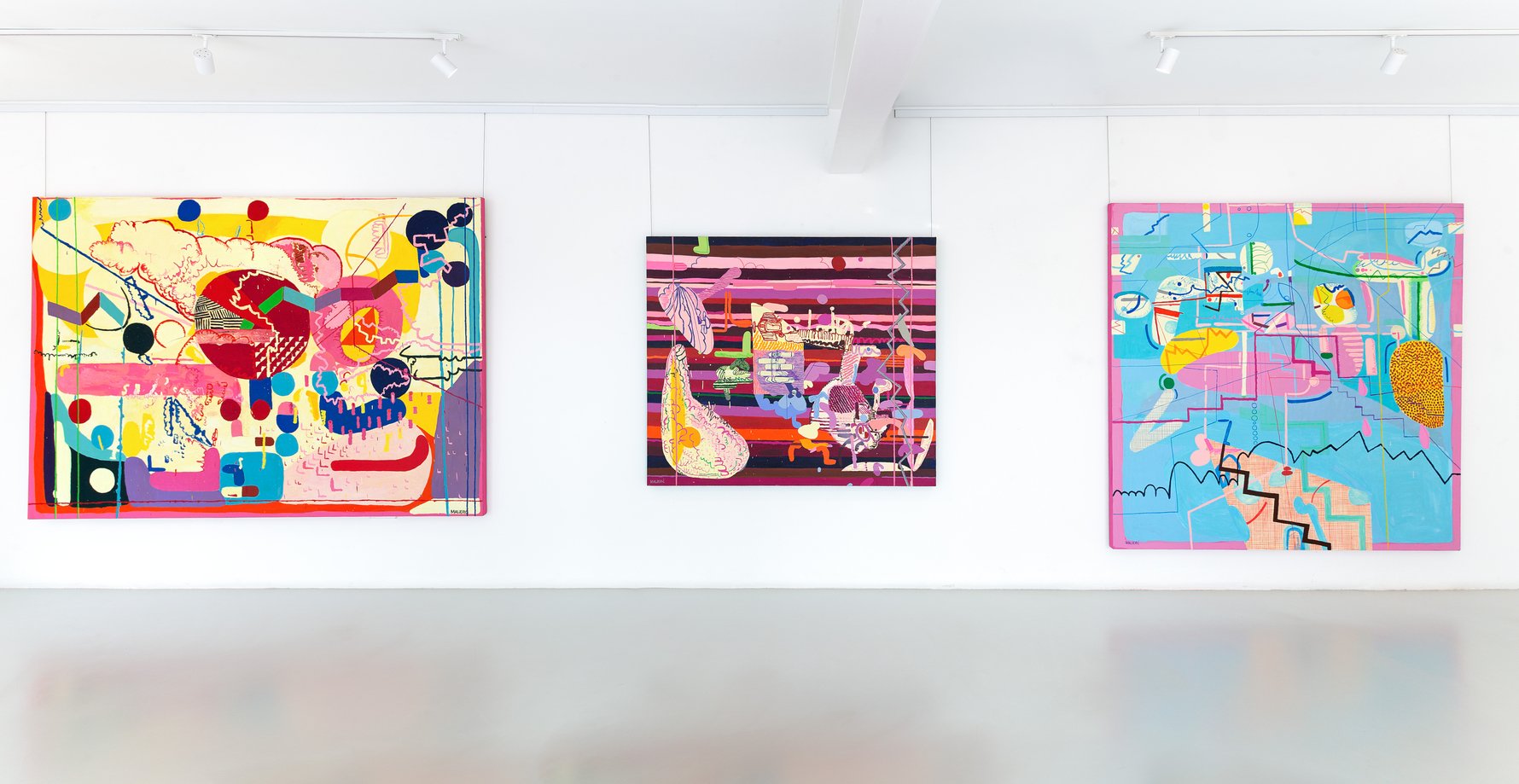
Your work feels instantly recognisable – playful, layered, expressive. How would you describe the visual language you’ve built, and what keeps it evolving without completely shifting?
Visual language is a powerful expression for me – it gives me the tools and opportunities to reflect my state of mind and my relationships with the world around me. What keeps it evolving is that it's a continuous dialogue – knowledge I never fully finish; I keep learning and letting it shape me.You grew up in Belgrade during a very particular cultural and political moment. How do those early experiences continue to shape what shows up in your work today?
Belgrade, and the people I grew up with there, shaped my sense of rebellion, belonging and identity as an artist. My roots are in that city, and they continue to influence every part of my work and who I am today.
You moved to Johannesburg in 2000. What did the city open up for you creatively, and how has it influenced your practice over time?
Moving to Johannesburg in 2000, at a critical moment in my life after the war in Yugoslavia, was incredibly challenging. Starting from scratch in a completely unknown place was hard, but it also gave me strength. It opened my curiosity and exposed my mind to new, unfamiliar perspectives. Over time, my practice began to reshape itself, while still holding onto its own stubborn core.
"Visual language gives me the tools and opportunities to reflect my state of mind and my relationships with the world around me." – Maja Maljević
How has living here reshaped your sense of “home”, and does that tension between places feed into your practice?
Living here has reshaped my idea of home because I’m always in this middle space. I don’t fully belong to where I came from, but I’m also not always seen as part of my new home. That tension has been difficult, but it’s also given me strength. I’ve grown into someone who sees beyond borders, a global citizen who uses art as a universal language.
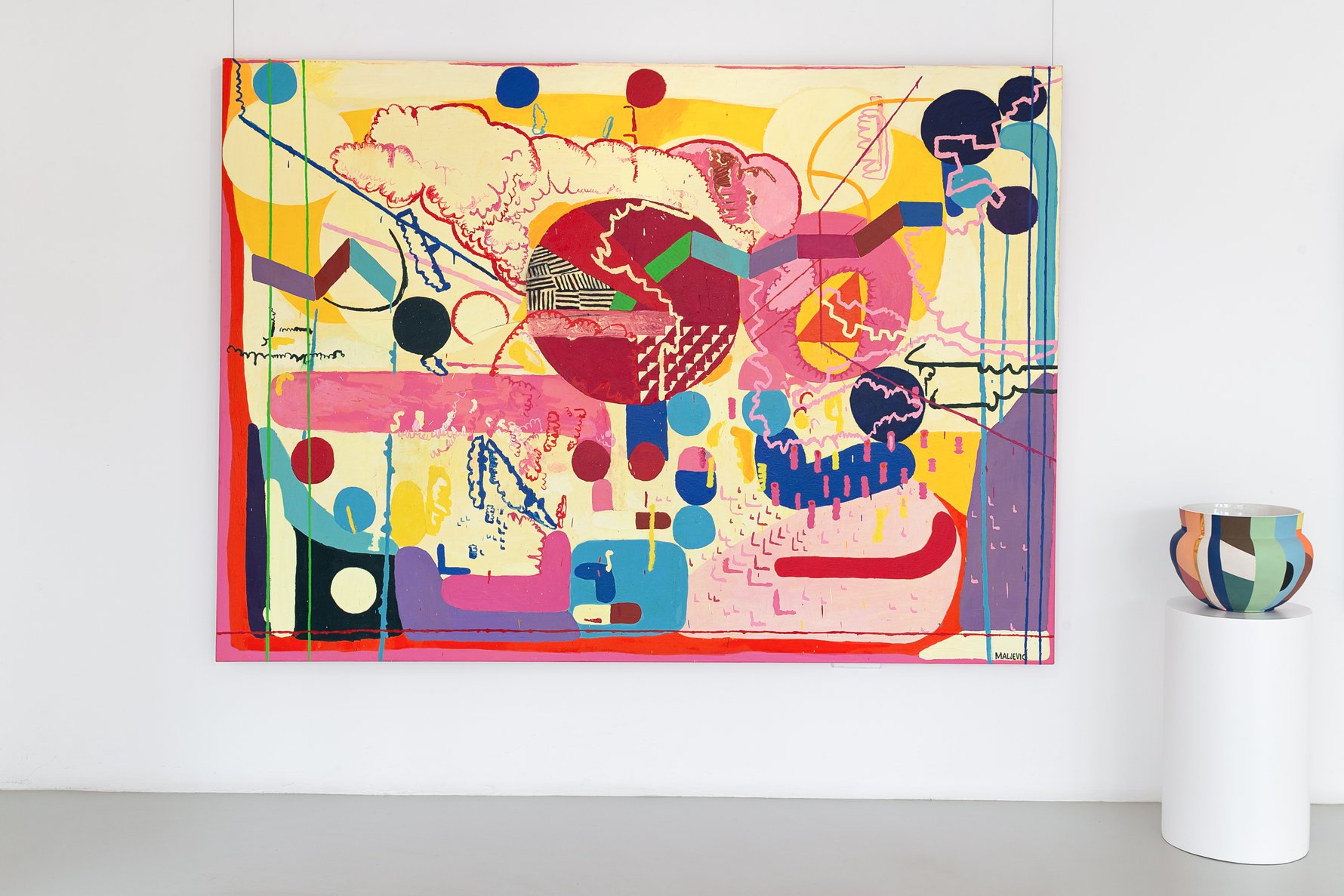
Your paintings often sit somewhere between figuration and abstraction – forms emerge and dissolve rather than settle. Is that ambiguity something you consciously pursue?
The interplay of figuration and abstraction is essential to my art. I see the body as a fluid abstraction – one that I can shape and reimagine, so that it becomes a vessel for opportunity in the world of form.
How do you see your work in relation to the local art context here – do you feel part of an ongoing conversation around image-making in Johannesburg?
As the years went by, the local environment began to quietly influence my work. I didn't seek it out; it just naturally integrated into my daily life and culture. That subtle connection started a dialogue that still shapes my art today.
"Being able to laugh at myself and the world matters so much." – Maja Maljević
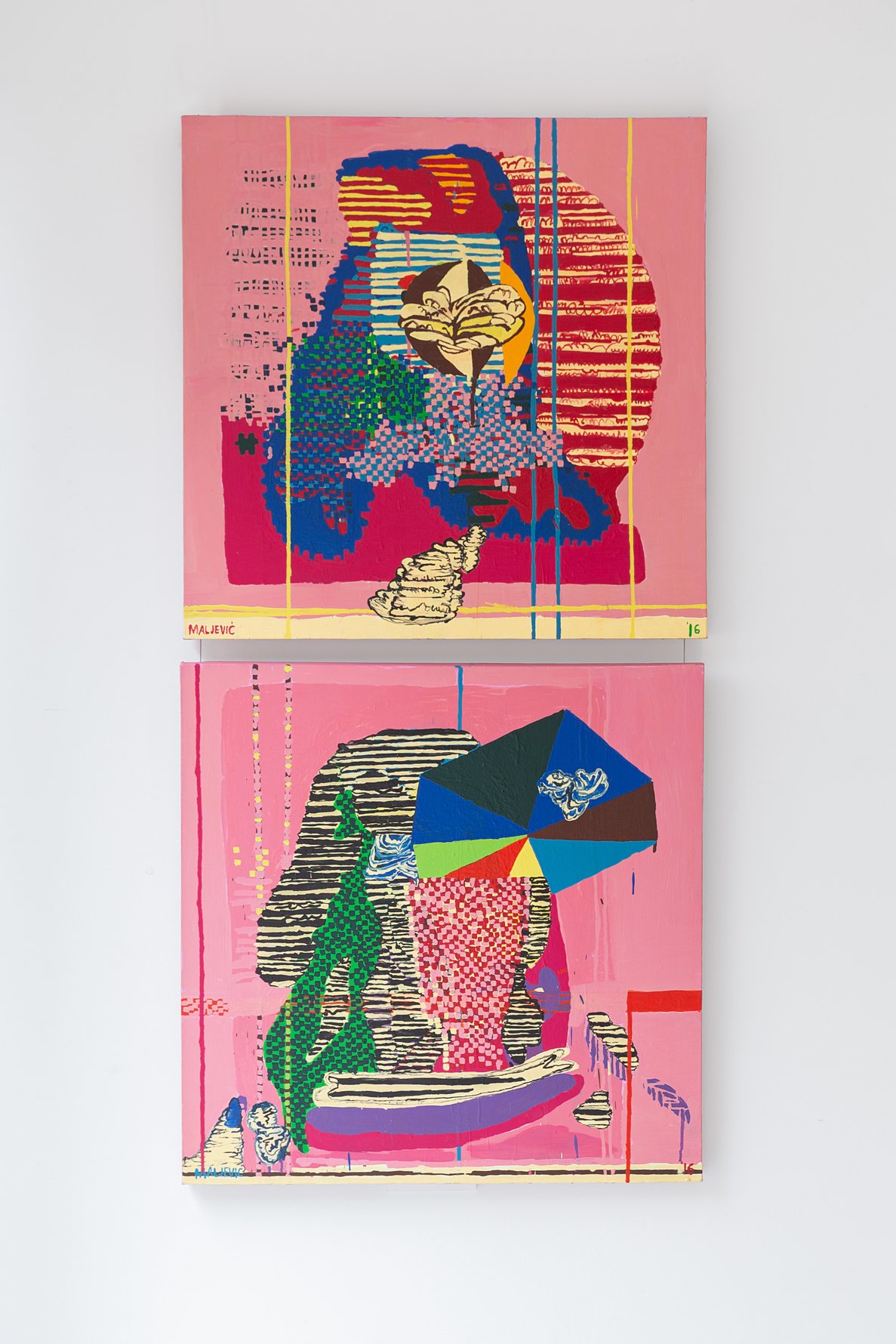
There’s a push and pull between humour and discomfort in your work. Do you think of your paintings as psychological spaces?
I often struggle to take myself seriously, and that’s why absurdity – being able to laugh at myself and the world – matters so much. It’s something that sneaks into my work, especially in the titles, giving it a lightness and a deeper honesty. So I guess that makes it psychological, yes.
My artwork is deeply tied to my personal experience, but I don't want it to be literal or overly obvious. Every piece is shaped by my thoughts and experiences, but I keep it open ended, inviting people to engage, to be puzzled and to discover their own meaning, rather than just seeing my story.
"The more I create, the more questions arise, and the more puzzles I want to solve." – Maja Maljević
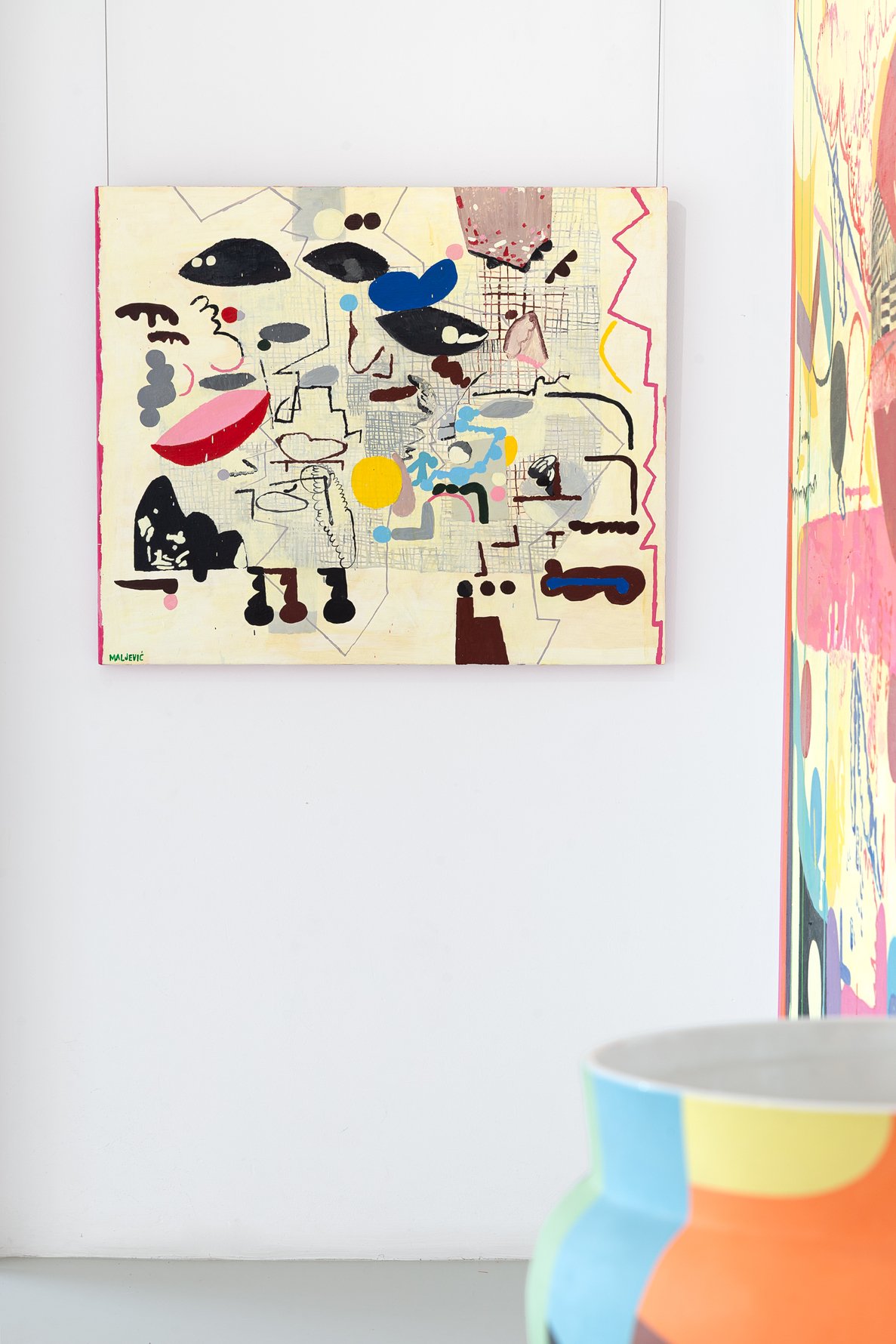
Alongside painting, you’ve built a strong ceramics practice. What does working in three dimensions allow you to explore that painting doesn’t?
All the different mediums I work with are just extensions of my expression. For me, being an artist is about staying open to endless possibilities, without boundaries. I'm always excited to discover new techniques and mediums, each one pushing me further.
How does collaboration feed your process and practice? We are thinking of your ongoing relationship with Lisa Jaffe of fashion label Guillotine.
My collaboration with Lisa Jaffe is just one of many across different artists and designers. I’ve collaborated on graffiti, books, carpets and blankets. I’m always open to working with interesting creators and fresh voices in the industry. Each collaboration brings a new perspective and energy to my work.
This presentation at 223 Creative Hub includes some of your larger-scale works. What changes for you when working at that scale?
I’ve always worked across both large and small scales, and each is a distinct experience. In the large pieces, my entire body is involved; it's like a dance, a full immersion. The small works are delicate and precise. Both are essential – they expand my creative boundaries as I seek something new.
What makes someone a Joburger? "Open minded, willing to embrace diversity and differences, and capable of wheeling and dealing." – Maja Maljević
What feels unresolved or still in process in your work right now?
Nothing in my work is fully resolved. The more I create, the more questions arise, and the more puzzles I want to solve. I hope this never ends.
Rapid-fire round: Five questions about Joburg
What is a surprising thing people might learn about Joburg by having a conversation with you?
Something that surprises people about Johannesburg is its altitude – it's as high as some ski towns in Europe. Plus, it boasts one of the largest man-made forests in the world, an incredible green expanse surrounding the heart of a major city.
What should a visitor not leave Joburg without seeing or experiencing?
Go to Constitution Hill to witness a powerful transformation of a former prison to a beacon of justice. The art collection in the Constitutional Court amplifies themes of dignity and human rights, making it a profound, must-visit experience.
If you could buy one Joburg building, which would it be?
Circa Gallery in Rosebank.
What makes someone a Joburger?
I would say someone who is open minded, willing to embrace diversity and differences, and capable of wheeling and dealing.
Three words that describe this city.
Gritty, raw, "alive-and-kicking".


Comments