

What did the medieval world look like through the eyes of a traveller who journeyed farther than almost anyone of his time? The exhibition A Magical Journey to the East sets out to answer exactly that question, inviting visitors into a world shaped by trade routes, curiosity, diplomacy and cultural exchange centuries before globalisation became a modern reality.
Inspired by the life and legacy of Marco Polo, the exhibition unfolds as a story of encounters between East and West — not only through historical events and objects, but through ideas, technologies and artistic influences that travelled across continents along the Silk Road.
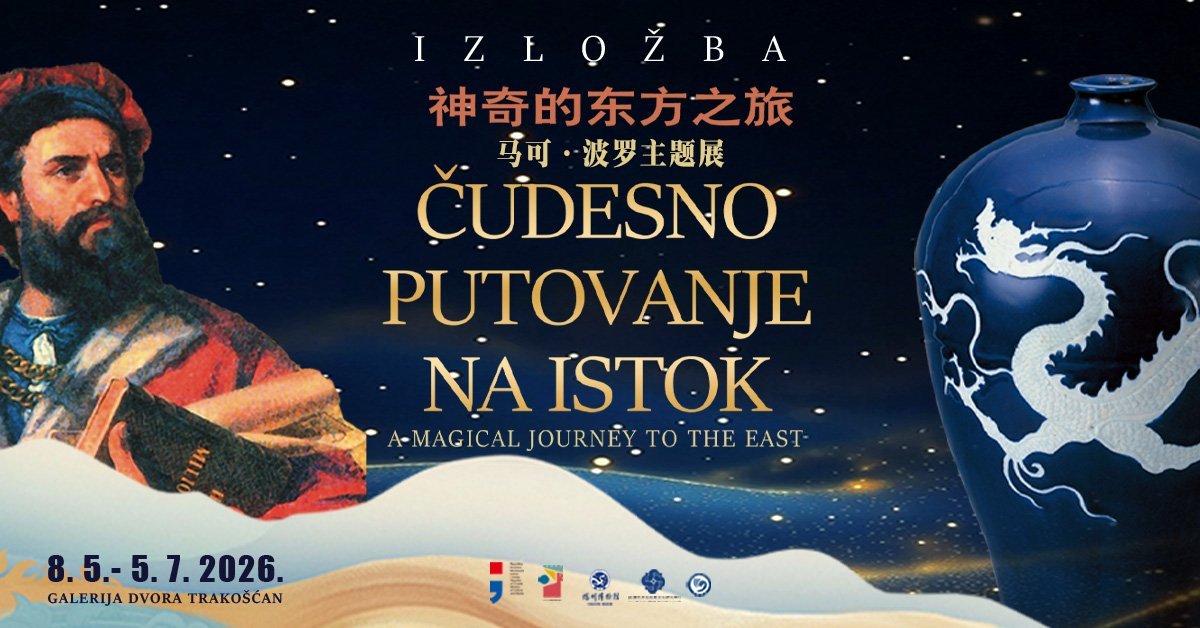
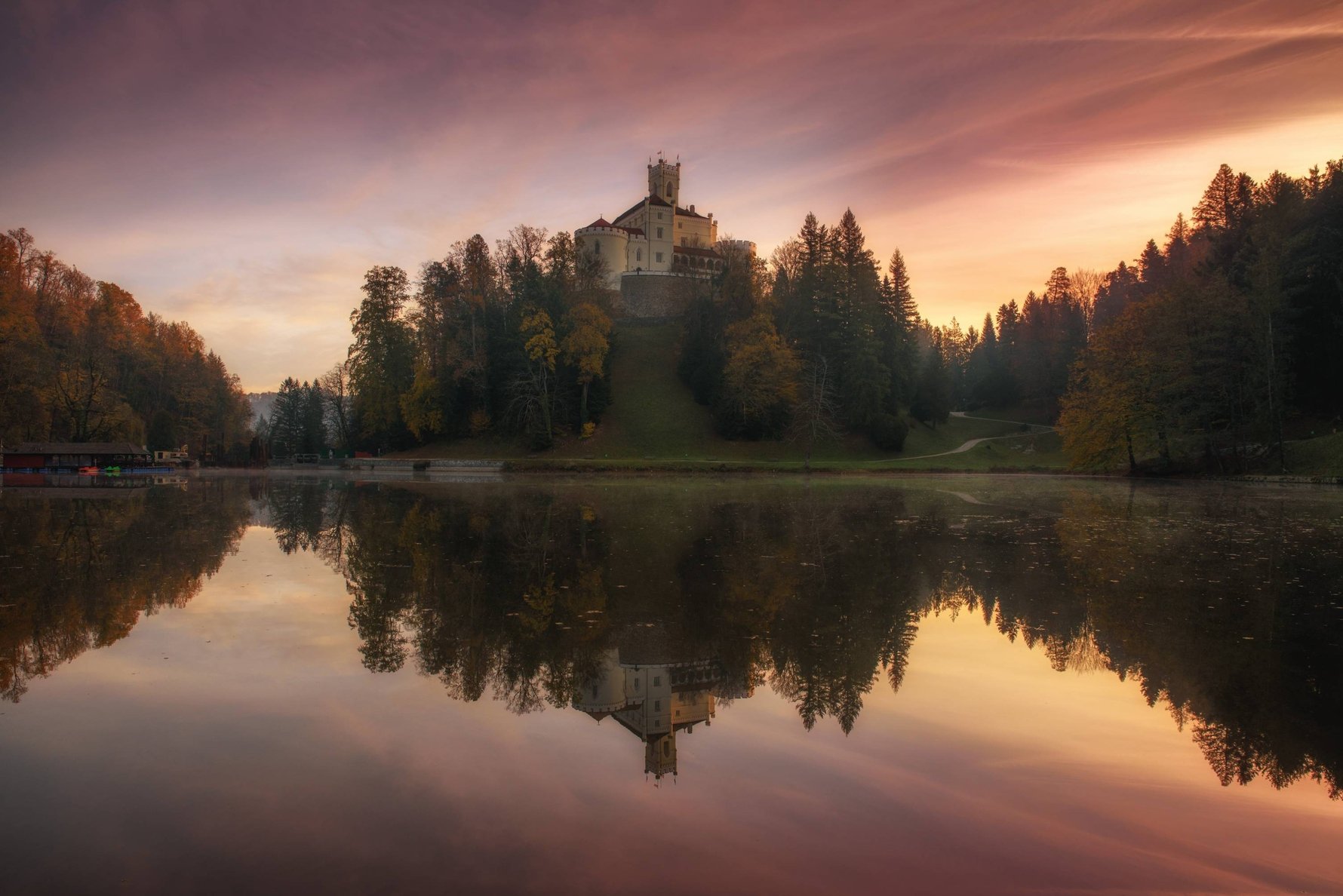
Recently opened at Trakošćan Castle in cooperation with the Yangzhou Museum, the exhibition has already attracted considerable attention as an ambitious international cultural project connecting Croatian and Chinese heritage. A Magical Journey to the East remains open until 5 July 2026 and can be visited daily from 10:00 to 18:00, with Monday and Tuesday visits available by prior arrangement.
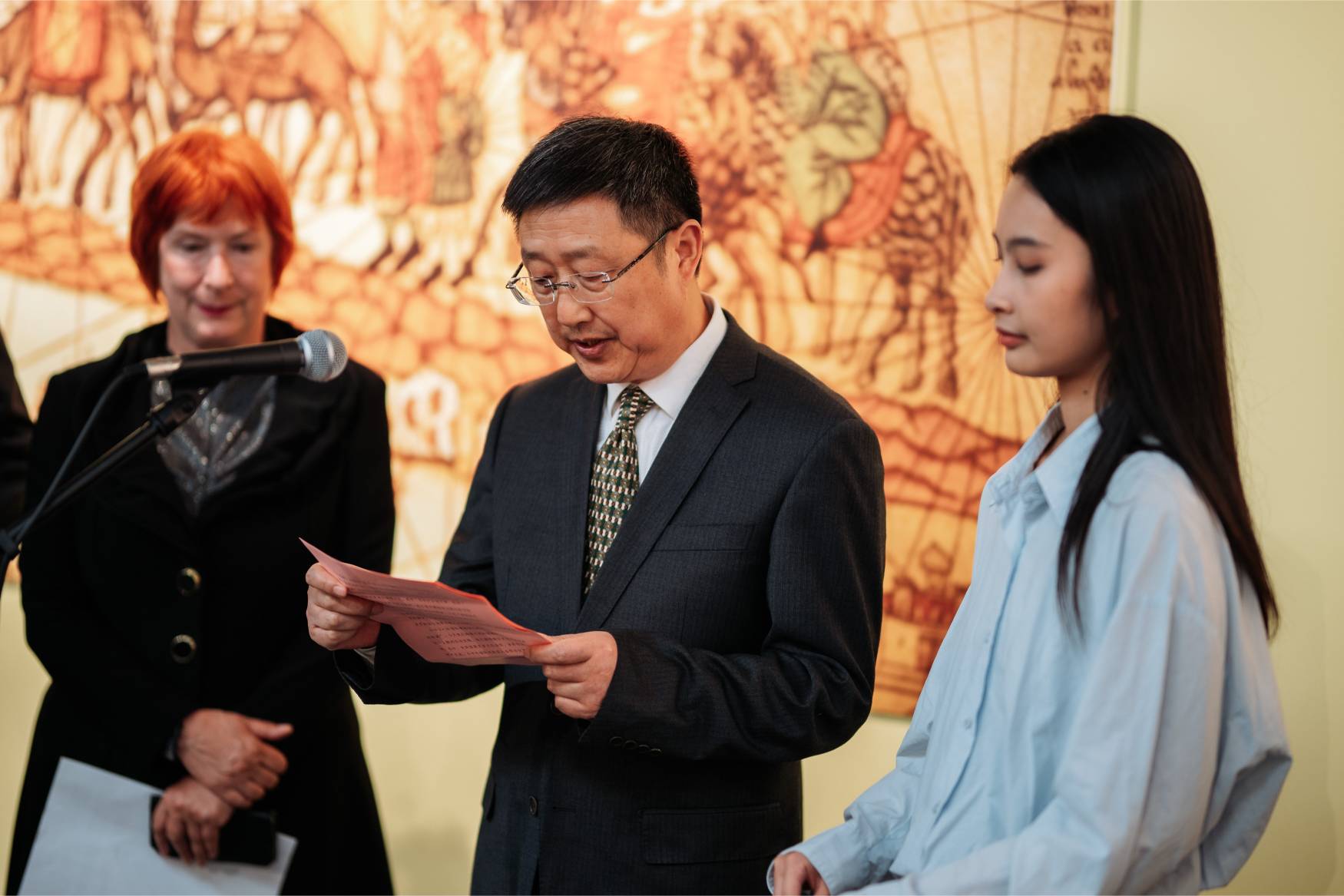
Opening Ceremony at the Trakošćan Castle: Shu Jiaping, Yangzhou Museum Director and Goranka Horjan, Trakošćan Castle Director
One part of the exhibition focuses on the Marco Polo Memorial Hall in Yangzhou, a city closely tied to China’s historic Grand Canal, once among the most important commercial arteries in the world. Rather than presenting Marco Polo merely as a legendary explorer, this section examines how his story continues to function today as a symbol of dialogue between cultures. Through collaborations between Chinese and European institutions, the memorial hall has become a living space of international cultural exchange, connecting contemporary audiences with a shared historical heritage.
At the heart of the exhibition lies Marco Polo’s extraordinary 13th-century journey across Asia during the reign of Kublai Khan. Through his writings, visitors are transported into the sophisticated and vibrant world of the Mongol Empire — a world that often appeared astonishingly advanced to medieval Europeans. Polo describes vast cities such as Hangzhou, bustling trade routes, highly organised administrative systems and innovations that Europe had barely imagined at the time. Among them were paper money used as everyday currency and coal widely burned as fuel. His accounts also capture the sense of wonder that accompanied travel into unfamiliar lands, from exotic animals on the Pamir Plateau to strange materials such as asbestos, once described as a “fabric cleaned by fire.”
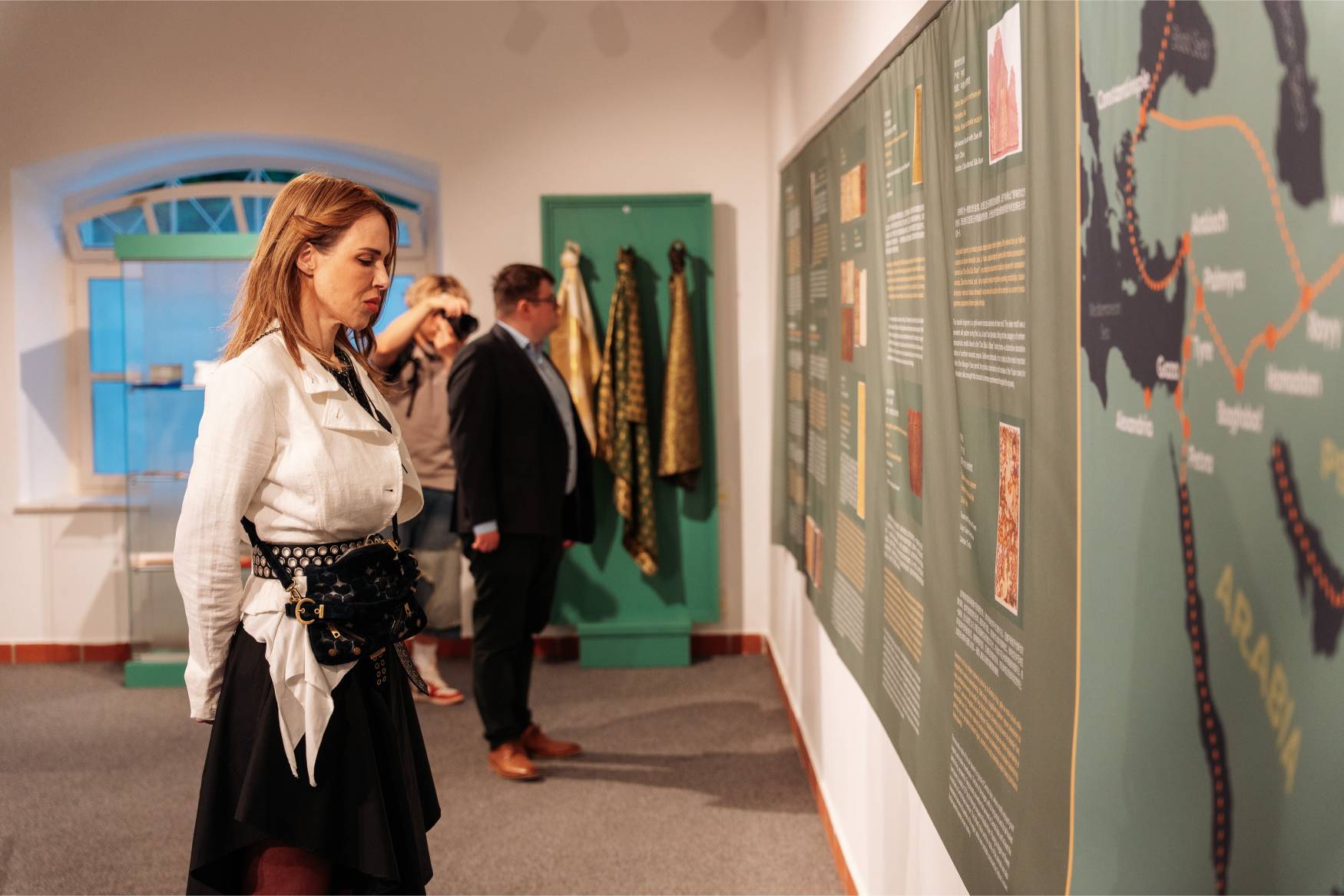
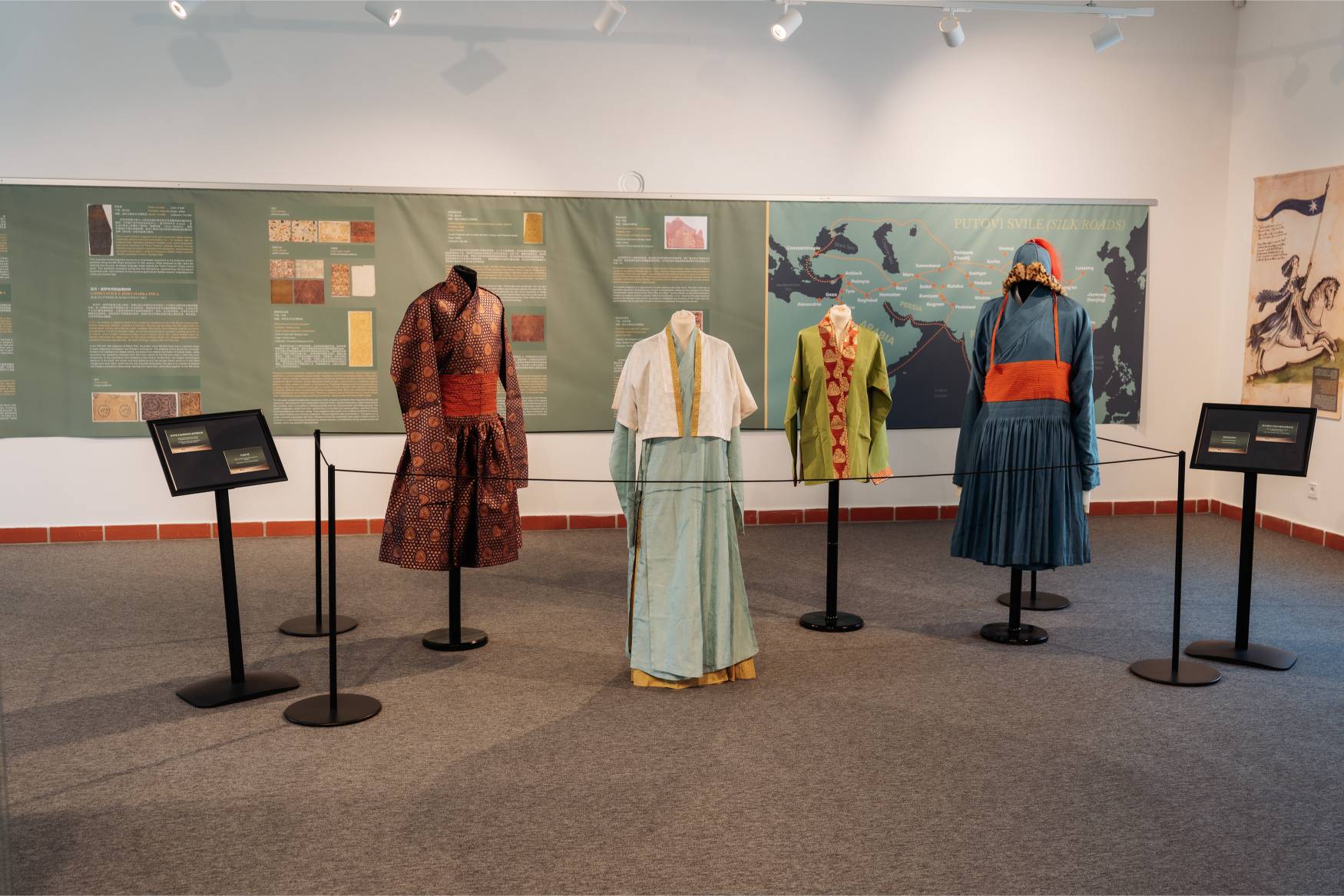
A particularly elegant section of the exhibition is dedicated to silk — the material that came to define luxury, prestige and international trade across centuries. Richly woven brocades, damasks and lampas fabrics reveal the extraordinary level of craftsmanship achieved along the Silk Road, while decorative motifs demonstrate how Eastern and Western artistic traditions continuously influenced one another. The exhibition also traces the arrival of silk into Europe through the trading networks of Venice and Dubrovnik, showing how these precious textiles became symbols of wealth and social status, including among Croatian noble families such as the Counts of Celje.
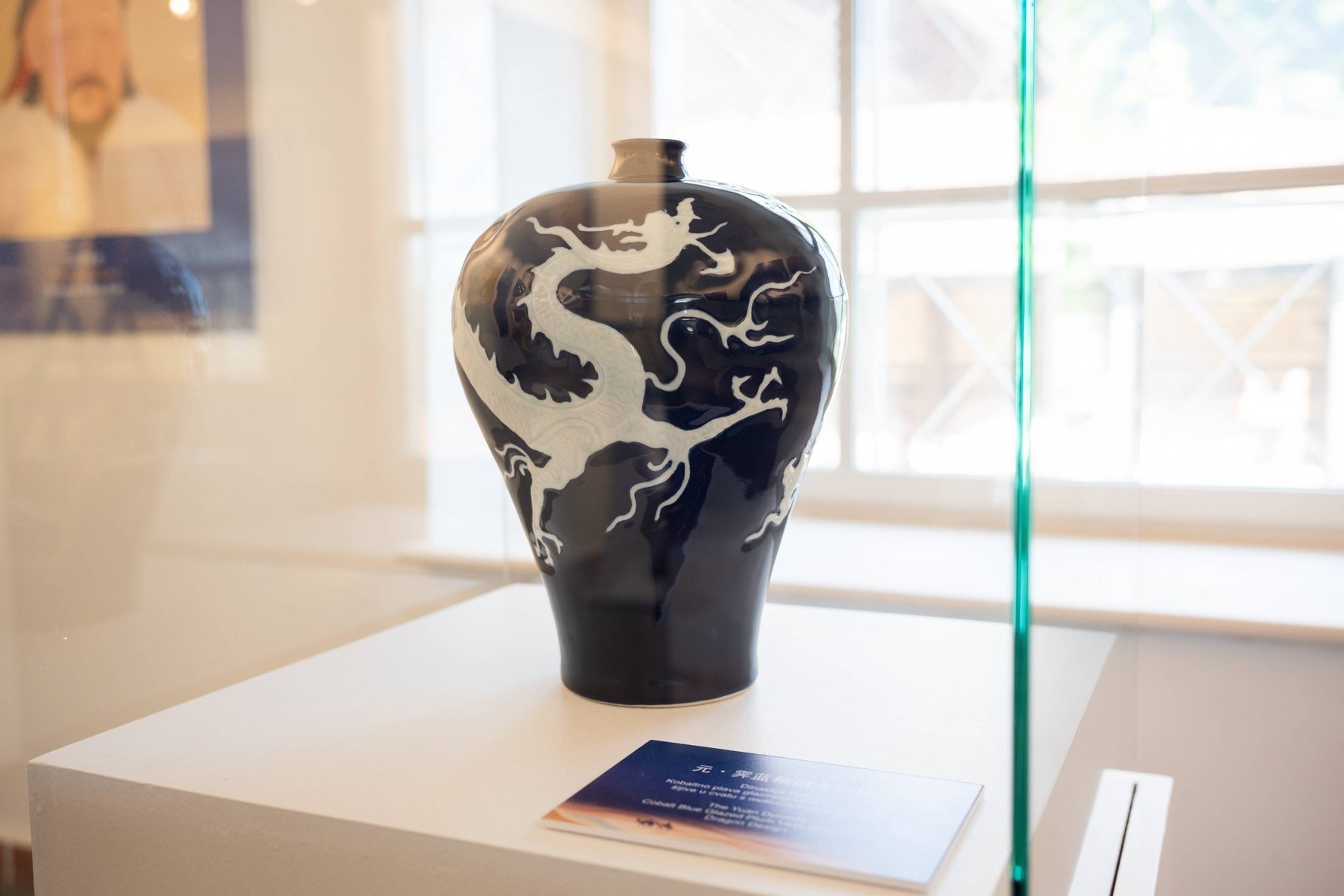
Throughout the exhibition, historical narratives are complemented by carefully selected objects, replicas and interactive elements. One of the standout pieces is a monumental Meiping vase from the Yuan dynasty, decorated with dragon motifs that symbolised imperial authority and refinement. Alongside examples of early paper currency and traditional block-printing techniques, these artefacts help recreate the atmosphere of a world connected through movement, commerce and exchange.
More than simply recounting the travels of Marco Polo, A Magical Journey to the East reflects on the enduring importance of cultural contact itself. It is a reminder that long before the modern era, civilizations were already linked by stories, trade, knowledge and imagination — connections that continue to shape our understanding of the world today.



Comments