

Croatia is often written as a coastal story, a country of islands, harbours, and Adriatic light. But away from the sea, another map quietly unfolds. It is not marked by borders or regions, but by water: lakes that appear in karst valleys, forest basins, mountain foothills, and even inside cities.
There is no single “Lake District” in Croatia. Instead, there is a journey — fragmented, shifting, and unexpectedly diverse. A route that moves not in a straight line, but in textures of water and landscape.Mljet National Park (Veliko & Malo Jezero)
On the island of Mljet, Croatia’s lake story reaches its most unusual form. Inside the national park, Veliko and Malo Jezero are saltwater lakes connected to the sea through a narrow channel. Unlike most protected landscapes, swimming is allowed in designated areas. Here, water is not only observed — it is entered. Beneath pine forests and near a centuries-old monastery island, swimming becomes part of the landscape rather than a break from it.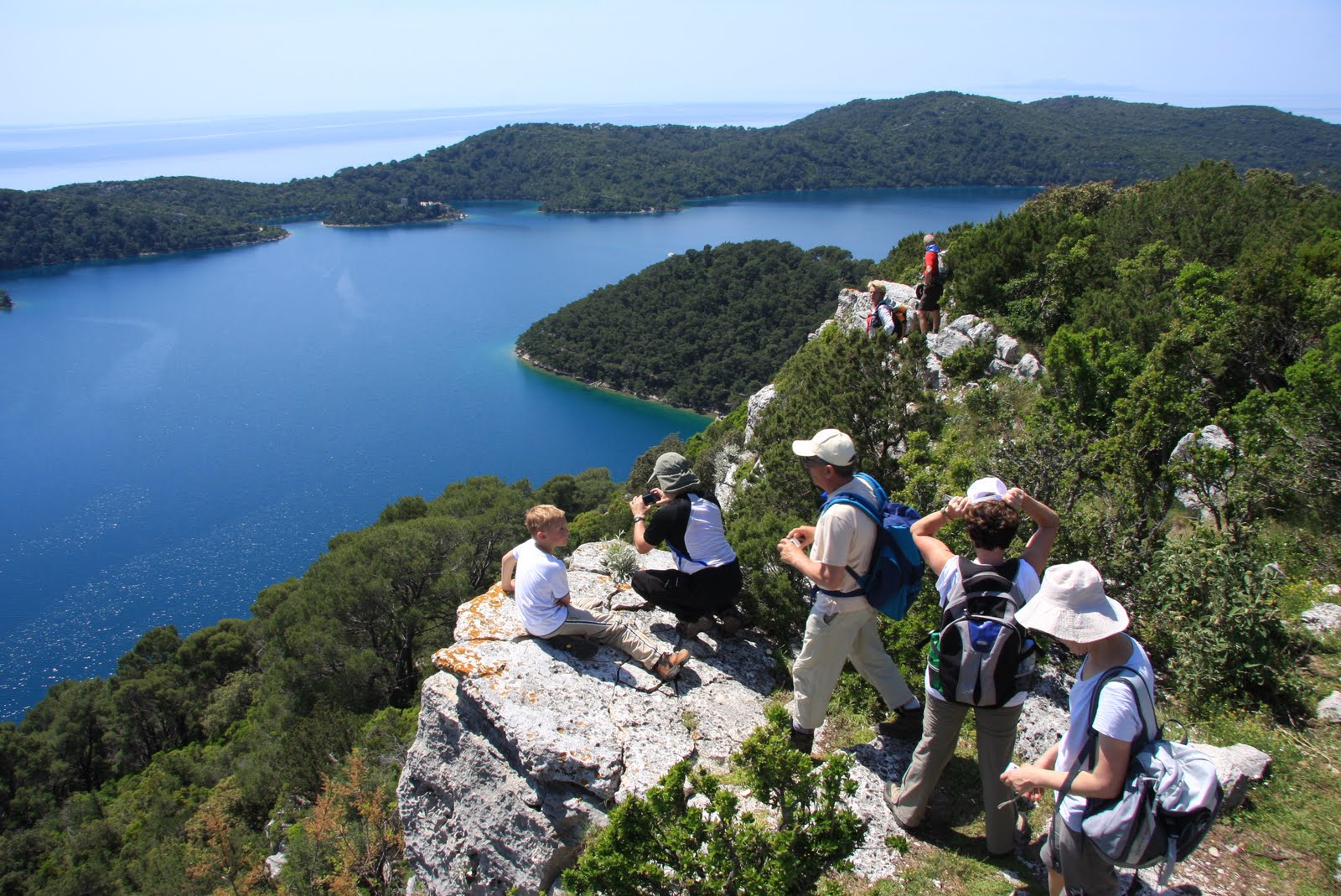
Blue Lake
At Imotski, the Blue Lake drops into the earth as a deep limestone sinkhole. Its colour shifts with the seasons — sometimes empty and silent, sometimes filled with vivid blue water where locals still occasionally swim when conditions allow. It is one of Croatia’s most striking natural formations: a lake that behaves like a living geological system.Baćina Lakes
On the south of the country, near Ploče, the Baćina Lakes form a hidden cluster of six interconnected freshwater bodies. Here, the boundary between coast and inland begins to blur. The lakes sit just above the sea, warm and calm, surrounded by reeds and hills. Swimming in Baćina feels like slipping between two worlds — the Mediterranean just beyond the horizon, and a freshwater stillness that feels unexpectedly private.Peruća Lake
Peruća Lake stretches across the Cetina hinterland. Vast and quiet, it feels almost oceanic in scale, yet completely inland. Its wide surface reflects a landscape of hills and stone villages — a man-made lake that has fully merged with its natural surroundings.Lake Sabljaci
Towards the hills around Ogulin, Lake Sabljaci appears beneath the slopes of Mount Klek. Large and calm, it is often called the “Ogulin Sea” — a name that reflects its scale more than its geography. Here, summer is slow: swimming, boating, and long afternoons without urgency.Orahovica Lake
At Orahovica, beneath the forested Papuk mountains, a reservoir lake becomes a regional gathering point. Known as the “Slavonian Sea,” Orahovačko jezero is where inland summer becomes lively again — music, swimming, and long warm evenings by the shore.
Šoderica Lake
Near Koprivnica, in Northern Croatia, lies Šoderica, once a gravel pit, now a summer escape with swimming areas, campsites, and long weekends that stretch around the water. It is one of the clearest expressions of continental Croatia’s “beach culture” — informal, social, and deeply local.
Lake Čabraji
Further south in Podravina, Lake Čabraji offers something quieter still. Small, forested, and unassuming, it is the kind of place known mostly to those who live nearby — a reminder that not all lakes are destinations; some are habits.Zagreb lakes (Jarun and Bundek)
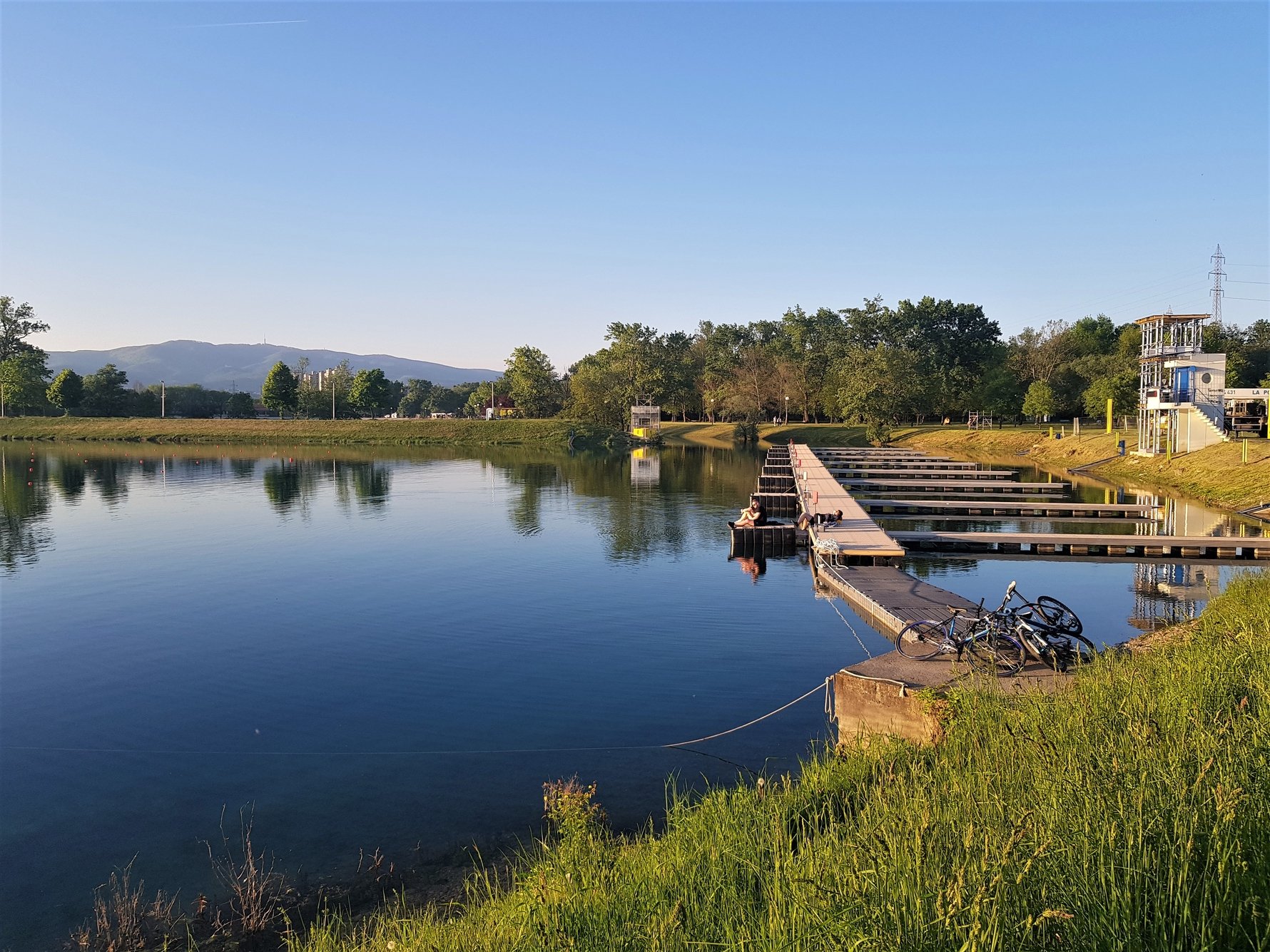
And finaly, even capital, has its city seasides. At Jarun, the city opens into a wide recreational lake with beaches, cycling paths, and summer nightlife. It is where locals go to feel the weekend arrive early. Nearby, Bundek offers a quieter counterpoint — a park lake where families gather and the city slows down under the trees.These are not wild landscapes, but they introduce a Croatian truth: water here is never far from daily life.
A country without a single lake district
There is no continuous shoreline of lakes in Croatia. No unified region, no single destination. Instead, there is a pattern of interruptions — water appearing unexpectedly across the map, each lake shaped by its own geology, history, or human need. From city shores in Zagreb to sinkholes in Dalmatia, from gravel lakes in the north to island lagoons in the south, Croatia’s inland waters form a scattered geography of summer. Not a district. Not a route on a map.



Comments