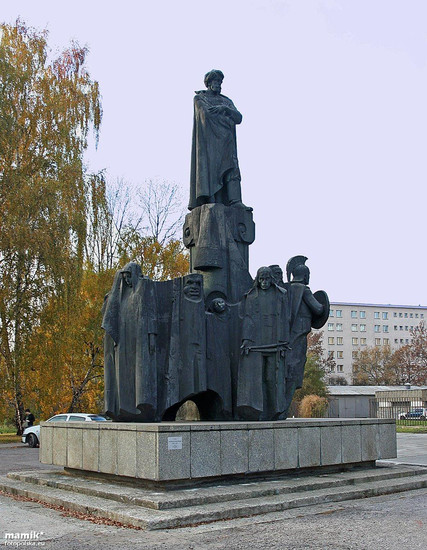
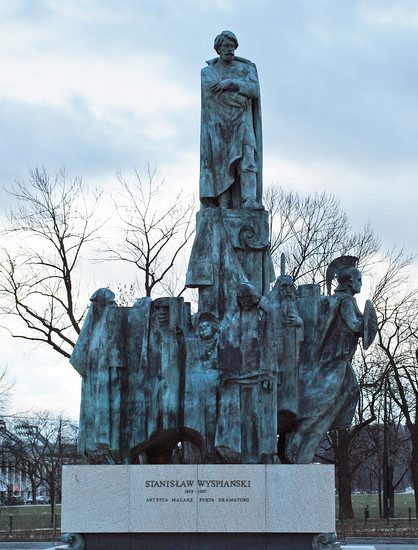
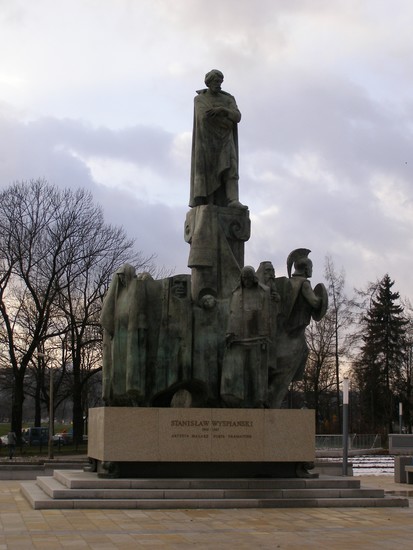
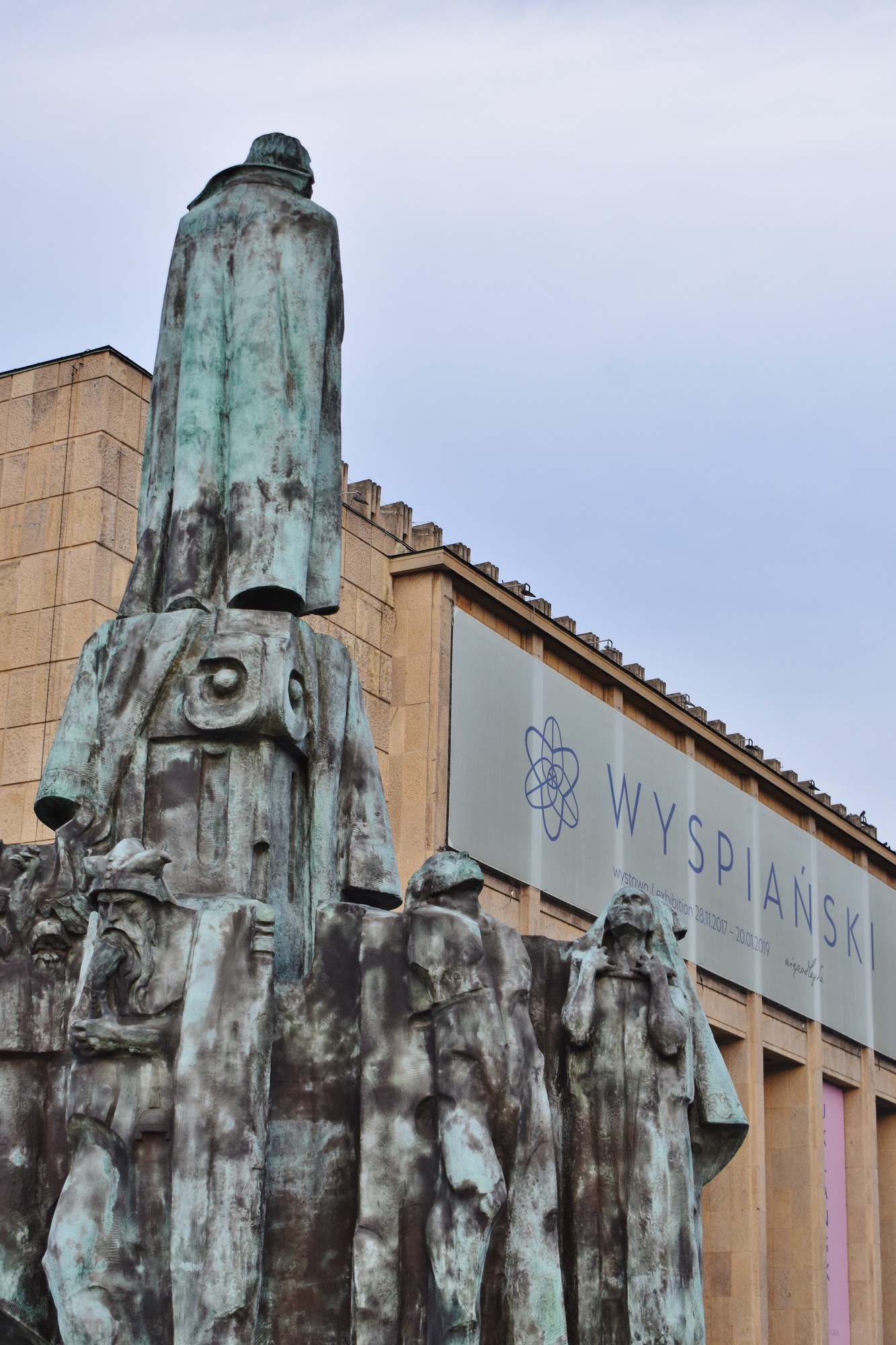
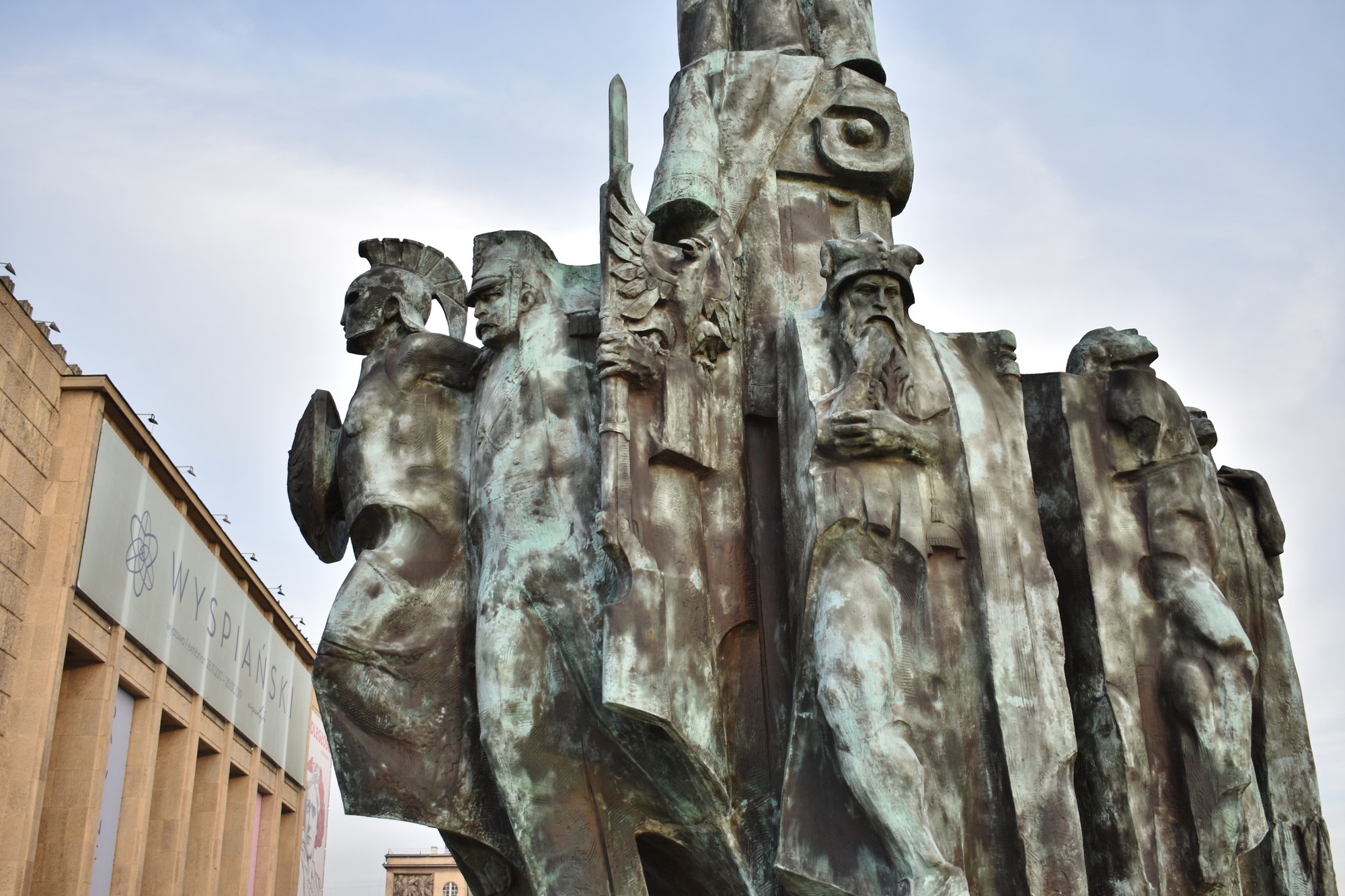
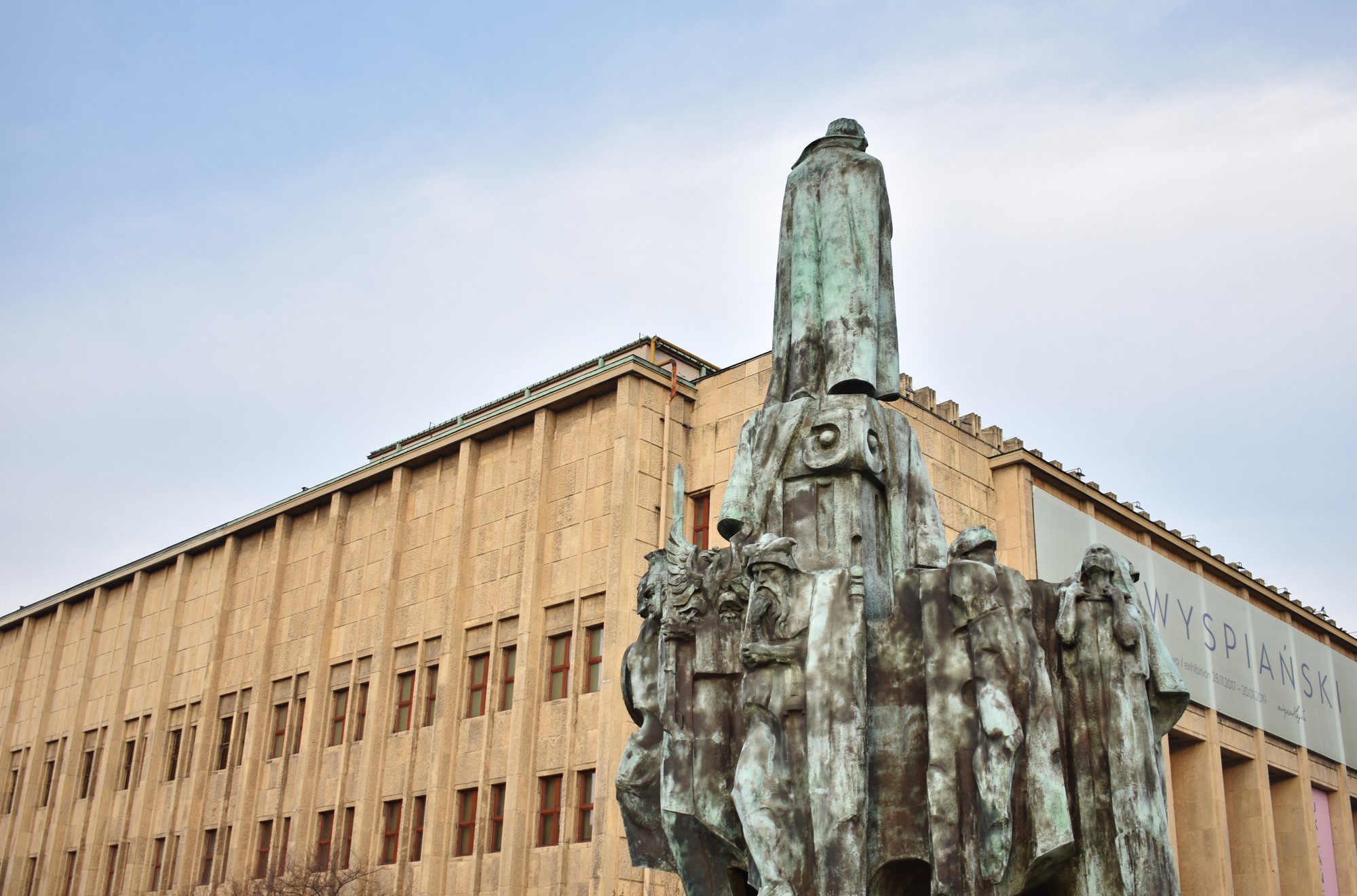
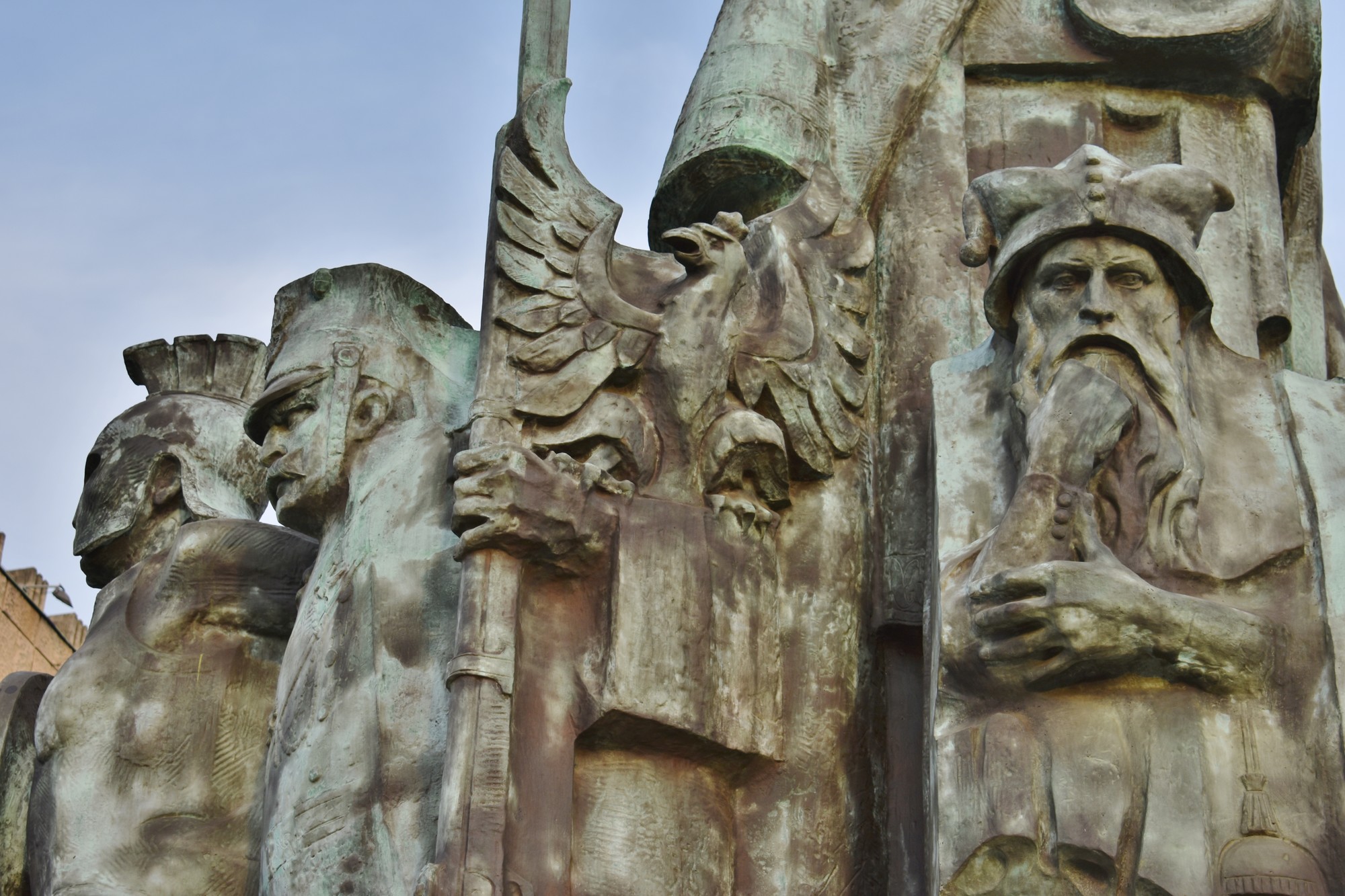
This monolithic monument near the National Museum honours Stanisław Wyspiański - a Polish playwright, painter and poet belonging to the Young Poland (Młoda Polska) Movement. Known unofficially as the 'Fourth Polish Bard' - joining Adam Mickiewicz, Juliusz Słowacki and Zygmunt Krasiński - Wyspiański was arguably the most versatile and outstanding artist creating in Poland during the era of Partitions. Marian Konieczny's inspiration for this monument came from Wyspiański's famous play Wesele (The Wedding), a deeply critical yet sarcastic exposé of a powerless Polish society. One of the most moving scenes in the play is the Chochoł dance ('chochoł' being straw wrapped around a rose bush to protect it during winter), symbolising Polish society's inertia, apathy and powerlessness. The figures from Wyspiański's dramas are grouped around him in the tableau reminiscent of the Chochoł dance parade - Jasiek, Żyd, Chochoł, Stańczyk and Isia from The Wedding, Stary Wiarus from Varsovian Anthem and Pallas Atena from November Night. Stanisław Wyspiański is portrayed wearing a cape, a garment characteristic of the Young Poland era.





Comments