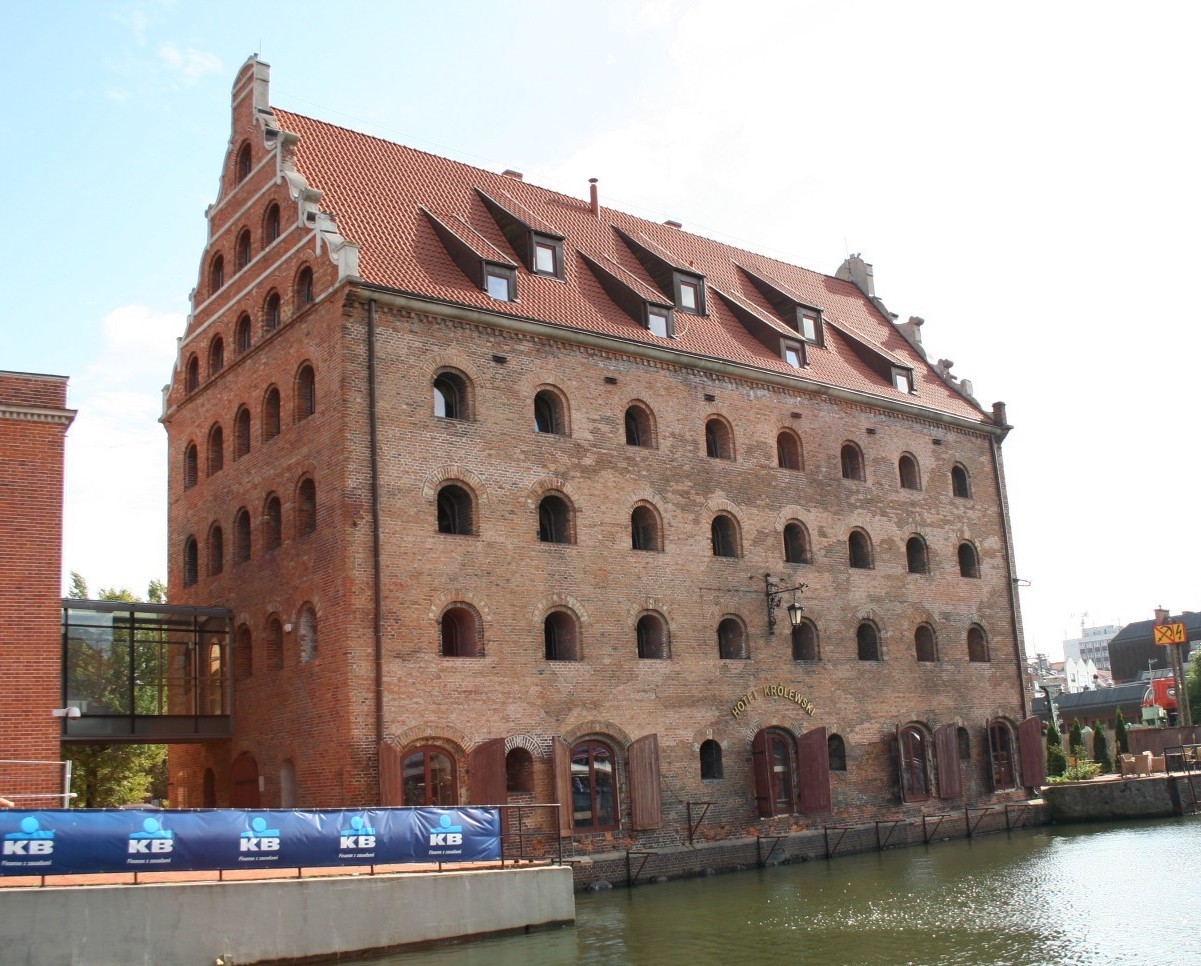


In the pre-industrial age, granary buildings were a symbol and a major source of Gdańsk's wealth. These glorious landmarks existed from the 15th-century onwards until 1945, when most had been levelled by Russian bombers. The only building in this area to remain relatively intact was The Royal Granary.
The construction of the Royal Granary began in 1606. The management of the work was undertaken by Flemish architect Abraham van den Block, the creator of several great realisations in the city centre, including The Golden House. The construction lasted two years. The result was a seven-storey building, erected on the banks of the Motława River. It was equipped with numerous windows that allow lighting, and above all, excellent ventilation of the interior, which was necessary for the storage of grain.
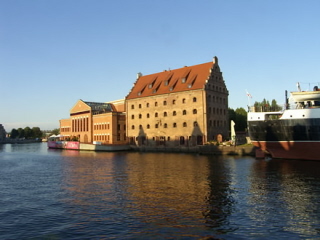
Following the renovation of the city power plant next door into The Polish Baltic Philharmonic Hall in 1998, the Royal Granary became an administration building and an orchestral rehearsal space. Today, it is the Hotel Królewski.
The construction of the Royal Granary began in 1606. The management of the work was undertaken by Flemish architect Abraham van den Block, the creator of several great realisations in the city centre, including The Golden House. The construction lasted two years. The result was a seven-storey building, erected on the banks of the Motława River. It was equipped with numerous windows that allow lighting, and above all, excellent ventilation of the interior, which was necessary for the storage of grain.
Following the renovation of the city power plant next door into The Polish Baltic Philharmonic Hall in 1998, the Royal Granary became an administration building and an orchestral rehearsal space. Today, it is the Hotel Królewski.