

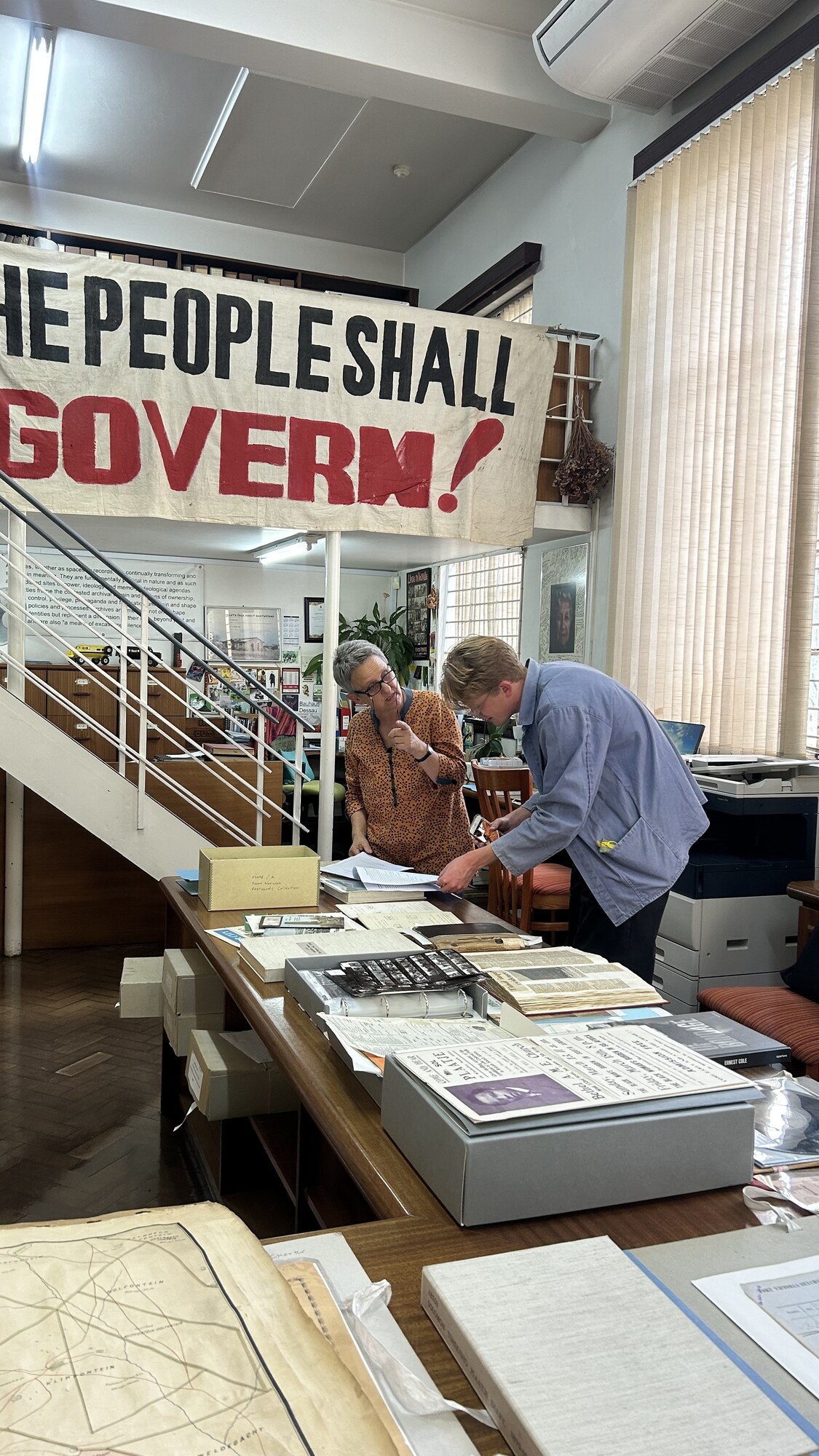
We visited* with manager and archivist, Gabriele Mohale, and what stuck with us most was the dedication and care of the team. Surrounded by these recorded histories, you become intimately aware that you are amid something far greater than yourself.
*Published May 2026.
Inside the William Cullen Library
We arrive at the William Cullen Library, located on the University of the Witwatersrand's East Campus, on one of those vivid and crisp Joburg mornings that only happen after the rains. The city's debris and dust are briefly washed away as it momentarily forgets its contradictions and complications, and the sky is a simple, crystalline blue. Neat rows of orange honeysuckle flank the fountain gurgling merrily outside, and snippets of conversation about tests and lectures reach us from the meandering students.First opened in 1934, the building draws from the design of the Petit Trianon at the Palace of Versailles in France, sitting solidly behind its slabbed columns. As we step inside, the campus sounds fade and the air grows still and cool. Light slides over the polished parquet floors, and the heavy, larger-than-necessary doors close with a stifled thunk behind us.
Even before you get to the archives, the tall windows and ornate interior of dark wood impart the same hushed awe as stepping into a religious monument. Only here, knowledge and history are the subjects of worship, accumulating as ink on bound paper, faded photographs and scribbled ledgers.
Meeting archivist Gabriele Mohale
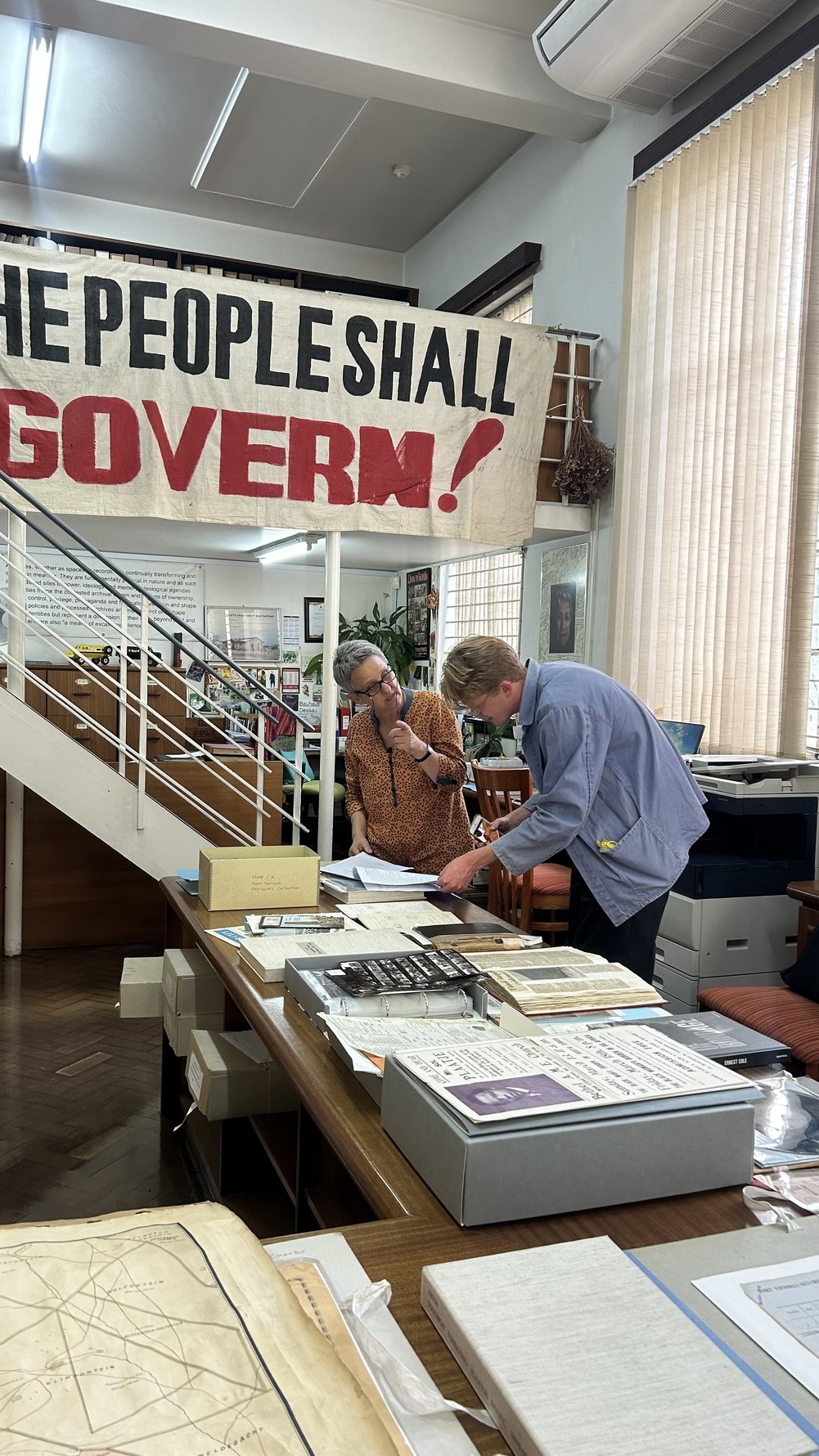
We are meeting manager and archivist Gabriele Mohale. As she leads us to the office of the Historical Papers Research Archive, there is a decisiveness to her movements – an assuredness that belies the weighty responsibility she is entrusted with.
"We have a lot to get through," she says over her shoulder, taking a door to the left of the entrance hall that skirts the main library.
The Historical Papers Research Archive is one of the most comprehensive and important archives in Southern Africa. While it is housed at Wits, Mohale stresses that it is publicly accessible. Its scope is immense, covering health, religion, early colonial history, apartheid and anti-apartheid movements alongside political and economic records. It is an incredible resource and surprisingly easy to access.
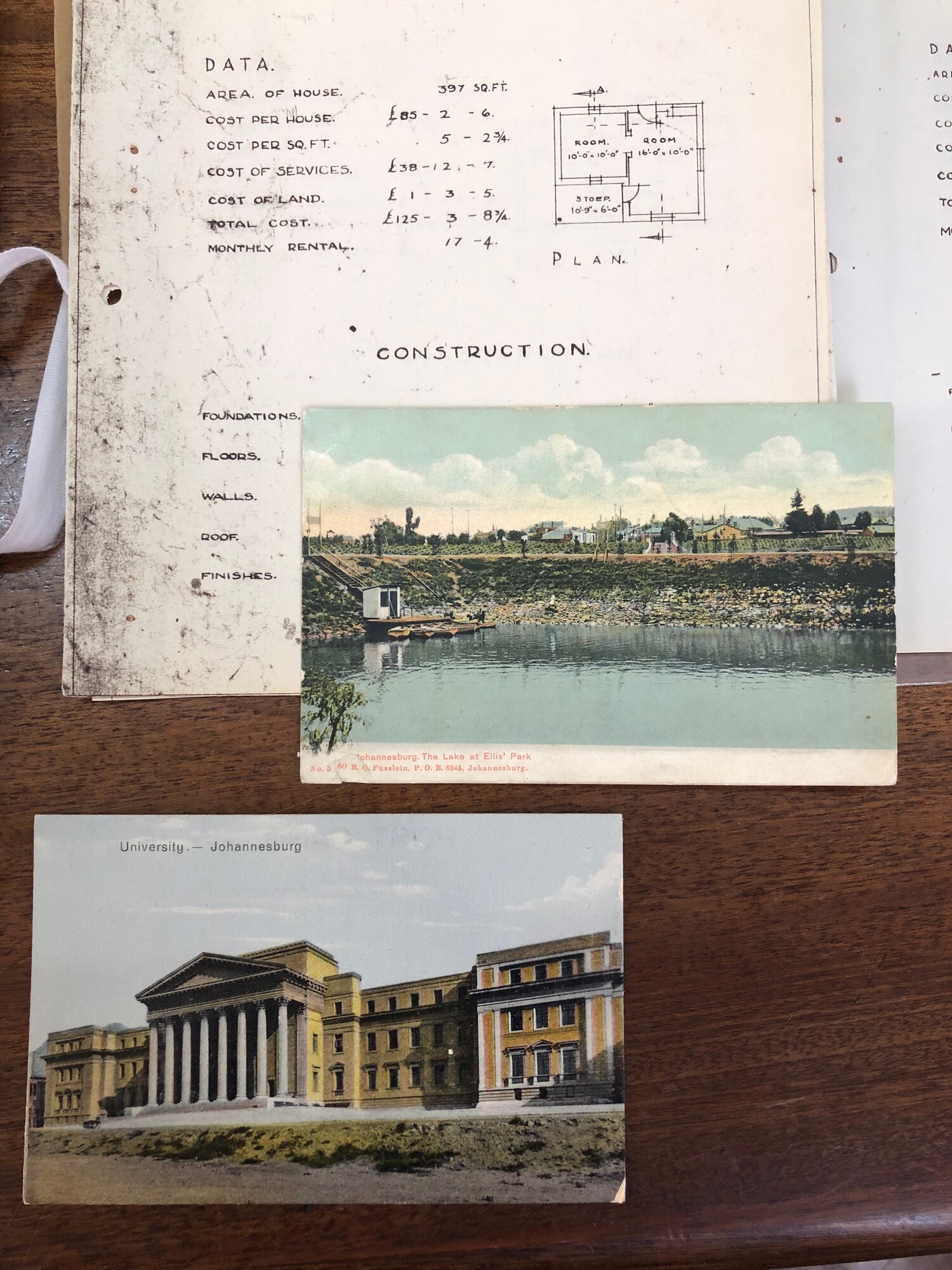
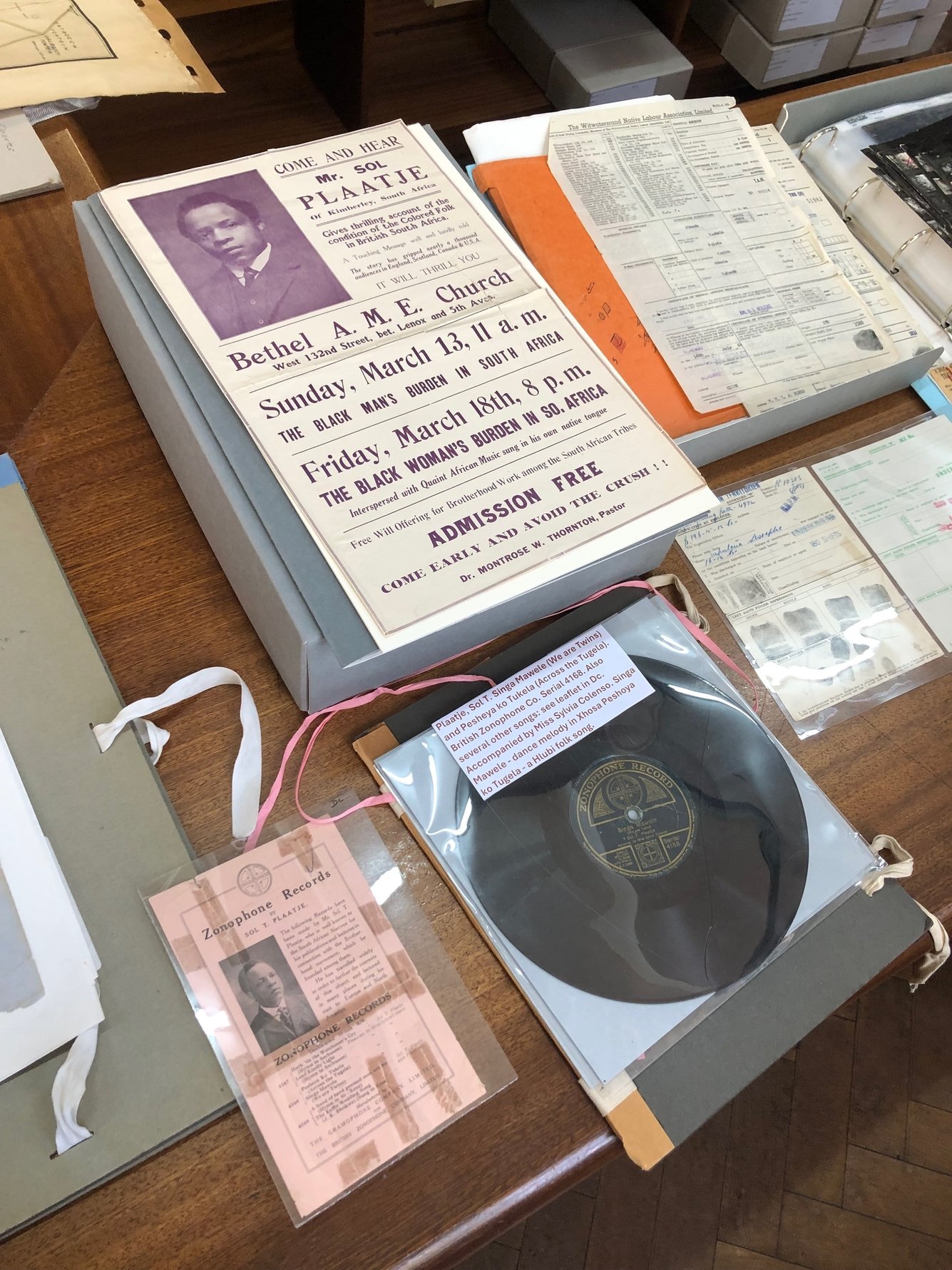
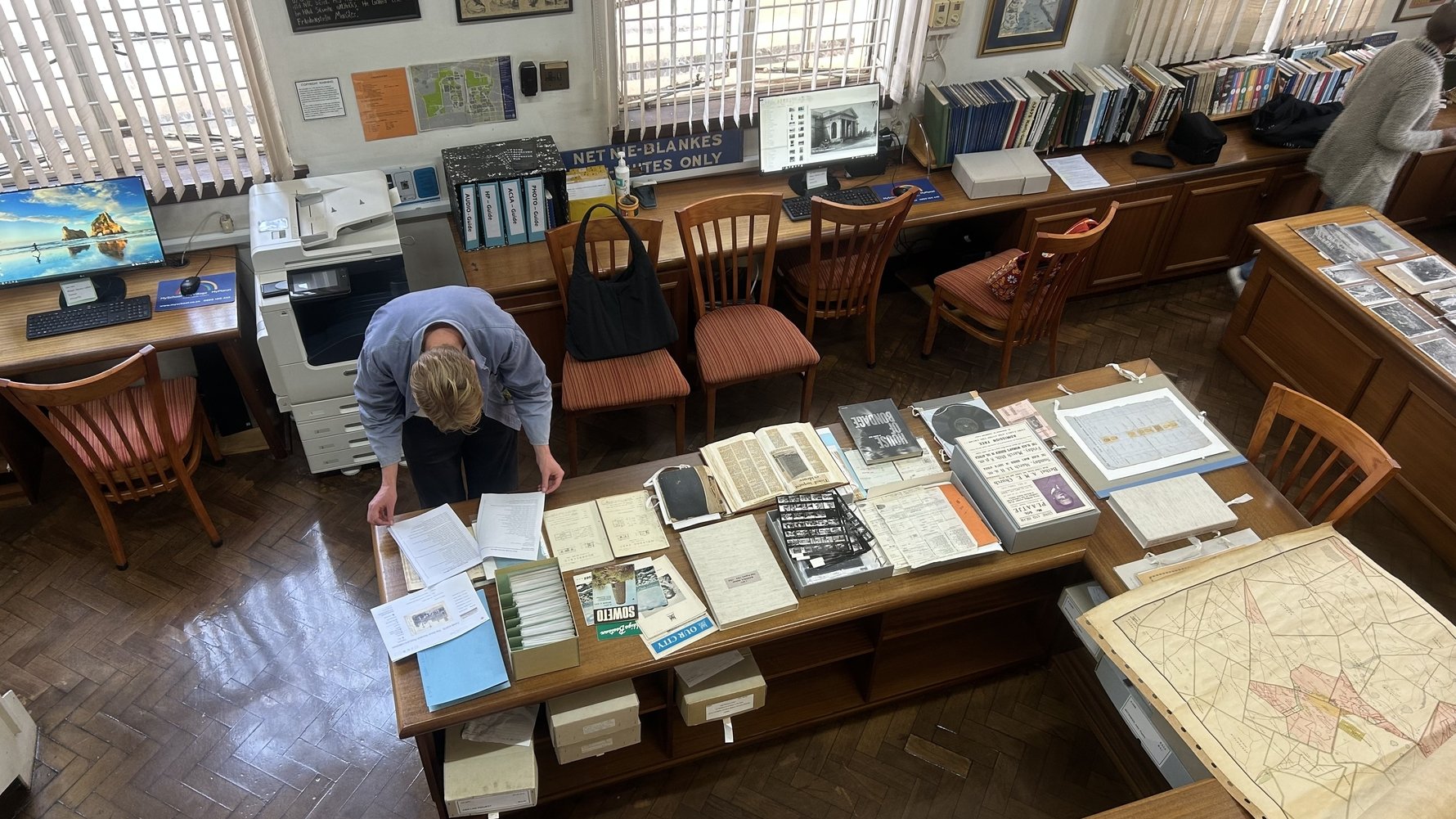
Stepping into Mohale's office, we can see she isn't wrong, there is a lot to get through. Dockets from the Treason Trial, postcards from a bygone Johannesburg, pamphlets from the apartheid government on Soweto, a recording and poster from a talk by Sol Plaatje, a French astronomer's notebook from the Cape to plot the Arc of the Meridian, photographs of old mines and original contact sheets from Ernest Cole's House of Bondage series.
Even knowing this is just a small fraction of what the archive holds, a creeping panic sets in that there is, in fact, too much to get through.
Descending into the stacks
However, Mohale is the perfect guide and makes delving into these layered histories feel far more accessible.
It is an inherently mysterious place. Surrounded by all the lives and perspectives held within the records, you become intimately aware of the fact that history is multiple. It is partially dependent on the available sources and partially dependent on the perspective of the reader. The past becomes as full of possibility as the future, and just as unknowable in its entirety.
As if sensing these thoughts, Mohale asks with a wry smile if we want to see the "showstopper door".
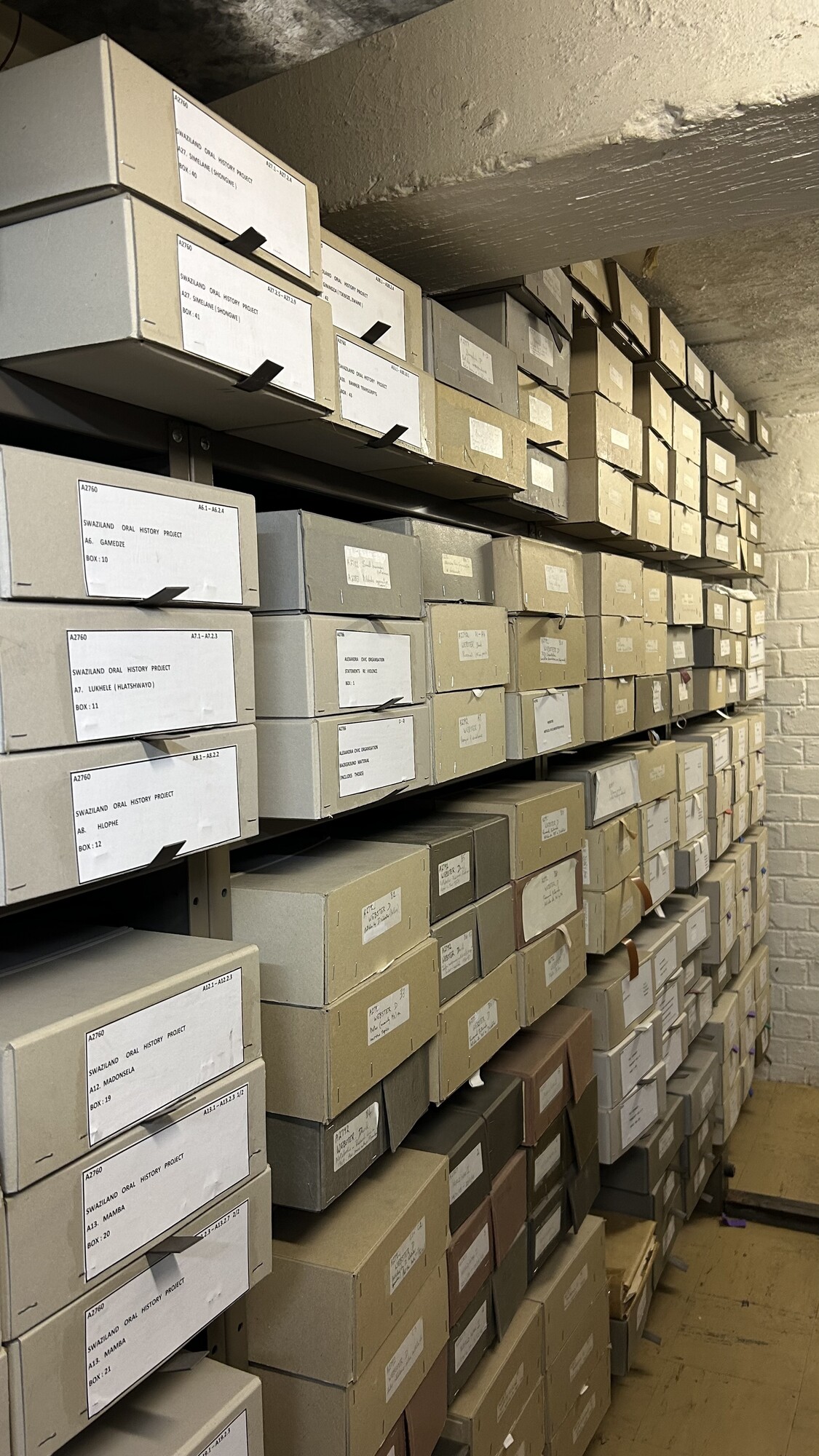
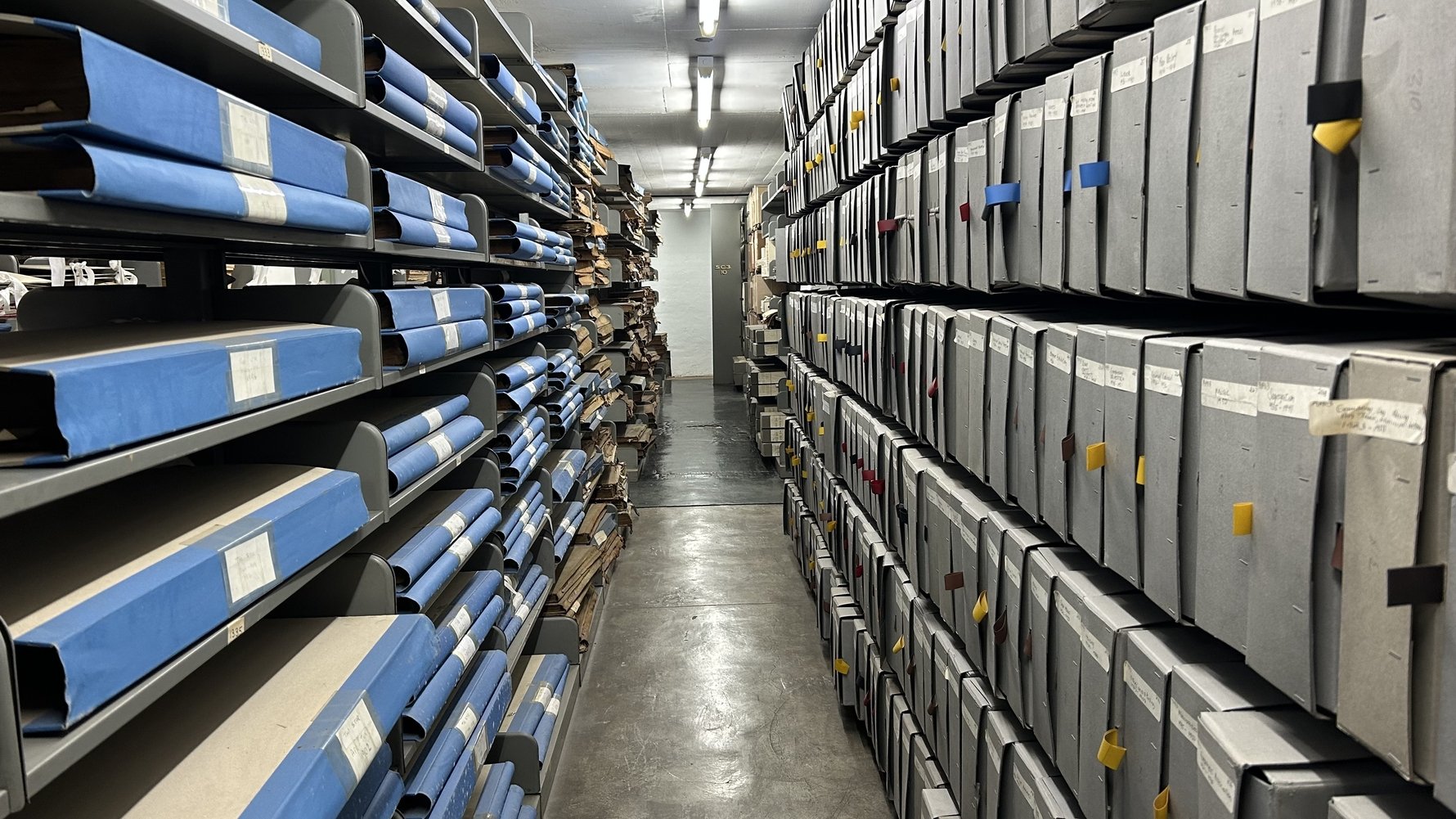
We follow her down a narrow, winding staircase, the fluorescent lights ghostly between the shelves. First, there is a heavy-set wooden gate that Mohale unlocks from a jangling chain of keys, and then we are in front of it: a sturdy, fireproof door, its keyhole covered so that the room remains airtight. It swings open and we are greeted by a gulf of darkness.
After plugging in the lights (for safety reasons there is no live electricity in the room), we see rows of shelves packed with grey folders. It feels cinematic, as if we are detectives working a long-lost case.
Once we are done wandering past the names of historic figures and companies, we head back upstairs to look at a late 19th-century map of the Witwatersrand goldfields. It is strange seeing topographical layers that you know you should recognise, but without the urban boundaries you expect to be there, it all looks unfamiliar. It is this unfamiliarity that one needs to grow accustomed to, and finding new ways of seeing within it.
Why archives still matter
On the wall of the office hangs a quote from Michele Pickover, a former archivist at the Historical Papers: "Archives, whether as spaces or records, are continually transforming and shifting in meaning. They are fundamentally political in nature and as such are mediated sites of power, ideology and memory... Archives and memory not only shape current identities but represent a dimension of their own, beyond past and present and are also 'a means of excavating silence'."
In Johannesburg, where violence and its subsequent silences still leave our history a patchwork representation of the truth, the importance of archives cannot be overstated. It is not just preservation for preservation's sake, but a constantly evolving interaction between the documents of the past and the present. Perhaps there is something in the archives you want to look at, and in doing so you might notice something that was overlooked, changing how it is seen thereafter.
The only way to know for sure is to schedule a visit. Whether it's for a creative project, academic research, a documentary or simply your own curiosity, you are unlikely to be let down.
10 fascinating discoveries from the Wits Historical Papers Research Archive
1. Ernest Cole contact sheets (Fonds A3440)
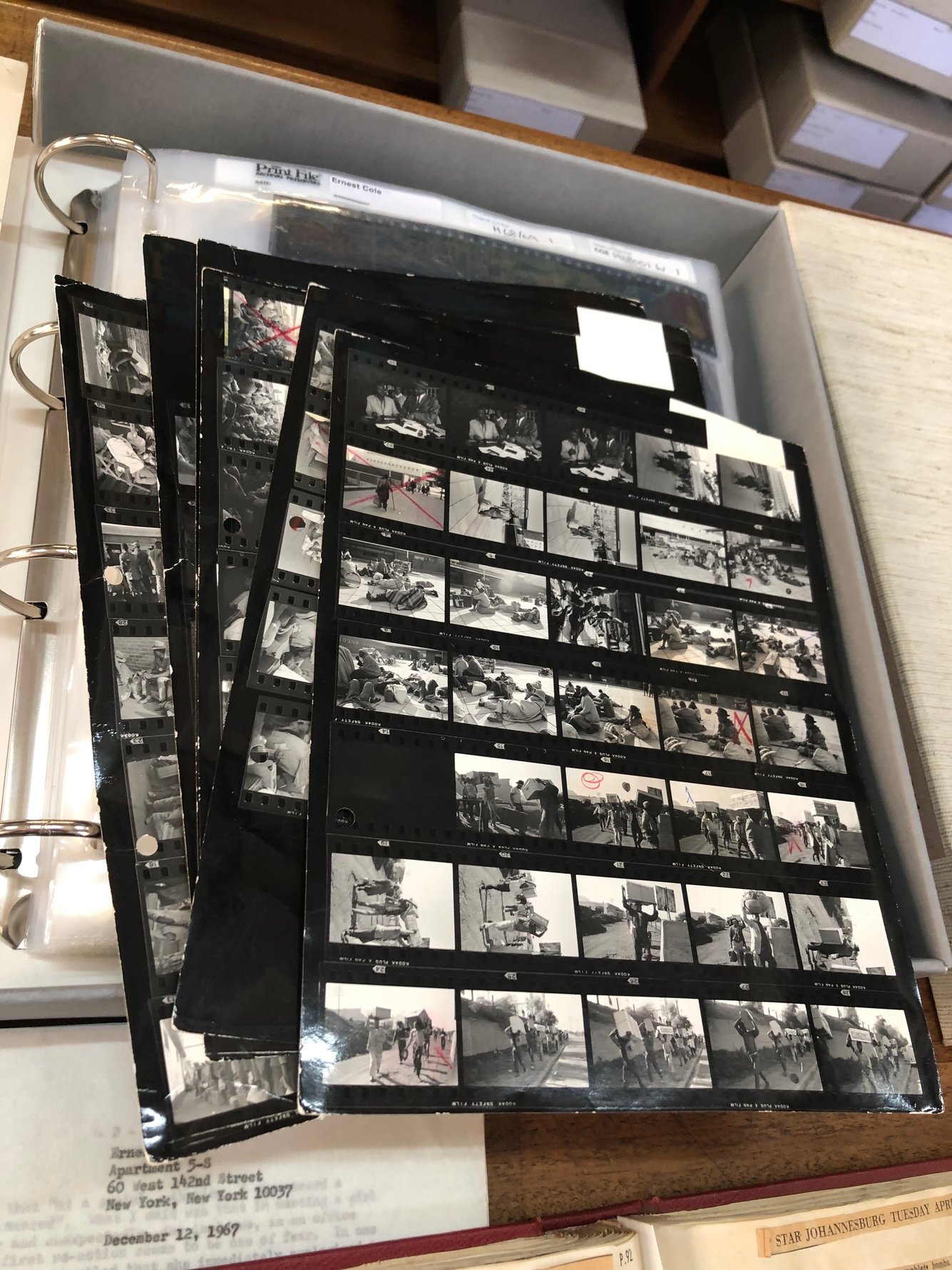
Ernest Cole was a pioneering black freelance photographer who documented day-to-day life under apartheid and its brutal economic and political realities. His seminal photobook, House of Bondage (1967), brought these realities to a global audience, and the contact sheets offer an unfiltered view at the process and photographs behind it. They reveal how Cole navigated the spatial constraints of the city, showing his sequence of frames as he depicted the economic realities and systemic surveillance of black life in Johannesburg. A foundational resource for the study of South African culture, life under Apartheid and the practice of one of our foremost documentary photographers.
2. South African History Archive
Formed in the 1980s by anti-apartheid activists, South African History Archive (SAHA) was created specifically to capture the "people's history". At the time, it was closely aligned to the United Democratic Front, and brings together posters, pamphlets and records from trade unions and student movements. Mainstream state archives historically erased black voices and resistance movements, and SAHA ensured that the narrative of liberation was documented by the participants themselves rather than filtered through the state.
3. Treason and Rivonia Trial dockets, Mandela Papers (AD1812 / AD1844)
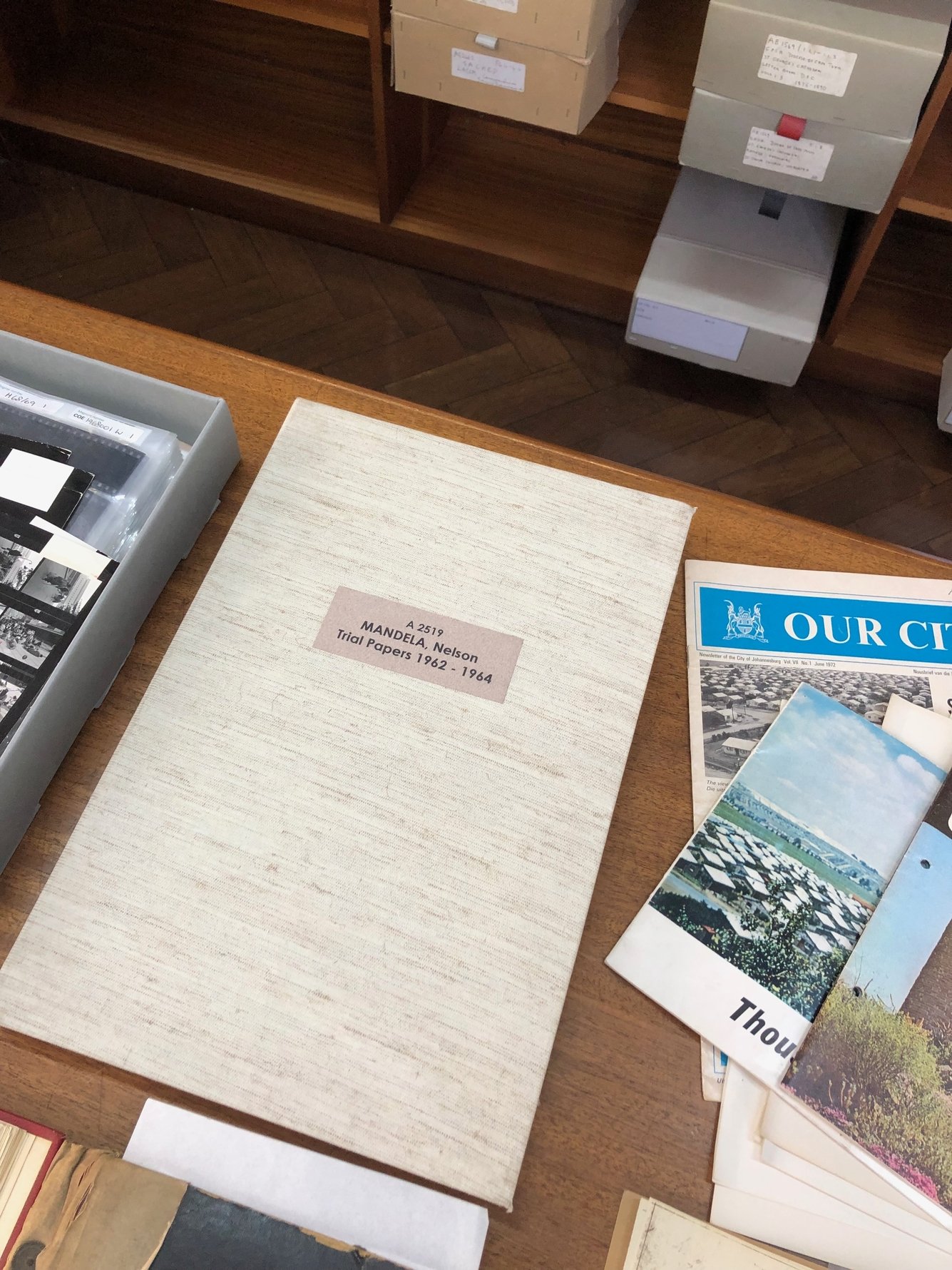
The Treason Trial, and the following Rivionia Trial, are South Africa's, and possibly the world's, most high-profile political trials, charging 156 anti-apartheid activists. The collection highlights the sprawling legal architecture of the state at the time, and the dockets and personal papers highlight the extraordinary lengths the apartheid government took to manage and control dissent. Personal papers from Nelson Mandela also reveal drafts of his famous three-hour speech where he says, "It is an ideal for which I am prepared to die."
4. Afrapix
Afrapix was a collective of anti-apartheid photographers (including Paul Weinberg and Omar Badsha) founded in 1982 to expose apartheid to both local and international audiences. The archive demonstrates the camera's role as a vital instrument of political mobilisation and historical witness. After a raid in 1986, the organisation begun sending materials to different locations throughout the world, and the archive at Wits University is one of the most complete representations of all the work they did.
5. Barnett Collection of Photographs
Established by brothers Joseph and David Barnett in the late 1880s, this collection contains over 2,000 glass plate negatives and provides a visual record of early Johannesburg, the Anglo-Boer War and the botched Jameson Raid. As one of the most comprehensive visual archives of Johannesburg's genesis, it highlights the transition from the rough, unregulated expansion of the city to when more formal architectural and social order was strictly imposed, and are invaluable for looking at the city's early visual and spatial history.
6. Medu Art Ensemble
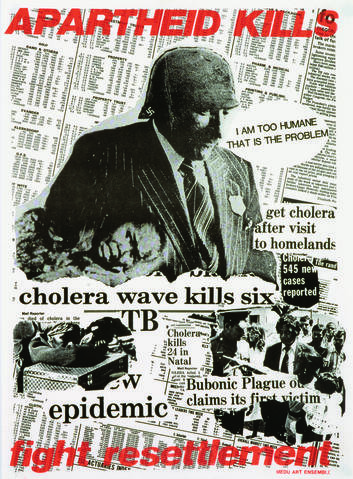
The Medu Art Ensemble was formed in the 1970s in Botswana by exiled South African cultural workers and freedom fighters. Here, the arts, through posters, theatre and literature, became an active tool against apartheid state power and to mobilise popular resistance. It offers a fascinating look at how the aesthetics of resistance were shaped before Medu Art Ensemble was destroyed in a deadly cross-border raid in 1985.
7. Barlow World Rand Mines Archives
A corporate archive documenting the Rand Mines group (the dominant mining conglomerate on the Witwatersrand). With mines and their interests being central to the formation of Johannesburg, the Barlow World Rand Mines archives probably gives the most comprehensive look at the evolution of control and domination in the city, and its links to mining. The archives detail the architecture of the migrant labour system, compound management and corporate consolidation, and show how business interests pioneered the systems of mass labour control and spatial confinement that shaped South Africa's history thereafter.
Clive Chipkin was Johannesburg’s preeminent architectural historian, best known for his masterwork Johannesburg Style. His papers contain decades of architectural drawings, research notes and photographs analysing the city's built environment. It is incredible to see the depth and scope that underpinned his research on how global architectural trends were adapted for Johannesburg. His work is vital for anyone analysing the structural evolution and spatial segregation of the city's built landscape.
9. Maps – Gold fields, Holmden's Register
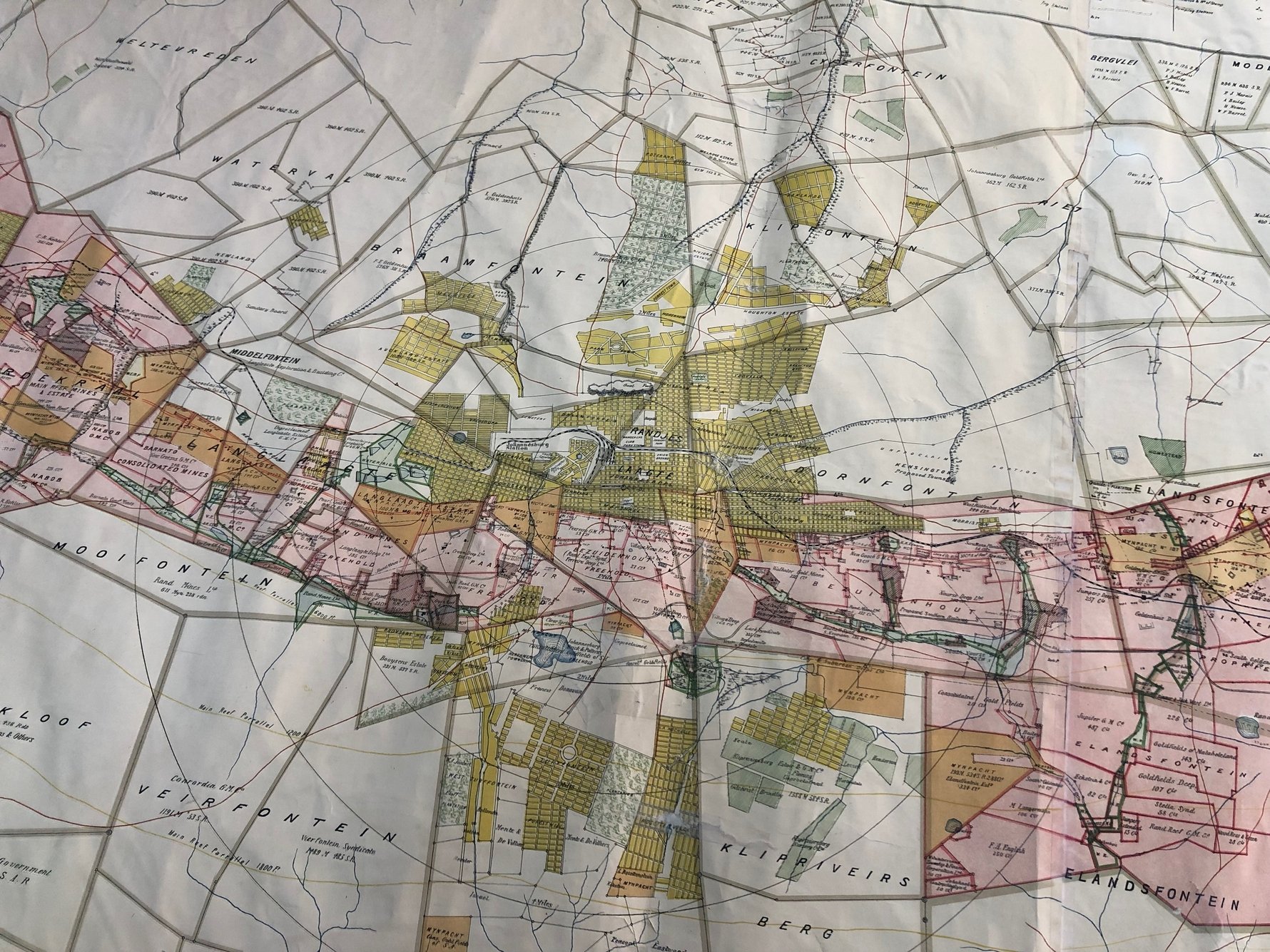
Maps feature regularly in the visual imagery of Johannesburg and reworkings, reimaginings and personalisations are often found at art exhibitions in the city. Here, a reference map of the Witwatersrand goldfields from 1896, as well as Holmden's Register of Township Maps of Johannesburg and District, show the early chartings of farms, mines and the nascent urban grid of Johannesburg. They serve as blueprints of the city, but also illustrate how the extraction of minerals came to shape and determine the landscape of the city. The sheer pace and scale of Johannesburg's transformation becomes evident from them, and perhaps this is one reason that maps in various forms are still so enduring today, that the change and shifts of the city make you intimately aware of both their artificiality, but also how they provide a grounding point in a city that seeks to upend your expectations at all turns.
10. Oscar Norwich Postcard collection
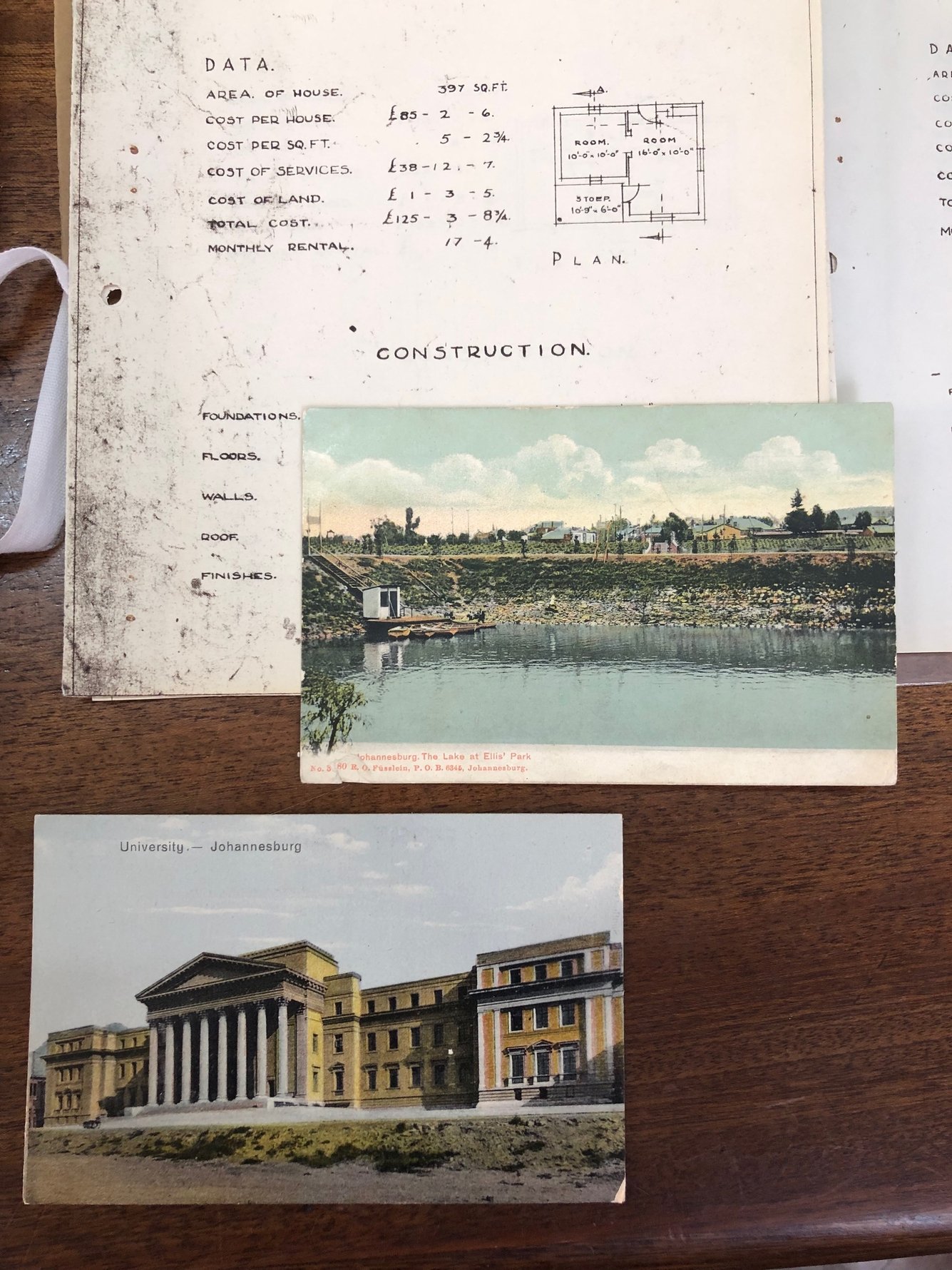
Postcards are interesting to look at within archives not just for what they show, but what they omit. These ealy commercial postcards show a sanitised and idyllic Joburg, one that belies the chaos and exploitation underpinning the city's foundations. Instead, architectural progress and a sanguine bourgeois way of life are highlighted. They show, as Mohale says, how the city wanted to be perceived as much as what it was. One of our favourites is the lake at Ellis Park; we wonder if ghosts occassionally still drag their boats to go paddle at the swimming pool.
Need to know
Booking: Visits to the reading room are by appointment. Email archives.library@wits.ac.za to arrange a time and discuss what collections you are looking for.
Cost: Access to the archive is free, though fees may apply if you require extensive high-resolution digitised copies for publication or if copyright is involved.
Accessing campus: Because the library is on university grounds, you will need to present a valid ID or driver’s licence at the security gates to sign in as a visitor.
Digital archives: You can browse a massive chunk of their digitised collections at researcharchives.wits.ac.za
While you’re there
Wits Origins Centre: Once you're done at the archives, head over to Origins Centre where you'll explore the history of early humankind in Southern Africa. This striking museum boasts an incredible collection of ancient rock art, early tools and archaeological finds. In addition, they host contemporary exhibitions that relate to their work. Read up on the Atlas of Uncertainty exhibition, where you'll instead turn your attention to the future and what lies ahead in our urban lives.
Wits Art Museum (WAM): Located on the bustling corner of Jan Smuts Avenue and Jorissen Street, WAM houses an extraordinary collection of historical and contemporary African art and is the perfect cultural chaser to your archival deep dive.


Comments