

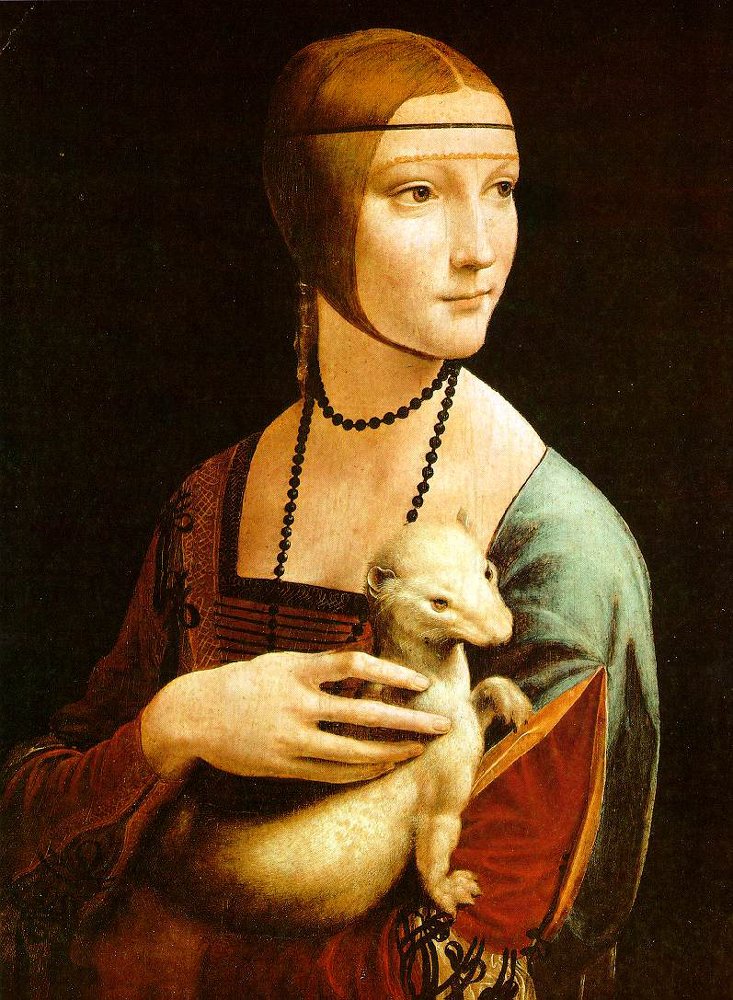
Kraków is home to approximately 2.3 million registered artworks, of which the undisputed highlight is Leonardo da Vinci’s Lady with an Ermine. One of only four surviving portraits by da Vinci in the entire world, Leonardo's Lady is a national treasure, and a sentimental favourite of Poles - reproduced and hung in many a home. Currently on display in Kraków's Czartoryski Museum, visitors shouldn't miss the opportunity to see this famous portrait in person.
The Painting
A work shrouded in mystery and speculation, little documentation exists of the painting until it's purchase by Prince Adam Czartoryski, as a gift for his mother Izabela, in 1798. The Prince seemed certain it was a work by Leonardo, but later scholars weren't so certain, erroneously crediting it as the work of Boltraffio, or possibly Ambrogio de Pedris. Executed in oils on a small walnut wood panel, x-rays and scientific testing revealed the painting to have been heavily altered over the course of the centuries: shadows were added, the veil covering the subject’s head was retouched to match the colour of her hair, and the background was inexplicably painted black (maybe that's why the weasel is so mad). Unsigned by da Vinci, the authenticity of the painting was not widely accepted by scholars until the 20th century, and then proven to everyone's satisfaction in 1992 when American scientists matched fingerprints on the wooden canvas to those on other confirmed da Vinci paintings.
The Lady
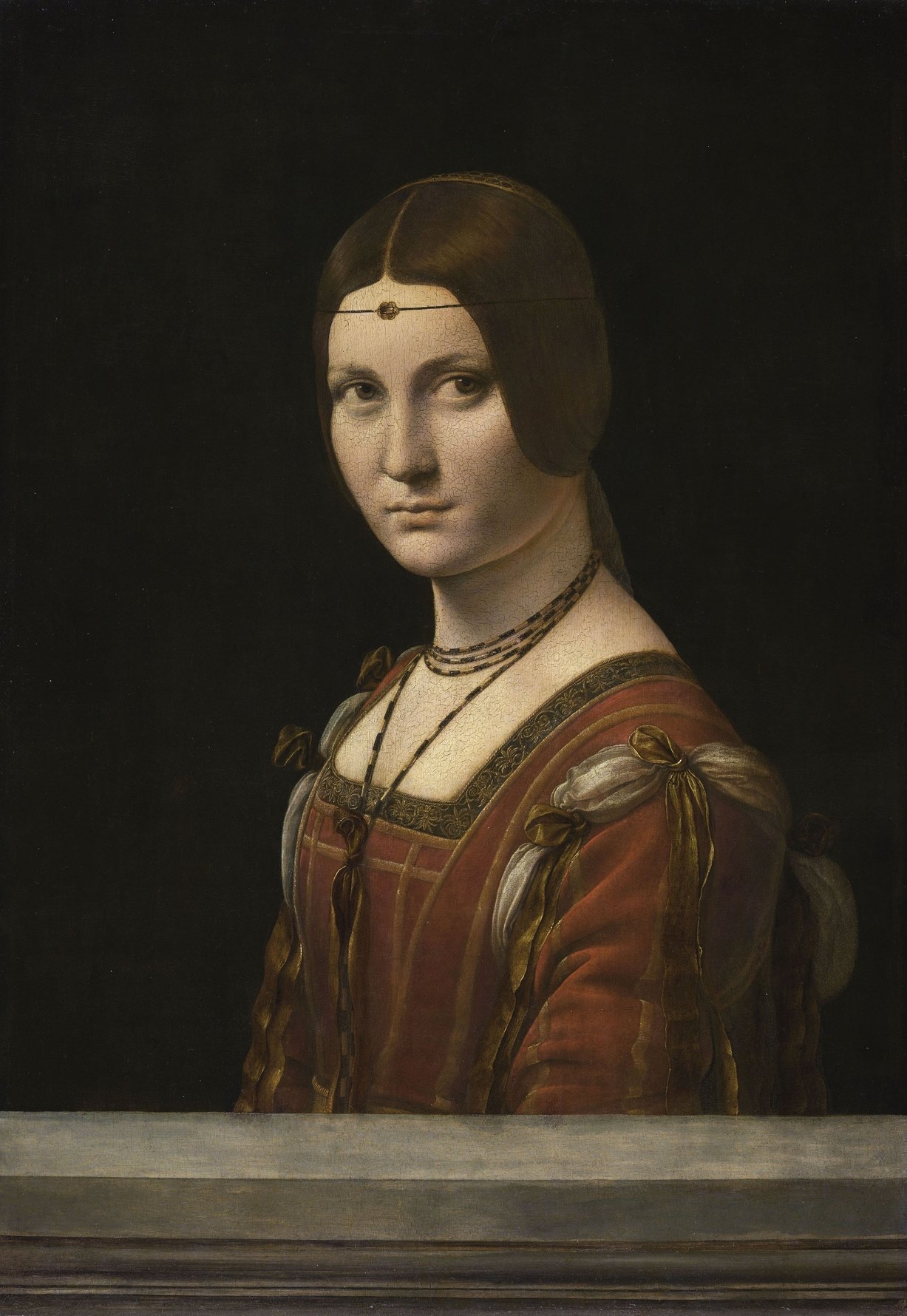
Thought to have been painted around 1490, the picture’s subject has long been the source of debate. Proposed theories included the Duke of Milan’s wife, Beatrice D’Este; his mistress, Cecilia Gallerani; or an enigmatic paramour of French King Francis I, 'La Belle Ferronierre.' In fact, the painting was often confused with another da Vinci portrait of the latter woman (today housed in the Louvre), due to an erroneous 19th-century inscription added in the top-left corner: 'LA BELE FERONIERE. LEONARD DAWINCI.'
|
|
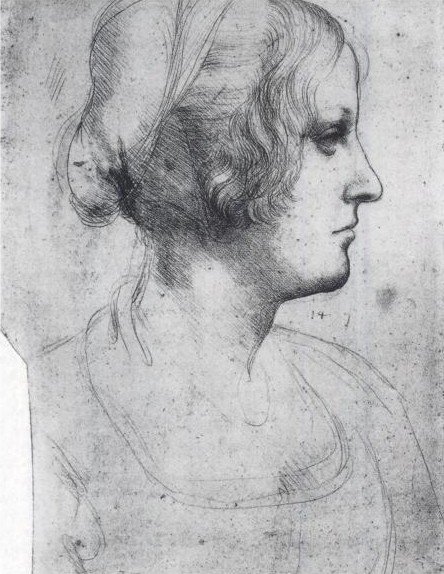
Regardless, recent scholarship seems to agree that the woman in question is indeed Cecelia Gallerani - the young mistress of Ludovico Sforza, the Duke of Milan and da Vinci's employer. Thought to be about 16 at the time of the portrait, Cecelia was the 40-something-year-old Duke's favourite, and bore him a son in 1493. Her lack of noble lineage kept them from marrying; in fact, the Duke had already been married to Beatrice D’Este for eleven years when Cecelia was asked to sit for Leonardo. Both women were the same age, and we'll let you do the maths.
When Beatrice found out that she was not the only teenager her husband was sleeping with, she had Cecelia sent out of the court. However, the Duke continued to provide for her, arranging a marriage with a count, gifting them a palace in Carmagnola as a wedding gift, and securing senior church appointments for their son. Cecelia went on to have four sons and a daughter with her husband, and died in 1536 in her early 60s.
The Critter
Known also in Polish as 'Dama z gronostajem' or 'Dama z łasiczką' - just what exactly is that creature she's holding, and why is it so angry? Despite being far too large, survey says it's a stoat - a type of small weasel whose sandy brown fur turns completely white in winter. Corresponding with this change in colour, is a change in the animal's English-language name, from stoat to ermine.

|

|
Leonardo was evidently fond of ermines (stoats be damned), drawing them on multiple occasions and writing of them too: "The ermine out of moderation never eats but once a day, and it would rather let itself be captured by hunters than take refuge in a dirty lair, in order not to stain its purity." Also, in another note: "Moderation curbs all the vices. The ermine prefers to die rather than soil itself." On top of the obvious symbolism of purity, the Duke of Milan was also a member of the Order of the Ermine, and used the creature as a personal emblem.
The Journey
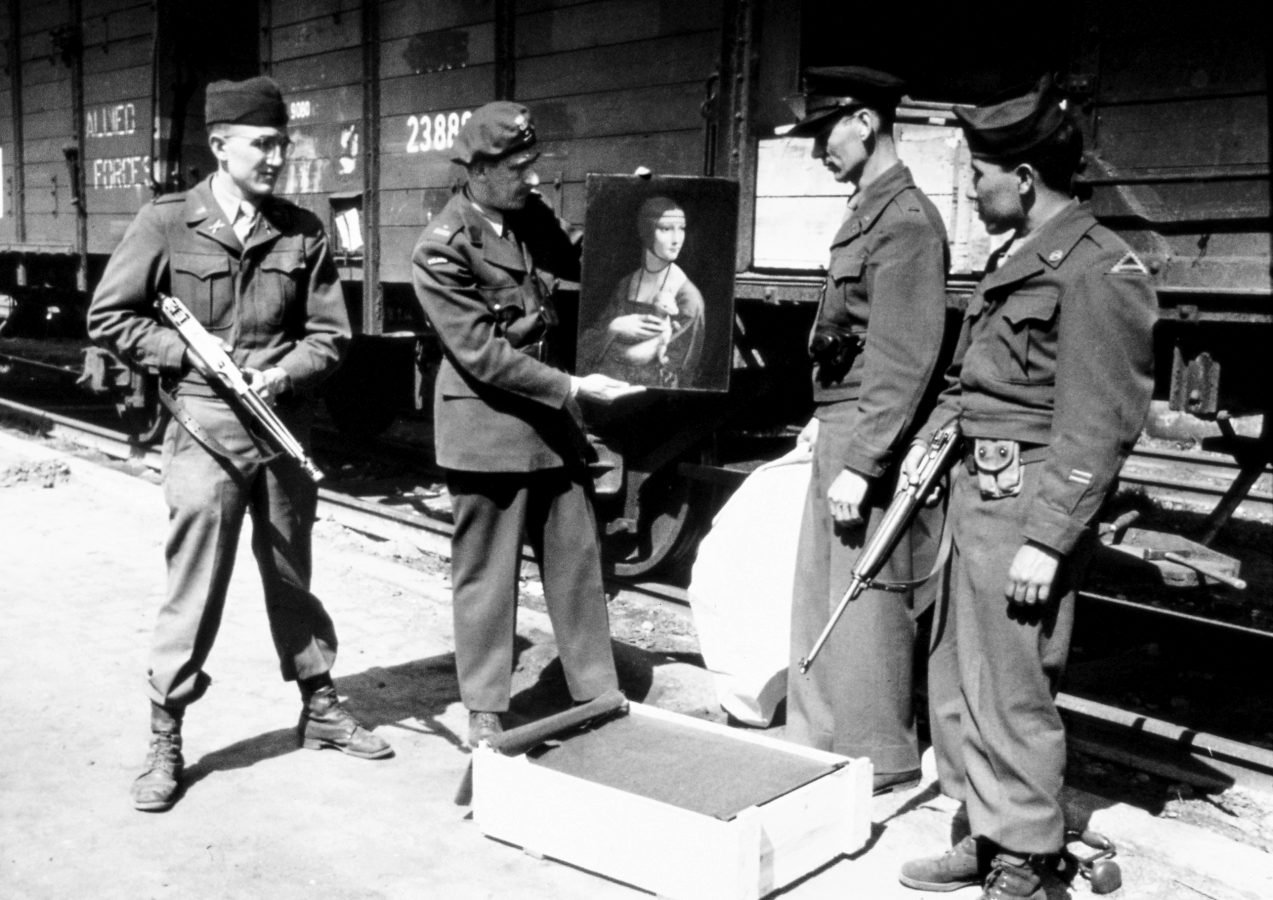
Leonardo's Lady and her pet weasel have enjoyed a turbulent life. When they aren't entertaining they often seem to be on the run or in hiding somewhere. For centuries the Weasel Lady was off the map completely, before having a rendezvous with Prince Adam Czartoryski during his Italian holiday in 1798. Gentleman that he was, he brought her home to his native Poland, where she was part of the family until the 1830 Warsaw Insurrection, after which the poor dear was forced with her protectors into Parisian exile. The Lady later returned to Poland moving into what would become her official address in Kraków’s Czartoryski Museum in 1878, only to be spirited into hiding as German tanks rolled across the border in 1939. Soon discovered, Weasel Woman was whisked to Berlin to become part of Hitler's private coterie, but eventually ended up in Wawel Castle to be ogled in the office of Hans Frank - Kraków’s Nazi commandant. With Soviet troops closing in, Leo's Lady was smuggled back into Germany, where American soldiers finally found her and liberated her home to Kraków in 1946. Aside from some art tours, there she has remained, becoming one of the city biggest icons.
Visitation Rights
Once again on display at the Czartoryski Museum, today Leonardo's famous portrait boasts its own private room, where - like the Mona Lisa - you'll likely have to jostle for a glimpse, and be amazed by her diminutive size. Her social calendar is such that all visits must be booked in advance at specific times, so head to bilety.mnk.pl to arrange tickets for this hottest of dates.

Comments