More features:
-
The Morčić
Why a Moor in Rijeka? There are a couple of picturesque legends about this, but the most likely story is that this is a local version of similar ornaments from Venice when the fashion for exotica was at its height....
-
Tourist information
Croatian National Tourist Board, Iblerov trg 10/IV, Zagreb, tel. 01 469 93 33. info@htz.hr, www....
-
Learn more!
Saint Vitus - Sveti VidThe Slavs took St Vitus to their hearts as a patron saint because his name means something like “all-seeing” in Slav languages – indeed, he is the patron saint of eyes and vision, and of the city of Rijeka....
-
Blue flag beaches, clean seas
Clean seas are one of the big reasons why visitors come back to Croatia year after year. In fact, this year German auto club ADAC published results of a study that showed the Croatian Adriatic to have the cleanest water in the Mediterranean....
-
Rijeka Beaches
Yup, you’re right, from the centre of Rijeka you can’t see too many sparkling beaches. Where do the locals go to swim? In the city itself, the grand eastern neighbourhood of Pećine has clean, rocky beaches and historic villas besides....
-
Photo Competition Be Local!
Be local! Send us a photo on the theme "I'll be back in Zagreb" (Vraćam se Zagrebe tebi....
-
Introducing Rijeka
A word of warning: if you’re travelling by car to Rijeka from Italy, you’ll have a tough time finding your way unless you have a satellite navigation system or know a few words of Italian....
Risnjak
Glowering above the city of Rijeka, in the densely forested Gorski Kotar region, are the primeval forests, mountain meadows and karst formed peaks of Risnjak National Park. This range of mountains, from which can be viewed the Julian Alps and the Adriatic is by far the wildest and most untouched in the country – mostly thanks to the somewhat inhospitable climate; it has an average temperature of 12.60 in July. This of course makes it the perfect location throughout May for Marohlinijaha – or in other words a month long dandelion picking contest.
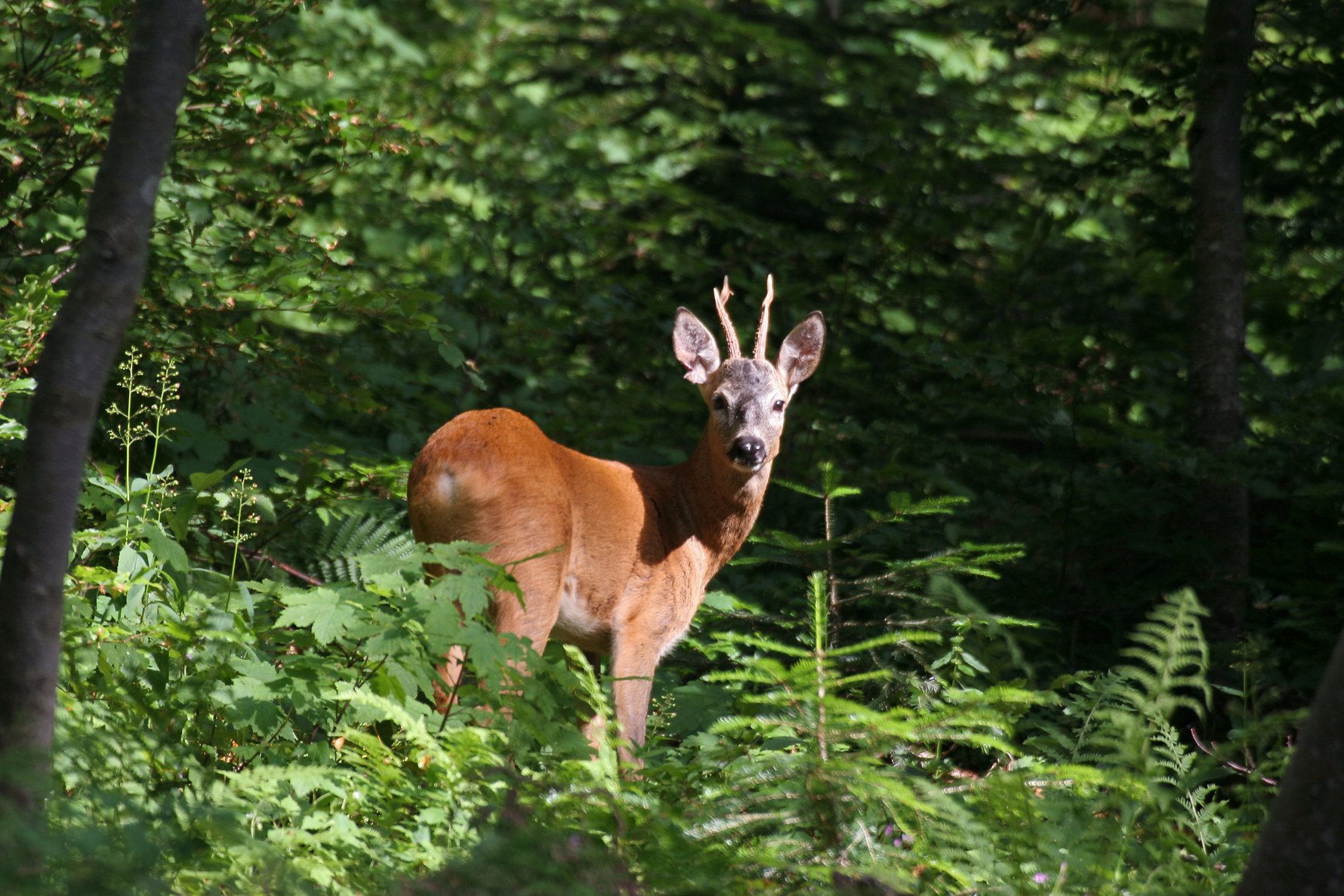
Whilst wandering around with head bent to the ground looking for the little monsters don’t forget to raise your view to watch for bigger monsters. The park is a haven for deer, bears, wildcats and lynx (ris) – from which the park takes its name. Wolves and wild boar also put in an occasional appearance.
The Information office for the park is in Crni Lug, a small village that perches at 724m above sea-level (no mean feat with the sea around 25km away) and 12km from Delnice – the main regional town. From the villages of Razloge or Kupari, small winding paths can be followed up to the source of the Kupa river. From the jagged karst the water wells up into a lake and then tumbles downwards through the ‘valley of the butterflies’.