This In Your Pocket Guide is available as

Bookmark and Share

Warsaw | Sightseeing | Monuments

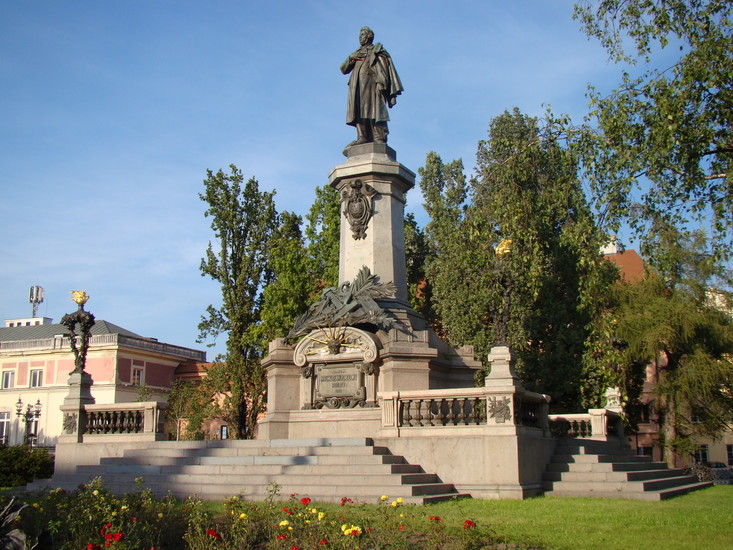
Patriot, poet and the man who inspired Romanticism in Poland, Mickiewicz stands out as Poland's greatest literary figure - as well as a figure of hope during a bleak age of Russian oppression. His involvement in politics saw him exiled east in 1824 by the ruling Russians, before finally heading to western Europe in 1829. A bid to return to his homeland in 1830 was thwarted at the border, and he never saw his native Poland again.

Much mystery surrounds his life; his role as a national cultural icon meaning that much of the seamier side of his life has been covered up, including his involvement in strange cults and alleged womanising. To this day, even his birthplace remains a hot source of argument. Some say Nowogródek (Lithuania), others say the nearby Zaosie. A champion of freedom, he died during a cholera outbreak in Turkey, 1855, while recruiting a Polish legion to fight the Russians in the Crimea. Originally buried in Paris, Mickiewicz's body now lies in Wawel Cathedral, Kraków.

His defining masterpiece, Pan Tadeusz, is a beautifully written epic portraying Polish society in the 19th century. His statue dominates ul. Krakowskie Przedmieście, and traces of bullet holes dating from WWII are still visible on the monument. [...]


Add your comment

ul. Krakowskie Przedmieście 5

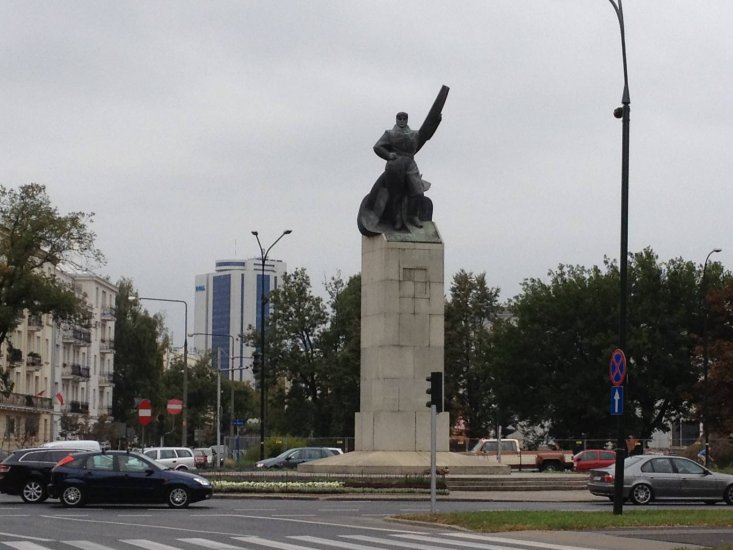
Fittingly located on the route from the airport one of the first sights that will greet visitors as they crawl into the city centre is the sight of a lone aviator standing at the top of ul. Żwirki I Wigury. The statue actually honours two men, Franciszek Żwirko and Stanisław Wigura, Poland’s most renowned aviation heroes. To list their achievements would require an extra page, suffice to say their finest hour came when they clinched victory in the Challenge 1932 international air contest. That was also to be the year the pair of aces died, crashing while on their way to another flying competition in Prague. The statue is a replica of the one unveiled in 1932 on Pl. Uni Lubelskiej. Blown up by the Nazis a faithful copy was reconstructed and placed in its current location in 1967.    [...]


Add your comment

ul. Żwirki i Wigury

Nine metres high and made of white granite June 6, 2009 saw the unveiling of giant cross on pl. Pilsudskiego. It was here that Pope John Paul II returned to Warsaw for the first time after being made pope, and it was also on this spot a candlelit vigil was held when news first broke of his death. T [...]


Add your comment

Pl. Piłsudskiego

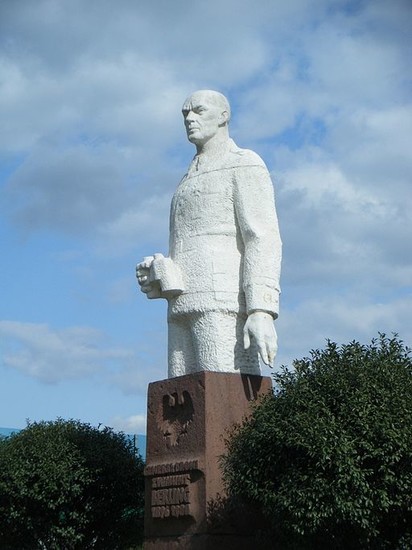
Charles de Gaulle is the subject of one of Warsaw’s newer monuments. Striding away from what was once the Commie party HQ, the monument is a gift from the French government and can be found on (C-4) Rondo de Gaulle’a. A resident of Warsaw in the 1920s, de Gaulle is a bit of a hero in these parts for the role he played in The Battle of Warsaw in 1920. With Europe in turmoil following the aftermath of WWI the Red Army launched a huge military strike, aimed at enslaving the rest of Europe. The Bolsheviks expected an easy march to Paris, but the Poles has other ideas. With the Red Army just 23km from Warsaw Marshal Piłsudski launched a deft action to split the Bolshevik forces in two and encircle them. The battle raged from August 13-August 25, 1920, with the Poles claiming a historic victory in what Woodrow Wilson went on to describe as the ‘seventh most important battle in history’. The Bolshevik forces were decimated, and Europe saved. De Gaulle fought with distinction and was awarded the highest military honour in the country, the Virtuti Militari. [...]


Add your comment

Rondo de Gaullea

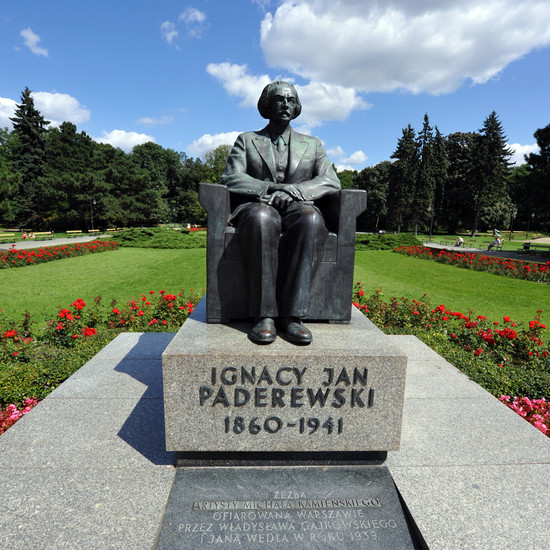
Born in Kuryłówka in 1860 Paderewski is fondly remembered as a politican, patriot and musician. Having entered the Warsaw Conservatorium at the age of 12 he worked as a piano tutor after graduation. The death of his wife, just a year after they married, spurred him to commit his life [...]


Add your comment

Park Ujazdowski

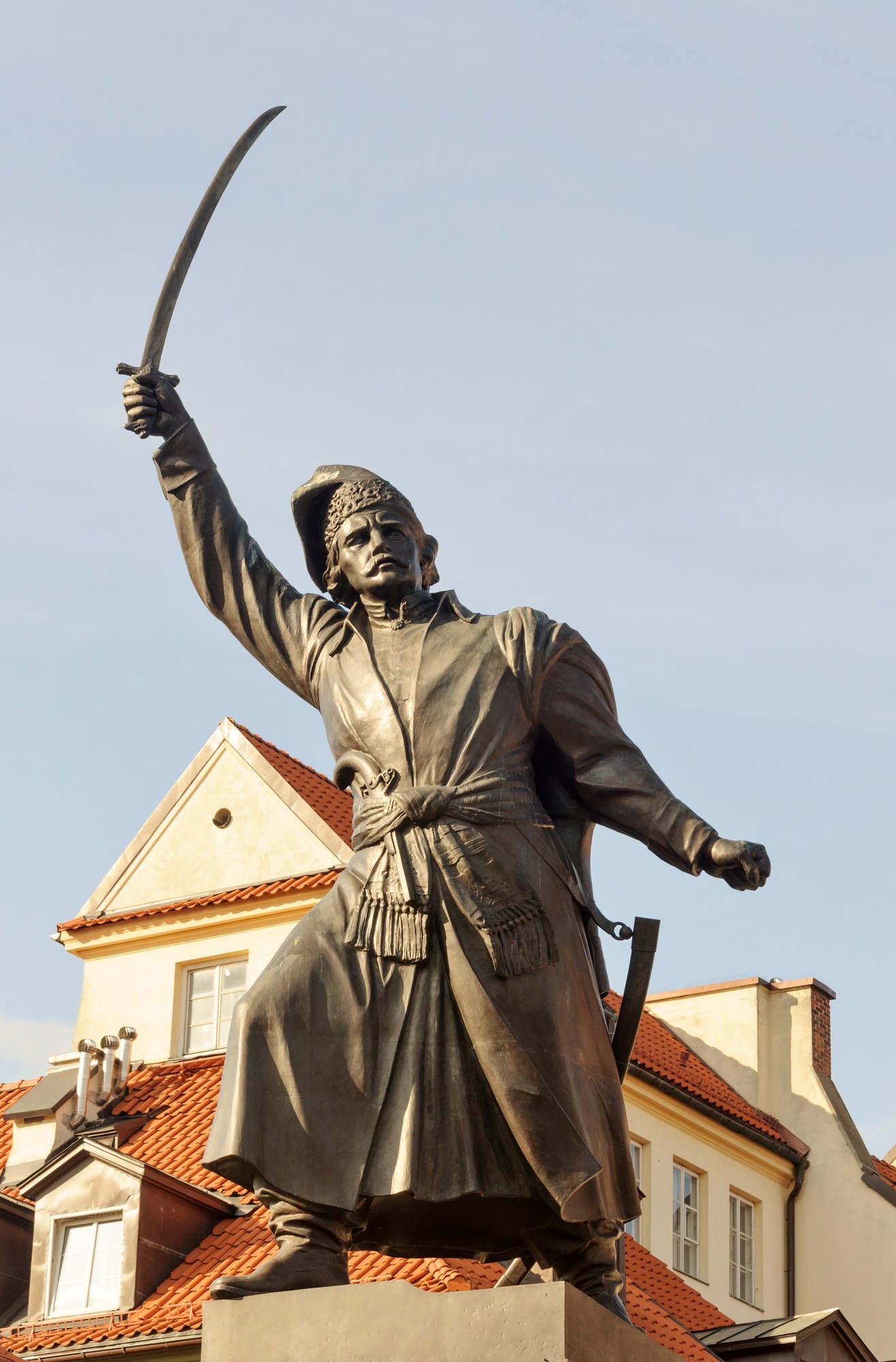
A huge monument honouring Jan Kiliński, a Warsaw cobbler who became the unlikely hero of the 1794 Kościuszko Uprising. Despite being wounded twice, Kiliński and his troop of peasants captured the Russian Ambassador's Warsaw residence; an action that ultimately led to [...]


Add your comment

ul. Podwale

ul. Świętokrzyska


Casting a steely gaze over the square named in his honour is a gloomy looking Field Marshal Piłsudski, a man many Poles hold responsible for winning the country its independence in 1918. Regarded as a political and military hero this man did more than most to free Poland from the shackles of Russian control; his early years saw him imprisoned in Siberia after being wrongfully convicted of plotting to assassinate the Tsar, though his finest hour undoubtedly came in 1920 when he beat off the Bolshevik hordes at the gates of Warsaw, inadvertently saving a battered post-war Europe from being flooded by the rampant Soviets.  Unveiled in 1995 this particular monumen is the work of Tadeusz Łodziany, and Piłsudski fans can view another such monument to the man on ul. Belweder. [...]


Add your comment

Pl. Piłsudskiego

Built in honour of the man who made Warsaw the capital of Poland, the column was erected back in 1664 and stands twenty two metres high. During the war the column collapsed under bombardment and the original now lies close to the Royal Castle (and is considered lucky to touch). The figure of Sigism [...]


Add your comment

Pl. Zamkowy

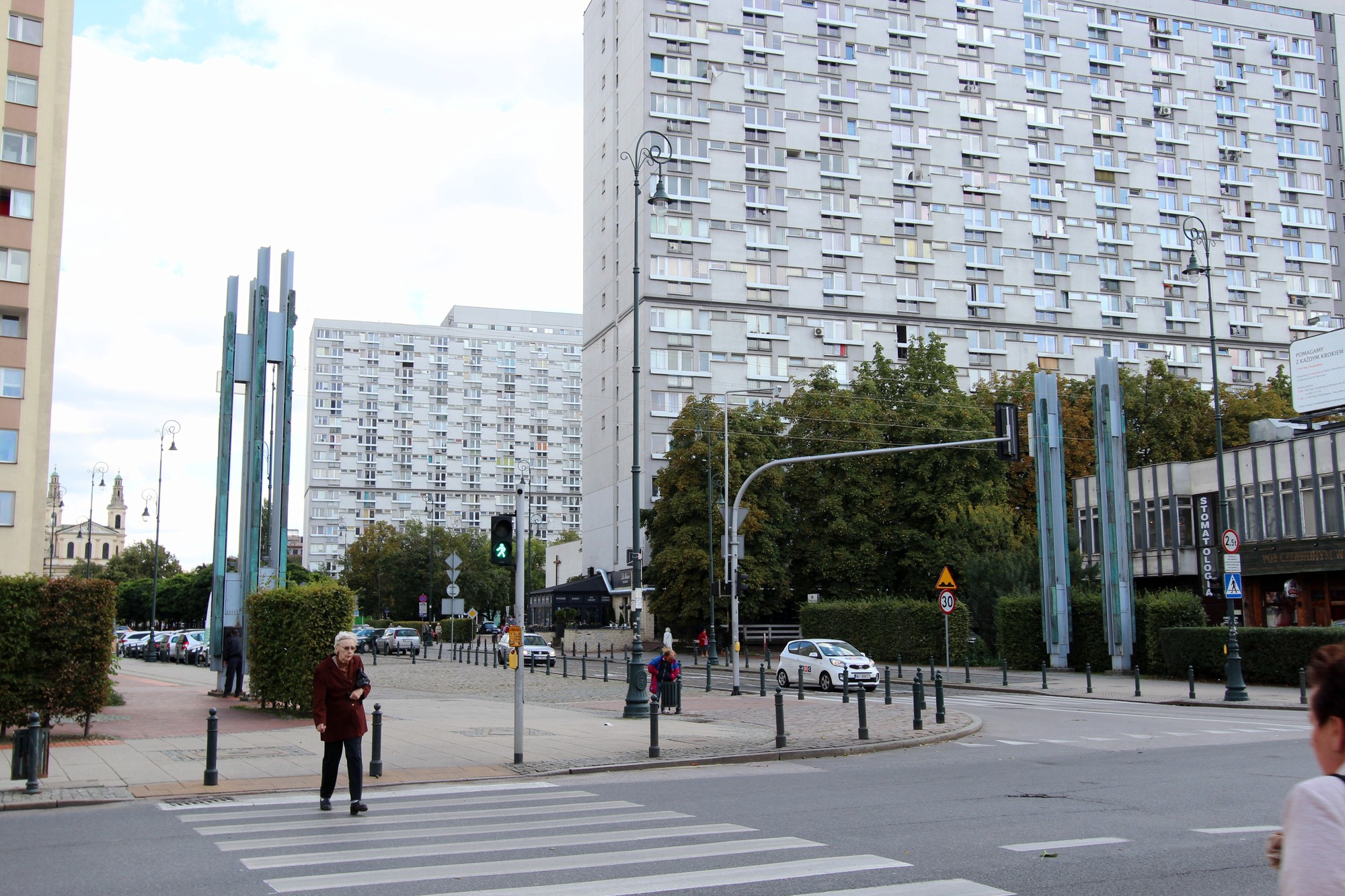
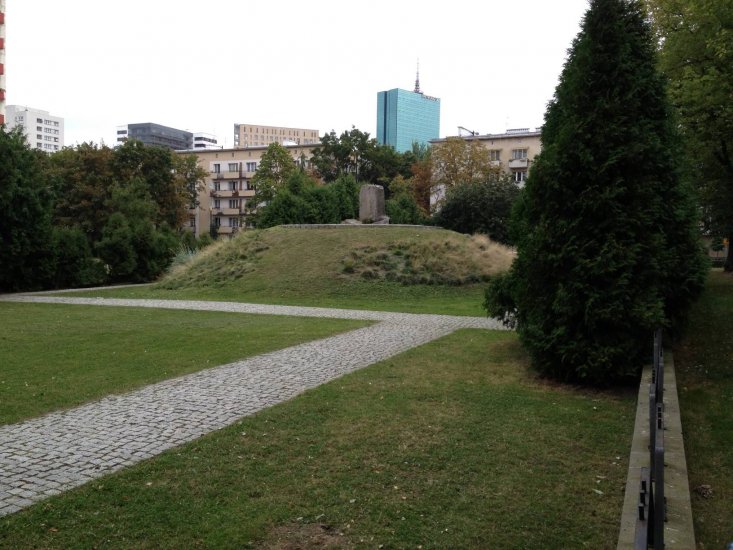
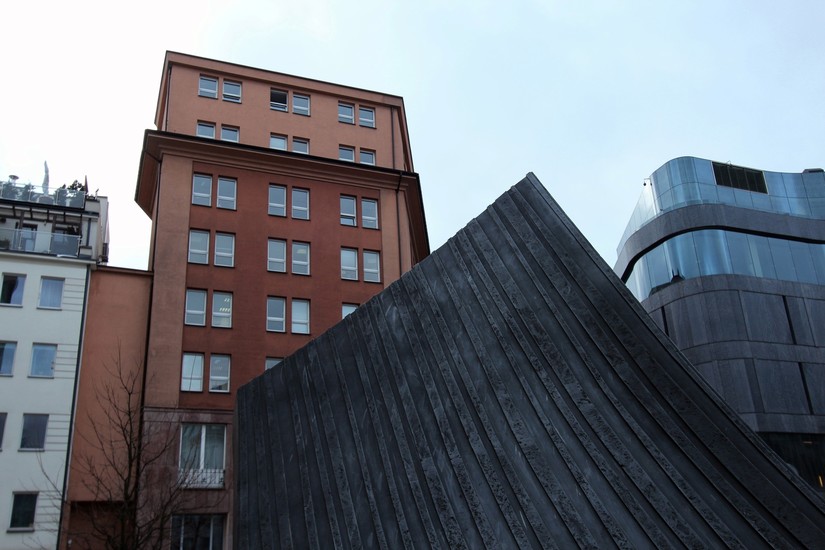
The Battle of Monte Cassino was actually a series of four intense and sometimes controversial battles that took place between January 20 and May 18, 1944, culminating at a 1,300-year-old Benedictine monastery on the top of the 1,100 metre Monte Cassino in southern Italy. After the successful Allied landings in Italy in September 1943 a route was needed from the Allied position north of Naples to Rome, and the only way through was via the Liri Valley. Blocking the valley was a mass of German-occupied hills around the town of Cassino. Involving British, US, French, North African, New Zealand, Ghurkha and Polish troops, fierce battles raged against the Germans on a slow and brutal advance towards the monastery, whose eventual capture would give the Allied forces the access they needed to open the road to Rome. At a cost of over 25,000 lives including the deaths by heavy allied bombing on February 15 of a number of Italian civilians who were taking refuge in the monastery, the final battle ended on the morning of May 18 when a reconnaissance group of soldiers from the Polish 12th Podolian Uhlans Regiment finally reached what was by then an empty and completely devastated monastery. The Battle of Monte Cassino paved the way for the Allied advance on Rome, which fell on June 4, 1944, two days before the Normandy invasion, and is one of Poland’s proudest military achievements. On May 18, 1999, exactly 55 years after the event, an 8.5-metre monument designed by the Polish sculptor Gustaw Zemła was unveiled in a small park by just north of the (A-2) Archaeological Museum. Resembling the outline of Italy with a number of eerie, battle-related elements built into it, the monument also features a pair of wings, supposedly representing Nike and the Polish Hussars. [...]


Add your comment

ul. Długa 52

Nicholas Copernicus Monument
The founder of modern astronomy. A sheltered academic, he made his observations a century before the invention of the telescope and without help or guidance. His book De Revolutionibus (1543) posited that the earth rotated on its axis once a day, travelled around the sun once a year, and that man's place in the cosmos was peripheral. This may seem obvious today, but it was an utterly radical idea at the time.

Although astronomers who propagated his ideas were burnt at the stake and the Catholic church placed De Revolutionibus on its list of banned books (as late as 1835), there was no turning back progress. The modern cosmological view - that our galaxy is one of billions in a vast universe - is this man's legacy.

The statue itself was built in 1830 and has seen its fair share of adventure. During WWII the Nazi's placed a bronze plaque insinuating that the great man was in fact - gasp - a German. In 1942, a boy scout called Alek Dawidowski, ducked the guards and removed the plaque. Boiling with fury, the Nazis removed the statue, hid it in Silesia and dynamited a few other surrounding monuments for good measure. The statue was recovered in the years following the war, while Dawidowski has entered Polish folklore as a result of his bravery. The plaque at the centre of the storm can be viewed in Warsaw's History Museum. [...]


Add your comment

ul. Krakowskie Przedmieście

Just before hitting the WZ tunnel that rumbles below the old town visitors can’t fail but see a giant cast iron statue of Nike: as in the Greek Goddess of Victory, not the shoe. Standing with sword and shield raised aloft this noble structure is actually officially named ‘Monument to th [...]


Add your comment

near Pl. Zamkowy (Trasa W-Z scarp)

ul. Krakowskie Przedmieście 46/48

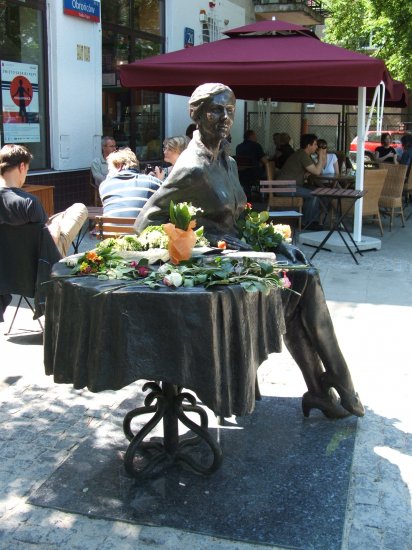
The mermaid is the symbol of Warsaw, and as such you’ll find her likeness on everything from buses to beer cans. The legend dates to the time of Prince Kazimierz, who allegedly got lost while on a hunting expedition in the area that is now Warsaw. Behold, a mermaid transpired from the marshland, and guided the hapless prince to safety by firing burning arrows. Firmly established as an icon of Warsaw you’ll find three mermaid statues in Warsaw, specifically on (C-1), Old Town Square, (D-2), Świętokrzyski Bridge and on (C-2/3), ul. Karowa. The original mermaid – or syrena in local parlance – stands in the Historical Museum, and was crafted from bronze by the expert hand of Ludwika Nitschowa. Modelling for her was actress Krystyna Krahelska, who was mortally injured on the first day of the Uprising while working as a field nurse.
[...]


Add your comment

The only surviving part of the destroyed Saxon Palace. The palace was constructed during the 17th century though the tomb was not added to the complex until 1925. Eerily, the tomb was the only part of the structure to survive being dynamited by the Nazis. The ashes of unknown soldiers from WWII hav [...]


Add your comment

Pl. Piłsudskiego

Dating from 1995, and designed by Maksymilian Biskupski, this monument remembers the victims of Soviet aggression and all those deported to the wastes of Siberia. [...]


Add your comment

intersection of Bonifraterska, Andersa and Muranowska